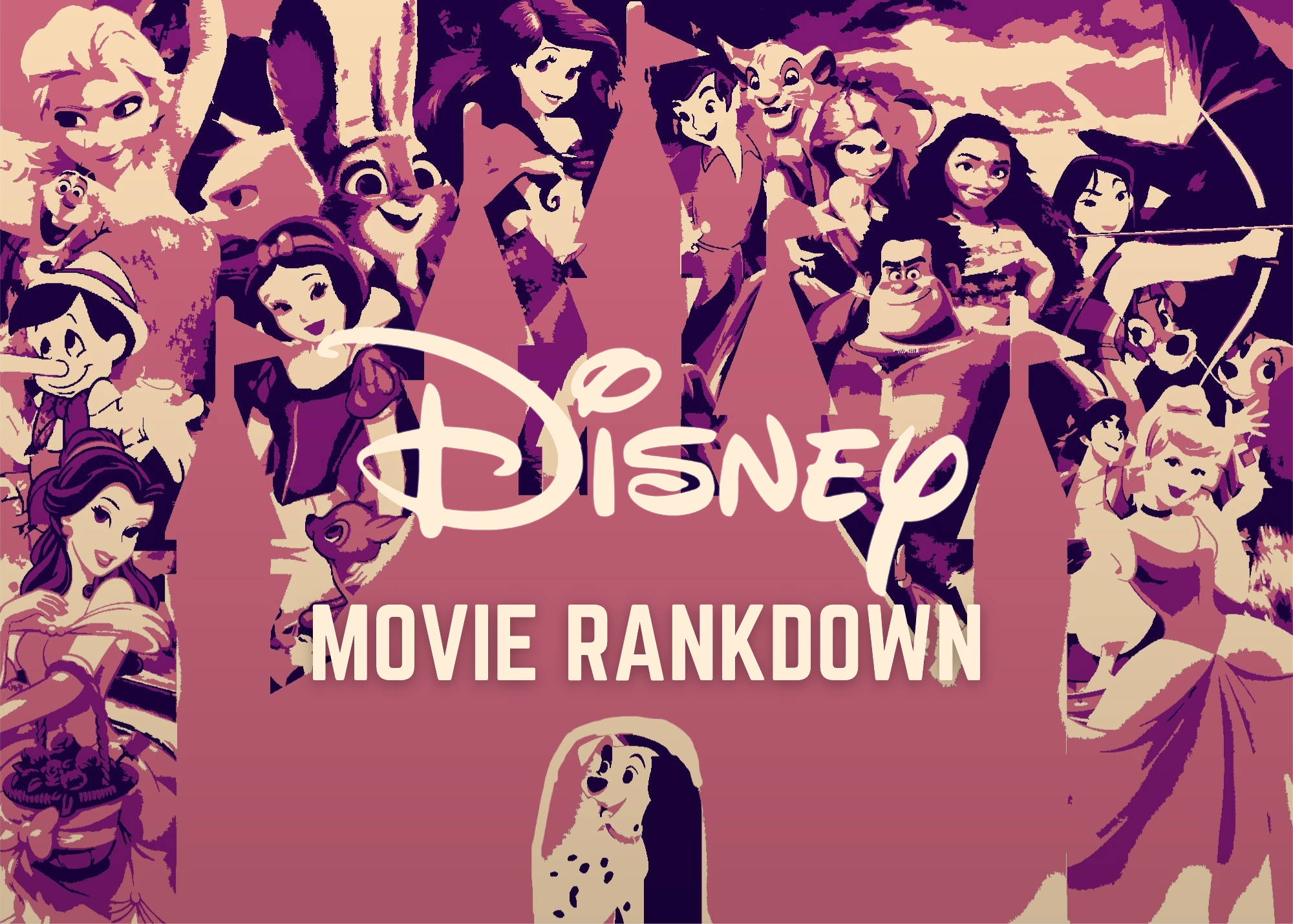
Every Walt Disney Animation Studios Movie, Ranked
Ranking the vaunted studio's century-old control over the universe.
RankdownOn October 16, 1923, brothers Walt and Roy O. Disney founded Disney Brothers Cartoon Studio. In 1926, they settled at 2719 Hyperion Avenue, and in 1929, they renamed themselves Walt Disney Studio. In the early years, the Disney brothers gave the world some of its most beloved and indelible animated characters, like Mickey Mouse, Donald Duck, and Goofy.
But Walt Disney had fiercer ambitions than animated shorts, which he felt prevented the ambitious storytelling and profits needed to grow the studio into the titan he’d envisioned. In 1934, he informed his most trusted staff of his plans to produce his first feature film. After bouncing between numerous stories, he finally settled on an adaptation of the 1812 Brothers Grimm tale Snow White. Despite skepticism from Hollywood, who dubbed the proposed project “Disney’s Folly,” he was undeterred. The budget would be unparalleled, the technical innovation revolutionary, and the risk greater than any a studio had ever undertaken, but it would be worth it.
Snow White and the Seven Dwarfs premiered at the Carthay Circle Theater in Los Angeles on December 21, 1937, to unprecedented raves. It was a cross-generational delight, a box office smash, but most importantly, a new type of cinematic experience that left audiences wanting more, and by God, did they get it.
Nearly 90 years later, we’re still getting it, to the point it’s almost annoying. Disney has undergone many phases, iterations, valleys, and peaks over its history, from the creative heights of the 1940s to the middling slogs of the 1970s to the Renaissance of the 1990s to today, where it feels less like a film studio and more like a money factory.
Whether you’re a certified Disneyphile or a bona fide hater, there’s no denying the mark Walt Disney and his legacy have left on the world. Childhoods have been shaped, Halloween stores have stayed in business, and movie theaters have been full for decades. Pop culture has been defined by its cinematic excellence and its domination of the industry. Disney is the alpha and the omega. It is omnipresent, and potentially omniscient. Disney is everything, everywhere, all at once.
Across 65 theatrical releases, we see the highs and lows, the evolutions and regressions, the commercial cynicism that’s depleted the studio’s creative stores, and the genuine inspiration that conquered the world, and now it’s time to rank them all. Was Disney at its best when it truly cared, has its modern indifference to originality produced carbon-copy classics, or does the needle end up somewhere in between?
Without further ado, here are the 65 Disney theatrical releases (including the latest, Hexed), ranked.
65. Wish (2023)
Wish is bad. Many movies are bad, but Wish is bad.
Where to start? Despite a talented cast, there’s not a single even average performance. Everyone sounds amateurish and forced, rendering Asha one of the most lifeless heroines in Disney history.
How about the premise? People surrender their dreams to a king and never question why only a few ever realize them, which is asinine. Or the setting, where Disney thought naming the kingdom “Rosas” and having the queen call her husband “Mi Rey” counted as representation, all the more insulting considering the kingdom itself is colorless and architecturally dull. The songs, with some of the most confused, unfocused melodies you’ll ever hear, are painful, despite Ariana DeBose’s voice. The Disney references never let the film establish its own identity (truly, there’s a deer named Bambi). But above all, it’s excruciatingly boring? One could write their college thesis on how abysmal this movie is and be so vindicated they’d likely be allowed to skip straight to a PhD.
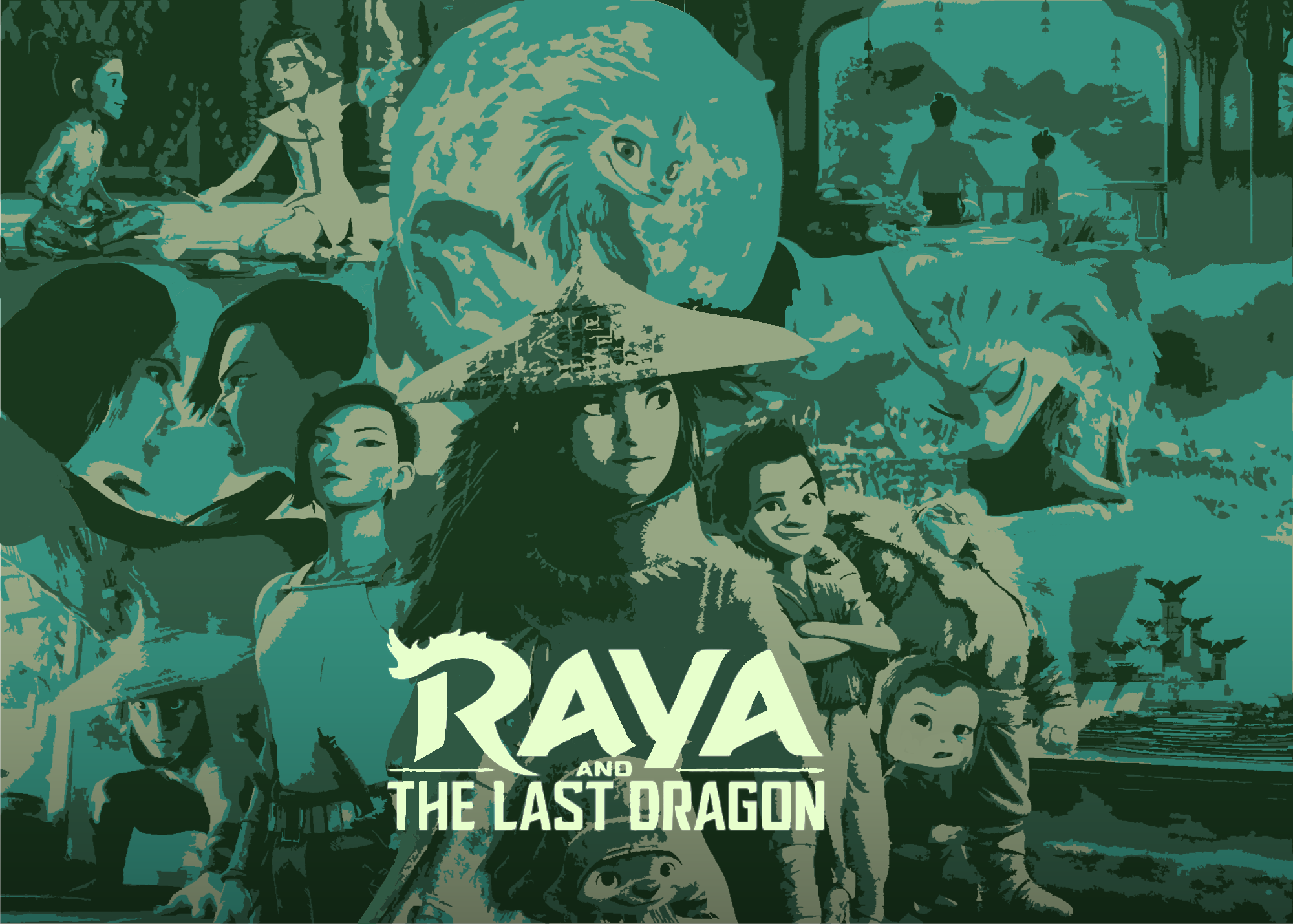
64. Raya and the Last Dragon (2021)
In 2021, at the height of Asian representation in Hollywood, Tinseltown seemed more interested in congratulating itself for celebrating Asian cinema than committing to sustaining its place. It was an embarrassing, insincere attempt by an industry long (and rightfully) accused of cultural insensitivity and exclusion to convince itself it’d evolved, but it was just another fad. Raya and the Last Dragon drew critical raves in the thick of it all, but one wonders how warmly it’d have been received outside that cultural moment, because, oh buddy, is it bad.
We start on Casting Court, where Awkwafina dwells at the peak of her film-ruining powers, then look around to the rest of the lifeless voice acting. We then bear right and pass through Lesson Lane, this time telling us to arbitrarily trust people who betray us constantly and that people can be redeemed because they make self-interested choices at the 11th hour.
We then veer into Visual Valley, where we behold a tragic waste of a compelling premise that would’ve justified color on par with Moana but is instead one of the inexplicably driest movies in the canon. We then emerge on Same Street, where everything is disappointingly familiar for modern Disney: poor character design, lame music, charmlessly anachronistic dialogue, overabundant side characters, and the feeling that it all would’ve been better as a TV show. Raya and the Last Dragon is not only a bad movie, but it’s also insulting and teaches horrible lessons to children.
63. Saludos Amigos (1942)
At 42 minutes long and as a pseudo-documentary package film, ranking Saludos Amigos feels peculiar, but if it must be done, this is where it lands. The documentary sequences feel voyeuristic, with a few troubling descriptors and a general air of “Look how odd these people are.” Considering films like these were designed to quell pro-Nazi sentiments as part of FDR’s “Good Neighbor” policy during WWII, it deserves to be penalized for feeling so out of touch, and not even celebrating the culture it lazily depicts. The animated sequences aren’t distinct or exciting, and despite its length, it's a slog. Eh.
62. The Sword in the Stone (1963)
Conventional wisdom isn’t always just, but The Sword in the Stone ranks near the bottom of these lists for a reason. The animation is unimaginative and colorless, overflowing with muted earth tones that fail to bring the film’s magic to life. The story of a young King Arthur who’s turned into various animals by Merlin to teach him life lessons is repetitive. The qualities Arthur “learns” don’t apply to a larger narrative, rendering Merlin’s presence, and the story as a whole, pointless. By the time he anticlimactically pulls Excalibur from the stone, it’s a snoozer.
61. Home on the Range (2004)
Many questions abound while revisiting Disney’s dreadful 2004 misfire about a trio of cows who set out to save their farm from foreclosure, but the most encapsulating of its awfulness is this:
How the hell did they get Judi Dench to do this?
Layers of unwise choices weigh down Home on the Range, but the casting is ultimately the most burdensome. Dench is superb, but putting Roseanne Barr in the hero role and Cuba Gooding Jr. as the irrelevant sideplot comic relief was a dreadful choice.
The story, though it lacks utility, is workable, but when your protagonist has zero chance to be rootable, your jokes feel forced and rudimentary, and your animation is dated at a time when the art form was constantly evolving, you’re doomed to failure.
60. Frozen II (2019)
Frozen II is pointless, but Disney knowingly produced this shameless cash grab and didn’t even try to hide the greed; that’s just obnoxious. Many movies have no purpose but become amazing experiences: Frozen II is just awful. Kristoff, the first film’s best character, gets relegated to incessantly ring-blocked boyfriend. Elsa is once again on a journey of self-discovery. Anna is there, doing Anna things.
The dialogue is consistently plain, often spelling out things that would be best shown to us, the visuals lack the vibrancy and flair of the original, the songs desperately call back to the first film instead of establishing their own identity, and, most damningly, the big number, “Into the Unknown,” the presumptive heir to “Let it Go,” is… unpleasant, and that’s even with setting aside Idina Menzel’s characteristically abhorrent vocals. It’s a horrid, purposeless mess that barely passes for a movie.
59. The Rescuers (1977)
Fifty years ago, The Rescuers drew positive critical reviews for reasons lost to time. Analytically, it’s one of the studio’s most tedious, colorless movies, making it a visual chore. You wait for some hue to pop, some creative editing to catch your eye, but nothing ever comes. The titular characters, two mice named Bernard and Bianca, sound uninspired and lack personality. It’s like listening to your grandparents try to remember if they wrote everything down on their grocery list, and that lifelessness doesn’t lend much urgency to a child kidnapping.
On the other hand, Penny, the young girl they seek to rescue, is one of the more endearing child characters in any animated movie, with an earnestness that makes her feel not just like a cute kid, but a genuinely good person. Geraldine Page shines as the deliciously campy Madame Medusa, adding some much-needed vigor and ensuring one end of the hero-villain spectrum meets standard requirements. Sadly, that’s not enough to overcome one of the driest stories in the franchise’s illustrious canon.
58. Strange World (2022)
Disney’s 2022 box office bomb was acclaimed for its landmark representation - not only is there an interracial marriage, but the child born from it is Disney’s first openly gay protagonist - but that doesn’t make Strange World a good movie. While its themes of generational trauma, accepting familial differences, being true to yourself, and doing what’s right despite your “legacy” are all common fodder for the studio, we’re at a point where if a movie isn’t offering a new angle, what’s the point?
Strange World gave itself that chance with such diverse representation, but settles for inclusion, not immersion. What’s left is a movie that, while initially gorgeous, becomes visually repetitive, and while the world is certainly strange, there’s a weak, uninteresting screenplay, glacial pacing, and poor voice work dragging it down.
P.S. Jaeger Clade? Worst Disney dad EVER.
57. Make Mine Music (1946)
The idea of animated anthology films isn’t bad, but Make Mine Music doesn’t do much for the cause. It's remarkably inconsistent. Blue Bayou is short and serene, with a heavenly original song, but Without You feels like a cheap rehash. Casey at the Bat will delight baseball fans and work for kids, but Two Silhouettes feels random and poorly-designed. Johnnie Fedora and Alice Bluebonnet is a treasure, but the final act, the story of an ungodly irritating operatic whale who gets mercifully murdered by a delusional impresario, ends things on a sour note. No other film gives such whiplash. Despite a few highs, Disney missed the mark on its first post-WWII entry.
56. The Princess and the Frog (2009)
The Princess and the Frog suffers from wasted potential like no other Disney movie. It’s set in jazzy New Orleans, though you can’t tell aside from the occasional burst of brass from its disappointing soundtrack. Tiana, the first black Disney Princess, simmers with self-actualization, dreaming of becoming a businesswoman. Sadly, Anika Noni Rose’s delicate voice doesn’t capture her fire and determination, resulting in an awkward, forced performance. The voodoo villain opened the door for a new blend of magical villainy, but the concept largely goes to waste, especially under the guidance of Keith David (who, in fairness, is an incredible documentary narrator).
It had the potential, but everything went about as wrong as it could have. Tack on one of the most rushed, disingenuous romances in the studio’s history (not to mention a forgettable team of side characters), and you get a film adored for everything it offered but chastised here for failing to deliver.
55. The Three Caballeros (1944)
Another “Good Neighbor” flick, The Three Caballeros feels painfully dated. Not much one can do, and perhaps that’s not a fair means of evaluating it, but there’s little to recommend anyway. Donald Duck is as endearing as ever, and his dancing partners’ excursions could easily charm kids, but the animation is dry, there are no memorable sequences, and much of the runtime is taken up by overlong live-action dancing numbers. Films that have a distinct style or that try something unconventional should make that unconventionality feel purposeful. The Three Caballeros does little to justify its approach, and instead makes us long to move on to the studio’s superior offerings. It’s not horrible, but it’s certainly not great.
54. Melody Time (1948)
The merciful end to Disney’s anthology films comes with Melody Time, an unfocused, uneven string of vignettes that vary wildly in quality. Bumble Boogie, set to Rimsky-Korsakov’s Flight of the Bumblebee, is a fun, imaginative example of what Disney can do when its greatest minds have the freedom to create and explore, but it’s the only engaging installment.
Outside that, Little Toot falls flat, but gives us another spectacular delivery by The Andrews Sisters. Blame It on the Samba starts well, matching the music with some captivating use of color, but it then pivots to a derailing live-action blend. Johnny Appleseed and Pecos Bill have some gorgeous animation, but each stretches too long. Once Upon a Wintertime and Trees are superfluous. Disney had a good idea with this type of production, but the execution, once again, faltered.
53. Brother Bear (2003)
Brother Bear isn’t bad. Frankly, its most damning trait is that you could leave it at that and it would suffice. Name a song. Name a character. Name a scene. If you strain, stretch, and drill into the deepest recesses of your memory, you may come up with something, but it’s unlikely.
It’s just flat. The story had potential, but even for a Disney movie, the ultimate conclusion that a human being would willingly become a bear out of guilt and brotherhood for the young bear whose mother he killed strains credulity. The movie could’ve earned that emotional swell, but it never made a concerted effort, so the one thing that could’ve saved it doesn’t land. Meh.
52. Atlantis: The Lost Empire (2001)
The biggest issue with the studio’s mildly adored box office bomb is that, on paper, it’s only a maybe. It has Michael J. Fox, some really riveting animation, and a generally intriguing premise, but under even the slightest scrutiny, it falls apart. The cardboard cutout sidekicks who betray their mercenary ways and join Milo’s cause are the most insipid teammates a movie of this kind can offer; the film is never funny or romantically convincing, and, of course, there’s the greatest sin of all: Atlantis only remains lost for a short while, and the rest of the time is spent bellyaching over the ethics of either abandoning an ancient civilization to ruin or slaughtering them for profit. Perhaps a tad dark for a kids’ movie and too binary for adults. Meh.
51. Hercules (1997)
Heading into 1997, the Disney Renaissance had followed a simple but effective formula: music, comedy, and romance aplenty, yes, but everything was straightforward. Hercules upended that with a mishmash of musical selections, from sappy ballads to roaring gospel, plus anachronistic dialogue and period-accurate animation. It’s admirable to try something new, but it only scores points if it’s actually good. “Go the Distance” fits thematically but lacks the soaring quality of the studio’s signature numbers, and the other music is ill-fitting and obnoxious. The animation, evocative of ancient Greek art, lacks dimension and wastes some of the highest-upside settings ever, and the humor is too childish even for youngsters.
It partially makes up for this with a likeable protagonist and James Woods’ vocal performance as Hades, along with a rare but desperately needed splash of color and majesty, but Hercules is mostly a disappointment that doesn’t earn its place among the Renaissance classics.
50. Ralph Breaks the Internet (2018)
Fans of Wreck-It Ralph largely decried Ralph Breaks the Internet for betraying its central characters, Disney’s meta self-congratulations, and largely feeling like an endless ad. Reality? It isn’t so much that those points are universally true, more that their application in the film is inconsistent to the point it’s maddening. Ralph is arguably the most grating protagonist ever in a Disney movie, which is aggravating since his arc has the potential to impart valuable lessons about insecurity and friendship. Unfortunately, his fixation on Vanellope is obsessive and creepy.
The Internet humor feels like an amateur comic appealing to the lowest common denominator, though it occasionally hits. The Princesses are good for a conceptual laugh, but you can never tell if it’s celebratory or a self-aware send-up. It’s simply a jumbled mess of a movie, mildly enjoyable in the abstract but frustrating in the specific, all while being overlong and poorly paced.
49. Big Hero 6 (2014)
It’s difficult to pin down what made people collectively lose their shit over Big Hero 6 in 2014. Perhaps its loose adaptation of a Marvel supersquad at the height of the MCU? Its Iron Giant-esque central narrative between boy and machine? Who knows, because it’s not good. It kickstarted the overly polished animation that defines this new, artificial era for Disney, the actual “6” are generally annoying and/or underdeveloped, the “surprise” villain is telegraphed, it’s not a moving display of grief because the brotherly dynamic feels interchangeable, it’s not funny, and the team never feels cohesive because they rally behind someone with whom they don’t have an actual bond.
What else? Oh, it’s poorly paced, particularly in its sluggish, overlong final act, the voice performances are mostly unrefined and lifeless, especially Ryan Potter’s featureless turn in the central role, and the entire movie feels derivative, specifically with Baymax, the film’s supposed calling card. He has a few chuckle-worthy moments, and Scott Adsit gives it his all, but up against WALL-E, the Iron Giant, or ET, he’s a fairly pedestrian entry into the innocent nonhuman archetype, lacking a distinct personality or enough of any one characteristic to make him stand out. Yet, despite its flaws, it made $670 million and took home the Animated Feature Oscar. Disney has worse films, but this is not a good movie.
48. Dinosaur (2000)
Dinosaur’s live-action animation felt groundbreaking to young eyes at the dawn of the millennium. Surprisingly, it holds up well, even if it’s a tad lifeless. Dinosaur is entertaining enough, but its narrative feels too compact, like it had more to say and do than the runtime allowed. Kron is a “villain” the movie doesn’t know what to do with, and the lemurs lose relevance so early on that it all feels like a cheap attempt at recapturing The Lion King’s magic. Yet, the biggest culprit is the inconsistent voice casting; the characters never feel unified. Still, Dinosaur is a solid flick, even if it’s underwhelming and lacks rewatch value.
47. Bambi (1942)
Bambi benefits from its age and status as much as it suffers, but in doing so, it forces reflection on the idea that simply because something is accepted as truth does not make it so. Too often, people absorb media having already decided what to make of it, largely based on the very conventional wisdom that drove them to consume it in the first place. Hence, Bambi usually sits near the top of Disney rankings, but it’s fine to accept that the metric by which we’d view it reverentially no longer exists.
The story, like many early Disney entries, is lacking, but to a greater degree than its contemporaries, making it a slog even at a mere 70 minutes. The voice acting of Bambi’s forest friends is so grating you’ll be tempted to watch the opening act on mute. Yet, over 80 years after its release, Bambi remains one of the most gorgeously drawn animated films you’ll ever see, and the undeniable care of its artists makes it a treat to revisit.
46. The Great Mouse Detective (1986)
As a bounceback from the critical and commercial disaster of The Black Cauldron, The Great Mouse Detective did its job. It utilized CGI in its thrilling final sequence as Detective Basil and co. chase the villainous Professor Ratigan to the top of Big Ben, earning it praise for shaking up a stale studio. Why else did it earn such raves?
Who knows.
It’s not bad, just mundane. The central plot, that of a young girl searching for her kidnapped father, gets washed out quickly and feels more like a cinematic necessity than a true story. There’s no real mystery for the detective to solve, so it doesn’t hold your attention. Basil is appealing enough, albeit a tad smarmy, and Vincent Price shines as Ratigan, but what else does it offer? The climax has aged remarkably, but The Great Mouse Detective doesn’t pop visually, narratively, or thematically. It’s simply fine, but on the boring side of inoffensiveness.
45. Chicken Little (2005)
Chicken Little starts well. Its introduction, which mocks previous Disney kickoffs, is worth a chuckle, as is the opening sequence in which the titular character’s infamous warnings about the falling sky send the town into chaos. Beyond that? While Zach Braff actually proves likable as Chicken Little, and it’s always nice to hear from Joan Cusack and Steve Zahn, the movie’s story and ultimate lessons are lacking. It’s a shame, because the idea that children need to be honest with their parents and that parents must take criticism in stride is invaluable, but the movie doesn’t legitimize it. By the time it becomes reliant on cutesy musical pop culture references and drops an underdeveloped alien kid from the sky, you’re aching for the end.
44. Fun and Fancy Free (1947)
The package films are the most difficult to critique because they, by definition, aren’t complete films. Fun and Fancy Free is a rollercoaster ride, starting slowly with the opening Bongo short about a circus bear that escapes to the wilderness and falls in love. Eventually, that story finds its footing, turning into a charming and strangely humorous romantic slapfest, carried by the catchy “Say It With A Slap.” Sadly, we then transition into a middling retelling of Jack and the Beanstalk. It’s hard to go wrong with Mickey, Donald, and Goofy, but the constant interruptions by the creepy puppets at the weirdest birthday party ever sink things too low to recover. It finishes well, but with a back half that doesn’t honor the quality of the first, this is where Fun and Fancy Free lands.
43. The Aristocats (1970)
One of the OG “animals find their way home” movies, The Aristocats fails to match the quality of its contemporaries or hold up against its successors. Phil Harris has a smooth, cozy voice that contrasts O’Malley’s origins and arc; Duchess has the personality of a wooden plank, and the three kittens lack individuality, leaving them undeveloped and more of a nuisance than anything else. The storybook animation doesn’t align with the film’s emotional aspirations, but most of all, it isn’t memorable. There’s no sense of adventure, no sense of the magnitude of their journey, and no sense of how attached the cats are to Madame and vice versa aside from the fortune she intends to leave them, which is not a great way to give the film emotional weight. If not for a few decent jazzy tunes, it’d be lower.
42. Moana 2 (2024)
Moana 2 was seen as a pointless inevitability upon its release (though not as much as the reviled live-action remake of the original). Disney could’ve shocked us all by producing a sequel that outdid, or at least matched, the original. Instead, they churned out a stale follow-up that violates every rule of making a good sequel: avoid redundant side characters, don’t alter your protagonist’s personality, don’t rehash the entire narrative, etc.
Granted, Moana 2 isn’t bad; it’s just aggressively unnecessary. Moana once again is on a quest to right a wrong, the songs are a downgrade and rely heavily on Lin-Manuel Miranda’s irritating style, and there’s a crew, none of whom impact the story or have a personality. Moana’s become irritatingly quirky, there’s a whiny little sister for no apparent reason; there’s nothing new except what doesn’t work, and what’s more of the same is fine, but that’s all. Moana 2 amounts to being the median Disney movie: if you’re better, you’re good. If you’re worse, you’re somewhere on the slopes.
41. Fantasia 2000 (2000)
It’s a simple but brilliant concept: use the magic of animation to enliven the most cherished pieces of classical music. Fantasia 2000 tries to justify revisiting this concept 60 years after its predecessor worked wonders, but fails - and the worst part? It knows it. Recycling The Sorcerer’s Apprentice is bad enough, but the other entries are uneven and fail to reach the highs of its predecessor or stand on their own. Rhapsody in Blue’s intertwined illustrative style had potential, but it misses the mark and drags. The best entry, an adaptation of “The Steadfast Tin Soldier” set to Piano Concerto No. 2, almost convinces you this sequel was worth making. Sadly, the unnecessary, disingenuous celebrity intros and occasionally garish animation make Fantasia 2000 both a bad sequel and a disappointing standalone movie.
40. Zootopia (2016)
Zootopia grossed $1 billion and won the Academy Award for Best Animated Feature on the Disney name and an ingenious idea. Children should learn that you aren’t defined by what you are or where you come from, and the animal kingdom analogies are, on paper, inventive and fun. Zootopia has some great voice casting, a wonderfully conceived universe, and compact conceptual messaging, but it fails to tie everything together in a satisfying, measurable way.
Unfortunately, its dialogue and storytelling are so on-the-nose that the film ultimately feels like it’s telling you the sky is blue and expecting you to hem and haw. Kids are sharper than many movies believe; that’s why the greatest kids’ films, the ones that stand the test of time, have complexity. Zootopia has zero complexity; it nailed the structure, but the building itself is empty and plain.
With the humor and profundity of early Pixar, Zootopia could have been a classic. As it is, its overlong flatness and bland protagonist (voiced by a typically charisma-free Ginnifer Goodwin) sink it to a decent kids’ movie that doesn’t support itself.
39. Pocahontas (1995)
If nothing else, Pocahontas actually feels well-intentioned, despite what the Internet would tell you. While there’s certainly an issue to be taken with mainstream media’s propagation of the idea that Native Americans had a mindless, uniform worship of nature, and the true story of Pocahontas deserves its due, Disney at least tries to legitimize the idea that we’ve failed to respect or understand our nation’s native people. For 1995, it’s as good as we can expect.
How? Well, with beautiful animation and an inspired central performance from Irene Bedard, for starters. Pocahontas is enlivened by Bedard’s naturalness, but the character is intelligent, wise, and capitalizes on her agency instead of letting her ideals become whispers in the wind.
Although lacking visual diversity, the settings are warm and serene. Its soundtrack is a bit tuneless, but its highs, namely “Colors of the Wind,” carry the film well.
So, what’s the problem? It’s simple. Pocahontas is boring. Yes, Mel Gibson, who lacks the tonal warmth and range to craft a convincing character arc, was an atrocious choice to voice John Smith, and the romance is painfully unconvincing. But even if all these things had gone right, Pocahontas is one of the most uninteresting, unengaging movies you’ll ever see. Is it offensive? No group is monolithic, but for many, yes, and that’s worth noting. But its greatest cinematic offense is that it’s just as dull as a doornail.
38. Tangled (2010)
Tangled isn’t bad. The most apt adjective, sadly, is tangled. Narratively, Rapunzel’s story isn’t purposeful. It’s not metaphorical self-discovery, but literal self-discovery, which isn’t interesting because we already know who she is. Mandy Moore is splendid; you couldn’t have asked for a better voice for a Disney Princess. Zachary Levi, on the other hand, is fine, and Donna Murphy lacks a distinctive voice to make Gothel a tangible villain. “I See the Light” is a good song that feels misplaced in a movie with a baseless romance (truly, what actual reason do Rapunzel and Flynn/Eugene have to fall in love?); the other songs range from unnecessary and mediocre (“I’ve Got A Dream”) to dreadful (“Mother Knows Best”). It’s watchable enough, but the quality varies so much within each element that it truly lives up to its name.
37. Bolt (2008)
Bolt underperformed and has been lost to time. Why? It competed directly with Madagascar 2 at the box office and got overshadowed in the animation sphere by WALL-E. The first is attributable to IP, but the latter is thanks to being a jack of all trades and a master of none. Bolt is charming, but not endearing. It’s humorous in concept but rarely in execution. Its performances are serviceable, but none are memorable (and John Travolta was a questionable choice for Bolt). Its nadir is the introduction of Rhino, the completely pointless hamster, who, by being pointless, is inoffensive. Its apex is the reunification of Penny and Bolt, mildly moving because we all love our pets, not because the film itself legitimizes their bond. Overall, Bolt is a good, albeit forgettable, movie.
36. Oliver & Company (1988)
Released in 1988, Oliver & Company is the most unapologetically ‘80s animated movie ever: a percussion-funk score, comic-strip animation, deification of New York, and the musical stylings of Huey Lewis, Billy Joel, and Bette Midler (the latter two also provide voice work). In these ways, it could feel dated, but there’s something oddly refreshing about visiting it nearly 40 years later. It’s a fairly straightforward adaptation of Oliver Twist, so Disney relied on its immersion in the era to carry it, to mixed results. It's fun to look at and listen to, with one of Disney’s greatest soundtracks. It has a likeable cast of characters, particularly Dodger, and Jenny, the young girl who adopts kitten Oliver, is appreciated for her inoffensiveness. On the flip side, its lack of narrative inventiveness makes it a little dry, and it takes a bit to get going, considering the story doesn’t offer much. Split the difference.
35. Lady and the Tramp (1955)
I’d be remiss not to mention that, for all the mythical villains, oceanic monsters, and wicked stepmothers, no Disney character is as repugnant as Aunt Sarah. Seriously, who house-sits for people and takes their pets to the pound?!
Anyway, Lady and the Tramp is mediocre and generally innocuous, inspiring little sentiment. The highs are visual; it is truly the most beautifully drawn film of its time, particularly the early scenes in the family’s front yard. You truly get a sense of why Lady is not only devoted to her family, but genuinely happy in her fenced-in paradise.
On the other hand, it never sinks to a true low; it simply meanders narratively, never picking up steam until the climax when the dogs chase down a rat breaking into the house, which is comparatively tame and too visually dark to be exciting. Lady and Tramp themselves are uncontroversial but also don’t inspire adoration. All in all, a harmless film, perfectly suitable for a random rewatch, but not particularly distinctive.
34. Treasure Planet (2002)
Why did Treasure Planet lose $74 million? Well, it’s a steampunk movie, which isn’t exactly an audience favorite. It wasn’t released in direct competition with other big movies, but competing with Harry Potter and the Chamber of Secrets and Die Another Day in the same month didn’t help.
Ultimately, it lacks the “Wow!” factor. Treasure Planet is good, but for every asset, there’s a drawback. Joseph Gordon-Levitt charms as Jim, a young explorer, but no one else pops, and some of the cutout characters are irritating (namely B.E.N., the C-3PO rip-off). It’s undoubtedly a grand adventure, but its color palette is an acquired taste. James Newton Howard delivers a capable score, but the big ballad, the Goo Goo Dolls’ John Rzeznik’s “I’m Still Here,” feels out of place.
It takes a while to find its stride, and when it does, it's as entertaining and wondrous as you’d imagine. Unfortunately, it’s too inconsistent to be an elite Disney movie, and the more you analyze it, the easier it is to understand its failure.
33. Hexed (2026)
Hexed is the type of movie with which audiences will have a complicated relationship. It’s good enough that its shortcomings aren’t actively frustrating, but they’re apparent enough that they drag the movie down. It fails to break away from the awkward, pseudo-quirky teenage girl archetype, uses a contrived collection of Top 40 hits as a soundtrack, and generally feels like it passed through a corporate filter that sapped the originality and left a visual spectacle that sought to distract us from its thematic woes.
It’s a shame, because it was so close. You ultimately have a good time in its eye-catching, energetic final act, and it’s saved by the film finally realizing that it’s telling Alice’s story and not Billie’s, but Disney’s too afraid to take the necessary risks for this to be a great movie.
32. Cinderella (1950)
After 13 years of swings and misses following Disney’s debut with Snow White and the Seven Dwarfs, Cinderella changed the studio’s fortunes. In many ways, it is Disney’s defining film even 76 years after its release, but that title, while understandable, isn’t fully earned. The opening act drags as the bothersome mice dominate the story, and the overarching narrative seems completely lost. Thankfully, once it gets going, we do get a healthy dose of the Disney magic we all know and love. Marc Davis’ team nailed Cinderella’s signature look for the royal ball, and while the idea of falling in love after a single dance and having it fix all your problems feels far-fetched on the one hand, considering Cinderella is essentially a saint getting abused by her wicked stepmother, getting hitched is really all she needed.
31. Alice in Wonderland (1951)
Pinning down Disney’s bonkers adaptation of the beloved Lewis Carroll book is an interesting task. It lacks a traditional narrative, playing like an actual dream: a succession of loony sequences from which we wake and ponder the insanity of our subconscious. It’s a titanic strength as much as a damning weakness. The variety keeps you on your toes and lets the movie land some winsome zaniness, but the lack of structure makes it reliant on all the eccentric characters Alice encounters on her adventures. In that way, it’s hit or miss and becomes a tad boring, but the movie succeeds thanks to its heroine. Alice is charming and funny, quick to hilariously melodramatic reactions but armed with a remarkable ability to recover from some massive inconveniences with an endearing “Aw shucks” attitude.
30. The Adventures of Ichabod and Mr. Toad (1949)
By 1949, Disney was wrapping up its initial experimental phase: vignettes, classical music, and general innovation. The final bow was Adventures of Ichabod and Mr. Toad, a two-part flick adapted from The Wind in the Willows and “The Legend of Sleepy Hollow.” Its magnum opus is the final sequence where the Headless Horseman chases Ichabod Crane on horseback through the forests of Sleepy Hollow, wildly waving his sword to claim a living head at last. It’s as good as advertised, and it’s better for a film to peak late than early, but the rest of the product is replacement level at best. It’s got a decent dose of unpretentious quirk, and that does wonders during the Mr. Toad segment, but overall, the movie is a perfectly fine, satisfyingly adequate entry, no more, no less.
29. Wreck-It Ralph (2012)
Adapted from nothing, Wreck-It Ralph is one of the most refreshing Disney movies: an original story with new characters and vital ideas. There’s nothing outstandingly negative to note: the voice acting ranges from usable to great, the universe is vivid and imaginative, and its blend of digital nostalgia and action-packed storytelling makes it a family film that can bridge gaps and carry enormous rewatch value. Why, then, is it not higher?
Many Disney movies, particularly the older ones, feel like they needed more time. Wreck-It Ralph feels overwhelming and could’ve been shortened a smidge. But the real issue is the muddied thematics. Ralph’s journey is one of self-acceptance, where labels prove arbitrary and can define us only if we let them. Sadly, the shift to Vanellope creates a narrative split that hurts the pacing and ends the movie on an unsatisfying note. Ralph closes by telling us that his young friend’s adoration affirms his character, which betrays the autonomy the movie sets him up to achieve. Messaging is a common Disney issue, and it unfortunately keeps Wreck-It Ralph from genuine greatness.
28. Tarzan (1999)
Tarzan looks great on paper. A lush jungle setting, natural incorporation of animals, a global megastar at the musical helm, and a familiar, famous story. Sadly, those things also work against it. Visually, we’ve visited these things many times before, and Tarzan doesn’t quite measure up. The animation lacks contrast, the animal sidekicks pale in comparison to Disney’s best (and the chronologically close Timon and Pumbaa), and the music, despite the now underrated “You’ll Be In My Heart,” feels more like a watered-down late-stage Genesis album than a Disney soundtrack.
The story lacks momentum and largely feels like it’s simply a collection of events. The connective threads ordinarily present, like using character development to transition from one scene to the next, don’t exist. We only have a rudimentary establishing of who and what everything is, almost like we’re simply waiting for Jane to show up and romance to blossom. By the time you refocus for the thrilling final act - truly one of Disney’s best and most exhilarating - it’s too late for Tarzan to be a great movie. As it is, it’s decent, flirts with being genuinely good, and ends up as simply inoffensive.
27. Robin Hood (1973)
By 1973, the legend of Robin Hood had been told only a few times, most notably in 1938’s Errol Flynn swashbuckler. Now, 35 years after Kevin Costner’s megahit and suffering 3 dreadful adaptations in the last 16 years, it’s difficult for Disney’s adaptation to feel truly fresh. As such, we take it at face value, and there’s good value here. Peter Ustinov gives one of the most zestful performances ever as the absurdly corrupt Prince John. While the animation feels commonplace and uninspired, the characters themselves are beautifully designed and expressive. We like Robin Hood beyond the concept of who he is, root ardently for his reunion with Maid Marian, and take warmly to the cast of characters he encounters along the way, even the usually irritating children. It slows horrifically as it labors towards its climax, and it’s not particularly inventive in execution, but the escape from the castle holds up after half a century, so it all ends on a high note.
26. The Many Adventures of Winnie the Pooh (1977)
The Many Adventures of Winnie the Pooh is hard to assess. Do we enjoy it on merit or because we’ve become so familiar with this beloved group of friends that any chance to visit will pass the test? Our longstanding bond with Christopher Robin and his friends in the Hundred Acre Wood plays a role, but Adventures is a cozy comfort film regardless. It has a delicate touch and a hospitable aura, which goes a long way when the string of vignettes slows down. It’s not the most anything, or the least anything, but it’s very much a worthy thing, with the warmth we sometimes need most and a reminder of why these iconic characters have captured our hearts and imaginations for decades.
25. The Little Mermaid (1989)
The grand kickoff to the Disney Renaissance, The Little Mermaid ushered in an era of unabashed indulgence and musical grandiosity. As a start to better things yet to come, it’s definitely commendable, but there’s more to caution about than to recommend.
Jodi Benson delivers a wonderful performance as Ariel, but her singing leaves much to be desired. The songs are memorable, but the story around them, while compelling conceptually, isn’t executed with the precision of Disney’s superior efforts. The first act, which establishes Ariel’s individuality and longing to join the human world, falters when she pivots into a lovesick teenager willing to throw it all away for a cute guy she hasn’t technically met.
Factor in the confusing pacing that delays the rising action but rushes the climax, and you’re left with a frustrating protagonist driving a scrambled, unsatisfying narrative. It’s undoubtedly entertaining, which carries it a long way, and you can see inklings of the genius Disney would later unlock in their peak era, but they’re unpolished, uneven beginnings.
24. Frozen (2013)
Evaluating Disney’s 2013 behemoth is difficult. It was such an unstoppable cultural phenomenon that it’s hard to separate its domination of the zeitgeist from its quality. As a first-time viewer, it’s aggressively decent in that, at its highest highs, it makes a concerted effort to capture the forgotten magic of the Disney Renaissance. At its lowest lows, it feels like it’s bashing you over the head with its resignation to mediocrity. Oddly, the moments we adored, like Elsa’s putting the past in the past and letting it go, fall flat (thanks to unrefined vocals and an unpleasant melody). But when Frozen finds the occasional humor in Olaf, who would otherwise be only a cheap merchandising ploy, delivers a spellbinding visual assault, or uses a charismatic Kristoff to upend the genre’s tropes, it’s as good as advertised.
23. Meet the Robinsons (2007)
2007 was weird. Music was weird, fashion was weird, but weird in the most ordinary, unmemorable way. In many respects, Meet the Robinsons falls into that bizarre wasteland of mundanity; the zany family is underdeveloped, the animation feels archaic even for the time, and the actual story lacks stakes or momentum.
Thankfully, it hits when and how it matters most. Penned with a uniquely personal touch by director Stephen Anderson, Meet the Robinsons feels like a more full-bodied take on the orphan archetype, transcending the trope to create a sympathetic, authentic protagonist in Lewis. The payoff is debatable, and the steps leading to it aren’t always compelling (though funnier than most Disney movies). Still, the subtle emotional highs and overall approach recommend a movie that was underappreciated in its time and remains largely forgotten.
22. Zootopia 2 (2025)
It could’ve been nothing more than a cash grab sequel, but Disney actually put some elbow grease into Zootopia 2. Its themes of ethnic erasure, trust and companionship, recognizing the value of differences in relationships, and confronting trauma are handled with greater care and substance than the ones found in its predecessor, with more natural dialogue and thorough exploration. Ginnifer Goodwin steps up her game, and while the unwise addition of Fortune Feimster as an obnoxious beaver is a drag, Ke Huy Quan and Andy Samberg add wonderful work to round out the main cast. The romance between Nick and Judy is ham-fisted, unnecessary, and a betrayal of both characters, but that expected contrivance is mostly forgivable. Why? Because Zootopia 2 is significantly more entertaining than the first, though even without comparison, it’s a worthy, though not amazing, Disney flick.
21. Sleeping Beauty (1959)
Sleeping Beauty wasn’t particularly acclaimed in 1959. Critics praised its distinctive animation style, use of color, and the side characters, but were underwhelmed by the familiar plot and banal leads. They weren’t wrong in a vacuum, but nearly 70 years later, Aurora is one of the better Disney princesses. She has the personality of styrofoam and is given nothing to do but sing in the forest and sleep, but her arc actually makes more sense than most. She’s been cooped up with three old women her entire life, forbidden to meet another person. Of course she’d fall for the first guy she met, prophetic dream or not. You really feel for this girl and root for her to wind up with plain, boring, but dependable Phillip, which makes up for her common personality. The movie is as technically enchanting as advertised, and Maleficent and the good fairies are treasured characters, but the film slows drastically after Aurora returns to the kingdom, and the climax is uninspiring, so it can go no higher.
20. Moana (2016)
Moana has a lot going for it: one of Disney’s most winning soundtracks and a willingness to capitalize on its Polynesian setting, which makes it one of the most spellbinding movies in the canon. The foundational story is a compelling, oceanic adventure, and Moana is a complete character capable of leading her own film. The problem is that Disney chose to rely on The Rock, the millennium’s most obnoxious screen presence, and relegated Moana to a sidekick in her own movie. Once she finds Maui, it becomes more his story than hers, which slows the pacing, saps the adventure, and eliminates the thematic intrigue. It’s still a good movie, has decent rewatch value, and its use of color and music is inspiring, but one wrong narrative choice sank what could’ve easily been the number one film on this list.
19. Snow White and the Seven Dwarfs (1937)
Evaluating the first of anything can be tricky. Sometimes, there’s a more objective analysis, but other times the derivatives muddy the waters. Everything Disney is it owes to Snow White, and it perhaps deserves credit for that (though one could argue that’s true for as many good reasons as bad). Yet its greatest triumph is its success as a standalone film. Snow White is a tad mousey, and the romance with the Prince is unneeded considering he bookends the movie, but the film remains a delight. The dwarfs are individually endearing and collectively a well-executed band of sidekicks. Snow, for her part, kicks off the Disney Princesses with at least vague likeability; we get a few good songs, and the animation holds up remarkably well. It shows its age as we ponder the pacing issues and overextended sequences, but Snow White still stands tall as an effective and iconic movie.
18. The Black Cauldron (1985)
A colossal failure that nearly destroyed Disney animation, The Black Cauldron is an oft-forgotten but vastly underrated dark fantasy. It falters halfway through; when the pacing falls off, we endure shrill voice acting and a stilted narrative. If you can push through that lull, you’re in for some of the most vivid, genre-forward animation the studio ever offers, and one of the few redemption arcs in a movie that actually works. It may not be the most memorable for all the reasons we’ve come to know Disney for, but it’s everything you could ask for an animated movie to deliver considering the difficulty of capturing this genre through the medium. It’s not the most iconic, and you can understand why the film struggled in 1985, but those who’ve re-evaluated it favorably are right.
17. Peter Pan (1953)
Anyone with a shred of professional experience can tell you: it’s easier to take a leap than to close a gap. In higher parts of a ranking, small details separate one movie from another, and that nitpicking makes or breaks placement. Peter Pan is fun, with a rootable (though somewhat tiresome) hero, a deservedly iconic villain, and the sort of magical whimsy that makes a children’s classic. It has to make us as eager to venture to Neverland and explore its swashbuckling joy as understanding of the Darlings’ desire to return home, and it strikes that balance masterfully. Sadly, this is one of the Disney movies that sorely needed more time, leaving a feeling of emptiness where other flicks feel fully realized. On top of that, this is the peak of Disney making teenage girls sound like middle-aged Victorian women, and listening to Wendy is just weird. Make no mistake: this is a strong entry, but its successes also make us lament how amazing it could have been.
16. Aladdin (1992)
Aladdin is a great kids' movie, no doubt. Aladdin himself is equal parts charmingly mischievous and relentlessly noble, making him the perfect vessel for every child discovering the world and the importance of respecting yourself, warts and all. Princess Jasmine is a phenomenal role model for young girls, and that feels as tangible post #MeToo as it did in 1992, when cinematic feminism was not a Hollywood strong suit. Jafar is fabulously venomous, and the animal sidekicks are as adorable and/or endearingly irritating as ever. It’s steeped in astonishing color, has striking visual sequences, and “A Whole New World,” while overrated, remains a Disney classic. Sadly, its other musical offerings and underdeveloped side characters disappoint, so here it lands.
15. The Jungle Book (1967)
The Jungle Book is greater than the sum of its parts. Mowgli is a rootable protagonist, but we’ve had more notable central characters. Bagheera and Baloo offer plenty of guidance and friendship, but other companions are more memorable. Shere Khan, voiced brilliantly by the great George Sanders, is a solid antagonist, but we’ve been dazzled by more venomous villains. The musical numbers are a triumph of music but a visual letdown.
Yet, The Jungle Book is one of Disney’s finest offerings, largely because of its story. It’s important that children learn to accept that it’s good to connect with those in other groups while still honoring and embracing who you are, and Mowgli’s initial stand against Shere Khan when the Bengal tiger finally finds the young man-cub is an honorable, memorable Disney moment. Add lots of fun throughout each chapter of this charming story and some beautifully drawn sequences, and you have one of the most rewatchable, enjoyable movies in the canon.
14. Encanto (2021)
Encanto became a surprise smash for Disney in 2021, failing to impact the box office due to COVID but taking the world by storm on Disney+. Five years later, it’s a “your mileage may vary” experience: if you still adore Lin-Manuel Miranda’s “old white people can like rap too” style of songwriting, it remains enchanting. If not, its soundtrack is the weakest component. “We Don’t Talk About Bruno” is worthy if not outstanding, and “Surface Pressure” is one of the most aggravating movie songs in recent memory; it’s the controversially Oscar-nominated “Dos Oruguitas,” a restrained, somber guitar ballad, that is the film’s musical high point, a testament to what makes it work so well.
Family dynamics are not new fodder for Disney, but Encanto tackles a complex story with grace and nuance. Mirabel is a well-tempered protagonist who serves as a fantastic vessel for familial disappointment and generational splits, and the Madrigal magic is a beautifully imagined means of connecting various identities under a common pressure that unifies as much as it divides. Add lively animation and spirited voice work, and you have the finest Disney film in a long time.
13. Fantasia (1940)
Cinematic sentiment is often shaped by novelty and nostalgia. Fantasia, fueled by innovation - animated vignettes set to iconic classical pieces - opened to rave reviews in 1940. Eighty-six years later, we understand how much novelty and nostalgia influence critical sentiment and analyze whether its initial praise was warranted.
The results? At its best, during Night on Bald Mountain and The Sorcerer’s Apprentice, Fantasia is a spellbinding monument to Disney's creative brilliance. It’s incredibly vibrant, bursting with the imaginative whimsy and radiance that caters to young and mature audiences alike. The stories are equally gripping and striking, and you’re likely to associate some of the most revered works in classical music with Disney’s imagery.
At its worst, during The Pastoral Symphony, it’s a hyperextended chore that fails to fulfill its potential or justify its premise. The imagination remains, but the execution leaves it in the cold with horrid pacing and narrative disconnect, and you wonder why the film runs 126 minutes.
All in all? A very good, occasionally great movie that oscillates between utter genius and crippling banality that you respect more than you like, but man, those highs soar like you can’t believe.
12. Winnie the Pooh (2011)
In 2011, Disney revisited A.A. Milne’s Hundred Acre Wood for a brief respite from the dreary creative lull that produced some of the studio’s most middling, disposable entries. Sometimes, a return to basics can lay a solid foundation for better things to come, and going with a traditional style certainly did the trick. It starts wonderfully, instilling the warmth and sincerity so many kids’ movies lack, and the voice actors transition seamlessly into their iconic roles. Sadly, once the first act passes, you realize a full-fledged story isn’t going to play out. At 53 minutes (excluding the ending credits), it’s regrettably short: its one glaring weakness. Had it been given room to breathe and develop, this could’ve cracked the top five.
11. Pinocchio (1940)
Let’s address the donkey in the room: the idea of sending “disobedient” boys to “Pleasure Island” is the most horrifying concept in the history of the world.
That aside, Pinocchio has more than earned its place in the Disney pantheon. We’re well and truly charmed by the titular puppet longing to become a real boy, but everything around him is just as well-executed. Jiminy Cricket, though not particularly skilled at his job, is enchanting as Pinocchio’s conscience, the various settings are memorable and fleshed out, and the Moby Dick climax is thrilling and a wondrous means for our beloved puppet to earn his place in our world.
Of course, it’s all a moot point in the shadow of the film’s greatest contribution. “When You Wish Upon A Star,” sung with beautiful earnestness by Cliff Edwards, remains the most beloved and recognizable Disney song, a staple of childhoods across the world, and is a heartfelt bookend for one of the studio’s most cherished triumphs.
10. The Rescuers Down Under (1990)
After kicking off the Renaissance with The Little Mermaid in 1989, it seems odd that Disney followed it up with a sequel to a 13-year-old movie instead of an “original” story. The box office returns indicate it was the wrong call, but cinematically, taking the rescuers to Australia was a brilliant decision. Bernard and Bianca have more personality this time around, and their mission to rescue animal-loving Cody from a murderous poacher is a step up from the first film’s unremarkable story. Its score soars as high as the golden eagle Cody rescues in the film’s thrilling opening sequence, the voice acting improves markedly, the new characters introduced are a necessary delight instead of a merchandising nuisance, and it’s one of the most invigoratingly paced, exciting films in Disney’s history. In the debate over the greatest sequel of all time, The Rescuers Down Under deserves some love.
9. Dumbo (1941)
It sounds odd saying this about an 85-year-old movie, but Dumbo is refreshing. Disney’s earlier offerings often feel incomplete, but Dumbo, at only 64 minutes, is a compact, wonderfully executed narrative. The titular elephant, born with giant ears that draw the ire of not only his kind but everyone else save a kind-hearted mouse, is lovable without uttering a syllable. His ostracization for something he can’t control (and doesn’t matter), and the friendship born from someone willing to step up and do what’s right, combine to make a heartwarming, precious lesson for children to learn and adults to revisit.
The hallucination sequence drags things down a tad, but we finish off with one of the most satisfying conclusions you’ll ever see. No one gets redeemed, no one gets a second chance. Screw them, Dumbo wins. More movies should have the guts to avoid these lame, damaging tropes. Dumbo learns to fly on nothing but his own will and courage, earns love and acclaim worldwide, reunites with his mother, and gets to put down, in humiliating fashion, everyone who’d bullied him.
8. The Emperor’s New Groove (2000)
The Emperor’s New Groove, Disney’s first film after its powerhouse run in the ‘90s, was a major box office disappointment. After a decade of iconic songs, merchandisable characters, and epic stories, audiences likely weren’t ready for something a little off the beaten path. The Emperor’s New Groove features zero musical numbers, isn’t based on any historical event or famous fable, has sharper humor, and starts with a repugnant main character. Yet, those make it work.
The animation isn’t particularly dynamic or distinct, so it needs to compensate across the board, and does so marvelously. It has the best voice work in a Disney movie, from a charismatic David Spade in the title role to John Goodman as good-natured sidekick Pacha, Patrick Warburton as the bumbling henchman to Eartha Kitt as Yzma, the all-time unsung Disney villain. Emperor Kuzco’s arc isn’t totally viable, but there are so many laughs and so much clever editing you don’t mind. It may have bombed on release, but The Emperor’s New Groove has more than earned its cult status.
7. Mulan (1998)
Mulan is one of the rare Disney movies that feels like it takes full advantage. It capitalizes on its setting, taking us from the countryside to the mountains to the Imperial City in gorgeous fashion. Its voice acting, particularly a tempered Eddie Murphy as the dragon sidekick, Mushu, is exceptional. While it’s clear the studio has mostly filler songs in its catalogue, Mulan scores a few sweeping entries, particularly with “A Girl Worth Fighting For.” It’s engagingly paced and nails all of the action, whether the less intense training sequences or the climactic, explosive battle.
Yet, its greatest achievement is making us ask where cinematic feminism went wrong in the nearly 30 years since Mulan’s release. We’ve gone so far down the road of quirky teenagers musing about the patriarchy keeping them down that all sight has been lost of Mulan, a teenage girl with inner strength, courage, a sense of duty, and zero paint-by-numbers dialogue. Start to finish, Mulan is a knockout.
6. One Hundred and One Dalmatians (1961)
Upon its release, One Hundred and One Dalmatians was widely regarded as the best Disney flick since Snow White - better than Pinocchio, Dumbo, Bambi, and Cinderella. Despite being a box office titan and spawning a successful live-action remake, it's somehow fallen out of the Disney pantheon. Remembered? Yes. Regarded? Sure. Beloved like the studio's most revered classics? No.
Why? Who knows, but that’s incorrect. One Hundred and One Dalmatians is an undeniable delight. It’s got it all: England, dogs, brisk pacing, a compelling story, thrilling action, high drama, and the studio’s most detestable villain: the murderous, barbaric Cruella de Vil.
The goal of slaughtering puppies for fur coats is a tad intense, and Pongo, Perdita, and the Radcliffes sound too posh and refined to bring urgency to some genuinely dire circumstances, but One Hundred and One Dalmatians is a gem because it hits masterfully at a parent’s love, the true meaning of family, and how much we love dogs.
5. Lilo & Stitch (2002)
In the early 2000s, Disney became more experimental than ever, and 2002 was the apex of their waltz with the weird. It was the year of Treasure Planet, a steampunk adventure with animals and aliens, but even a deeper dive into the oceans of irreverence was Lilo & Stitch, the story of a young orphan and her destructive alien pet.
Thankfully, it doesn’t rest on its laurels and cares more about telling an interesting story than simply appearing to be interesting. Lilo is a bit bratty, but her uneasy bond with her struggling teenage sister is as natural a display of transitional grief as Disney could do. When she meets Stitch, whose independence and lack of restraint mirror her, the movie kicks into gear.
Does it have laughs? Yes. Does it have memorable characters? Yes. Does it have a great song? Yes. It checks the boxes.
But Lilo & Stitch is great because it goes beyond checking boxes. Stitch’s animation makes him one of Disney’s most endearing characters, whether he's excited, confused, turning into a pint-sized badass to save his best friend, or pleading to stay with his chosen family. It solidifies the film’s core idea - what family truly means - and beautifully reminds us that who we choose and why is one of the most impactful parts of life.
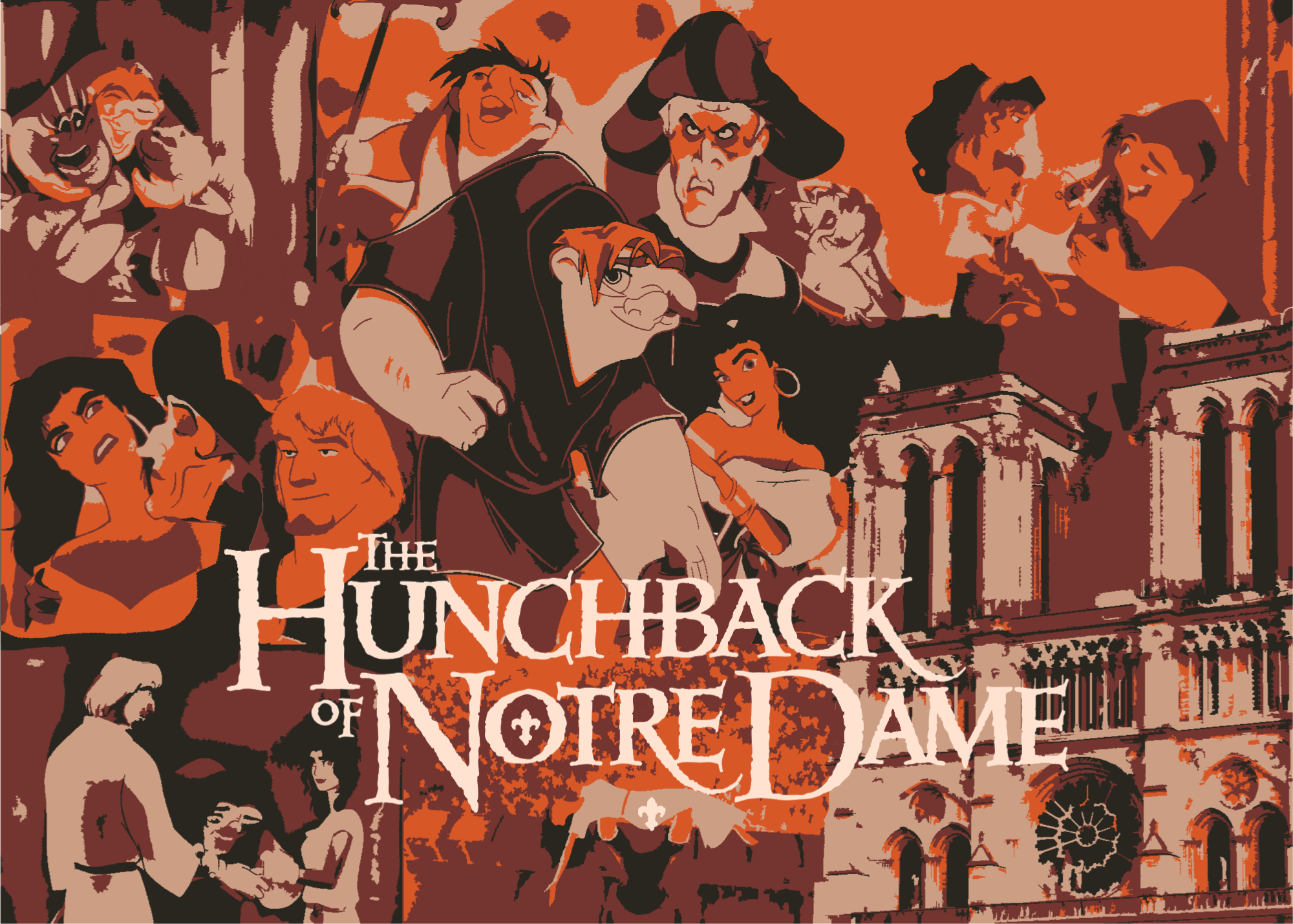
4. The Hunchback of Notre Dame (1996)
Hunchback is the most ambitious Disney movie. In the midst of the Renaissance, it broke the thematic formula to tackle bigger themes with a darker tone and less reliance on big musical numbers. The result is a tragically underserved film, the red-headed stepchild of the Renaissance.
Disney has never given a better protagonist than Quasimodo, a completely unaffected hero whose character feels inherent and unflappable. He’s good-hearted, ethical, and never goes the route you expect. If love doesn’t find him, he embraces friendship. If loyalty is misplaced, he revokes it.
Following his story is a joy because he feels like a true person, genuinely aspirational. His movie is powered by Alan Menken’s incredible, operatic score, a cast of respectable complementary characters, and the most thrilling climax of any Disney movie. It gets very little wrong, almost everything right, and remains an invaluable teaching tool for children. What more could you ask for?
3. Beauty and the Beast (1991)
Beauty and the Beast made history as the first animated film nominated for the Academy Award for Best Picture. At the time, Disney had 29 theatrical releases, not to mention the countless animated productions from other studios. Yet, their adaptation of the beloved French fairy tale broke ground that, to date, only two other films have built upon (Up and Toy Story 3). Looking at it today, 35 years after its release, it’s clear why.
It begins with a lively opening number, colored to luminous perfection (though admittedly not sung to the same standard), where our heroine, Belle, establishes herself as independent, inquisitive, and introspective. We know instantly that Disney is looking to do something revolutionary, something to blow us away, and we’re taken on a captivating ride from there on, punctuated by the indelible ballroom sequence: an elegant, sweeping expression of grand romance, rounded out beautifully by Disney’s greatest musical offering sung by the unimpeachable Angela Lansbury.
From the enchanting cast of enduring characters, impeccable voice acting, a wonderfully smarmy villain, the intricate, mesmerizing animation, and one of the most creative soundtracks in the studio’s illustrious history, we have an undeniable, timeless gem.
2. The Fox and the Hound (1981)
The hardest life lessons tend to make the best kids’ movies, and The Fox and the Hound is no exception. We all must accept that some relationships we deeply value are meant to be temporary, and that isn’t necessarily anyone’s fault. Copper and Tod are earnest and immensely likeable, and while the story would’ve been better with 20 more minutes to explore their initial friendship, Disney’s signature warmth and a pair of winning performances from Corey Feldman and Keith Coogan legitimize their bond.
Few films, from Disney or anywhere else, master the unquantifiable as well as Fox and the Hound. Its emotional swells, like Tod’s realizing his and Copper’s untenable friendship and Tweed’s leaving Tod at the game reserve, tug at the heartstrings. Tod’s romance with Vixey, the showdown between him and Copper, and the latter’s protection of his old friend from the trigger-happy Amos inspire more emotion than you’d expect. It feels like incomparable care went into every song, every syllable, every moment, the cinematic equivalent of having made food with love. It’s not the most complex, the most artistic, the most ambitious, or the most successful, but it is one of the best.
1. The Lion King (1994)
It might be the most cliché choice, but it’s well-earned. It isn’t the most ambitious Disney film conceptually, but it’s arguably the most aspirational. It calls back to beloved films from the studio’s iconic past, reaches further into history to evoke the genius of the world’s greatest literary titan, captures the majestic savannas of Africa, and delivers a rousing array of delightful ditties and beautiful ballads. It wants to be more than a kids’ movie. It wants to be a truly epic story.
Amazingly, it manages it.
You won’t find stronger voice performances in the studio’s canon, from an energetic Jonathan Taylor Thomas as the young Simba, a commanding James Earl Jones as the doomed king Mufasa, and a sickeningly shrewd Jeremy Irons as the treacherous Scar. The film, deliberately crafted in its astonishing opening act, earns a potent emotional response during the iconic wildebeest sequence and Simba's long journey home.
But let’s not stray too far from the film’s calling card: the music. “Circle of Life” remains the greatest opening in Hollywood history, “I Just Can’t Wait to Be King” stands as Disney’s greatest and most unconventional “I Want” song, and “Can You Feel the Love Tonight,” although an unfortunate choice for the Oscar, is one of the studio’s better ballads.
Remember the merchandising, the cultural legs that carried it across generations, and the enduring legacy of its beloved characters, gorgeous animation, unforgettable music, and irresistible majesty, and know that, all these years later, The Lion King deserves our praise today as much as when we made it the second-highest-grossing movie of all time and the biggest home video release ever. Why? Simple.
The Lion King is the best Disney movie.









Latest Entries