


%20(13%20x%206%20in)%20(13%20x%204%20in).png)
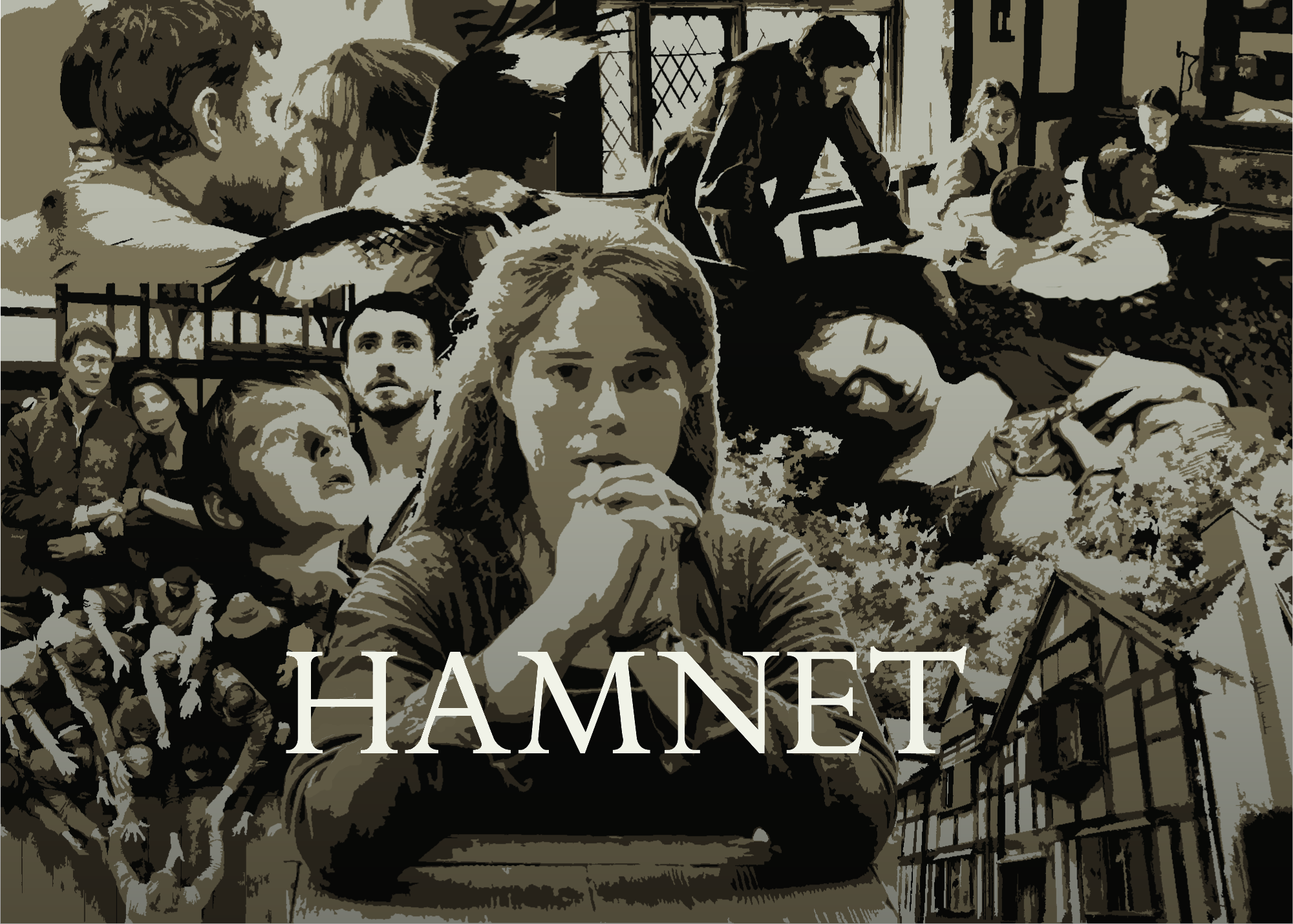
"Hamnet" Review: A Great Movie Trapped Inside A Bad One
Jessie Buckley and Paul Mescal save Chloé Zhao's historical tragedy from disaster.
Recent ReleaseIn baseball, no one is treated more unjustly than the manager. If a team with poor roster construction and injury woes finishes 72-90, the manager will be blamed when it’s entirely possible they got as many wins as possible out of such a team. But it’s just as unjust to unduly credit the manager for a team’s success when the opposite is true. If a roster has all the best players with an ownership group willing to spend billions and remains healthy from April to October, how much did the manager actually do?
The same is true of movies, though not to the same extent. Directors age out of relevance and become too old-fashioned. Occasionally, they commit to working with the same people, and their work becomes tired and stale. Oftentimes, studio interference derails a director’s vision, but there are times when someone needs to step in and save a director from themselves. A great editor can take a movie from average to good, and a good one from good to great. A skilled cinematographer can accent genius, but they’re not a substitute. A master composer can create emotion where the filmmaker brought none, but no score can make a great movie.
Ultimately, directors deserve credit when a movie goes well, but too often have we seen what horrors can occur without the right pieces in place. Chloe Zhao is a fascinating case in this respect. During her career, she’s taken ownership of her films, not only directing and writing, but also editing. Unfortunately, it appears that she’s a jack of all trades but a master of none, and so the burden of failure falls to her, and we must reconcile that, although the idea of a female director grabbing the reins is great, Zhao herself simply doesn’t have “it.”
She’s skilled, and when those skills are on display, her movies shine, but briefly and not as brightly as we’d like. No more evident is that truth than in Hamnet, her latest movie. Adapted from the novel by Maggie O’Farrell, with whom Zhao co-wrote the screenplay, the film tells the story of the Shakespeare family as they grapple with the death of their young son, Hamnet.
Hamnet hurts itself by feeling melancholic from the start, refusing to properly temper its underlying emotional essence. Sadly, this prevents the tragedy from impacting us fully because the joy wasn’t relayed properly. A constant grayness and somber aura permeate the movie, even when something joyous happens. One could argue that this sets the tone for all that follows, but pain is not felt more deeply when we know pain is coming. In fairness, this wouldn’t help Shakespeare and Agnes’ union anyway.
The pair’s relationship feels cut from “im14andthisisdeep.” Agnes is a woman with a bird who’s not like other girls; her husband is a socially awkward writer. Why these two are drawn to one another is a thinly-imagined concept, so the lust and “love” that draw them to a child-conceiving romp atop a barn table is not palpable. It forces the film to play catch-up as Will draws a faint comparison from his abusive father to himself during a bout of writer’s block and Agnes comforts him. It’s a mundane characterization and doesn’t compel us to either of them as individuals, meaning the tragedy awaiting them is not layered with something more than a concept.
The shot composition is so forcibly artsy but in the dullest way conceivable, more concerned with the appearance of skill and depth than the employment of either. Zhao stations the camera on a fixed point and has the action maneuver about, the sort of film school gimmickry that seems profound in your freshman year at NYU but not so much when you’re an Oscar-winning filmmaker. Not only is it pointless, but it’s detrimental; Hamnet relies on the emotional toll its most visceral moments inflict, and those need to have its actors brought in tight from the beginning to establish our relationship to their characters. It’s a shame; Jessie Buckley and Paul Mescal are fantastic, and in the film’s most restrained moments of realism, they create deeply moving moments. Sadly, Zhao’s artistic choices are too often self-indulgent, and she sometimes leaves her stars stranded, especially because the film appears so clean and polished while depicting things that are harsh and tragic.
Fortunately, there’s a moment, as Agnes gives birth to what turns out to be twins, that this pomp dissipates, and Hamnetbecomes a skillful movie from a caring artist, bent on relaying genuine emotion through a tempered narrative. Yes, the anguish of childbirth and the ultimate passing of a child are not lightweight topics, but Hamnet handles them with grace that allows it to become a worthwhile drama.
The family dynamic, though never intimately explored, feels tangible enough through the group’s moments of togetherness that it feels we’re asked to react to their story on a deeper level than something conceptual. The husband’s absence feels like a festering wound, but in a quiet way. It feels like acceptance of contemporary reality, but also recognition of the pain that reality could inflict in hard times. As Hamnet pleads for the Black Death to leave his sister and become his burden, there’s a magic to the simplicity of his hope; a brother wanting to be the hero for his sister. We have enough tender moments between the family to feel something earned as they confront their tragedy.
So, when Agnes scrambles helplessly to save Hamnet, her panic is palpable. Buckley unleashes something that, while flirting with histrionics, ultimately proves the emotional heft the movie needed for its quiet to genuinely pay off. Her anguish and sorrow are the backbone of everything Hamnet wants to be, and she truly does make the movie in her most impressive moments, even if Mescal’s subtlety proves more memorable.
In this stretch, Hamnet flirts with being a great movie. The marital disputes hit home to anyone who’s thrown what they can at the wall when in the throes of grief. Agnes detests Will’s absence, though she encouraged him to leave to fulfill his artistic destiny and escape his abusive father. Will quietly assures, despite lacking the context of all that happened in Hamnet’s final hours, and buries himself in his work, as so many do when confronted with feelings they don’t know how to process. It is Mescal and Buckley that make this feel earnest and truthful. Admittedly, in lesser actors’ hands, all of this likely would’ve fallen a bit flat.
As Hamnet drags itself towards its end, we have everything wrapped up in typical indie fashion, recalling earlier moments to explain the weight of the climax, like the unsubtle return of the story of Orpheus and Eurydice, where Agnes defies the fate of her fabled counterpart and demands her husband return her gaze, or Hamnet’s seeing the hawk as he dies.
What do these ultimately amount to? Narrative choices like these may excite on principle, but they lack utility. A movie cannot bookend itself with ideas and claim profundity. Every moment must be not only relevant, but inspiring, even if the inspiration is merely to watch. In its final act, Hamnet drags and with such melodrama and typicality (Max Richter didcompose the score, but “On the Nature of Daylight?” Really?), that it discards groundedness for Oscar bait.
All in all, is Hamnet a good movie? No, a film cannot succeed ⅓ of the time and be good, but it is fine, something worth seeing once and then never again. The reality is that resonance can come from empathy, but if that’s all it takes, then anyone could make a movie about anything and accomplish that goal. As such, Hamnet is capable, but so is an Easy-Bake oven, the cinematic version of which this movie was baked in. Great artists dive deeper, explore more fully, and inspire something more than relating to the audience because something bad happened once. Zhao has yet to prove herself capable of this, and Hamnet is worse off for it.

52
Director: Chloé Zhao
Studio: Universal
Running Time: 126 minutes
Release Date: November 26, 2025
Cast:
Jessie Buckley - Agnes Shakespeare
Paul Mescal - William Shakespeare
Emily Watson - Mary Shakespeare
Joe Alwyn - Bartholomew Hathaway
Jacobi Jupe - Hamnet Shakespeare
Screenplay: Chloé Zhao & Maggie O’Farrell
Editor: Chloé Zhao & Affonso Gonçalves
Cinematographer: Łukasz Żal
Score: Max Richter




.jpeg)








.png)


.png)
