


%20(13%20x%206%20in)%20(13%20x%204%20in).png)
.jpeg)
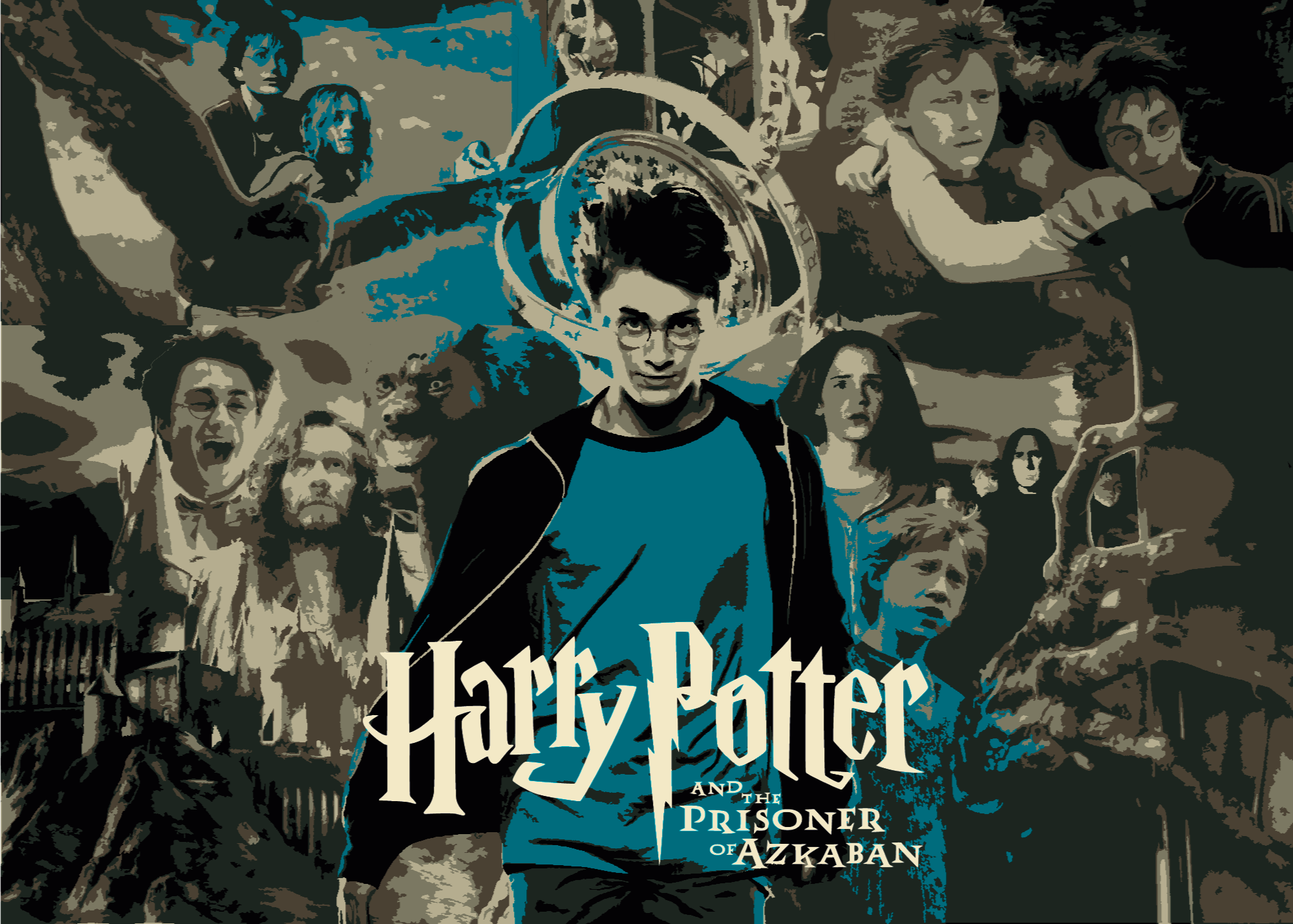
"Harry Potter and the Sorcerer's Stone" 25th Anniversary Retrospective: Why We Can Still Love Harry Potter
Yes, J.K. Rowling sucks, but that doesn't mean Harry Potter sucks too.
RetrospectiveIn the summer of 1990, on a train ride from Manchester to London, Joanne Rowling experienced “the purest stroke of inspiration” she’d ever had: a bespectacled young boy with magical abilities who didn’t know he was a wizard. Over the next five years, she would develop a manuscript, largely with a cold coffee in Nicholson’s Cafe in Edinburgh as her daughter, Jessica, lay beside her in a pushchair. Combining one of her favorite boys' names and the surname of a family she played with in her youth, Rowling gave her boy wizard the name that would define a generation: Harry Potter.
When she finished the novel in 1995, she sent it to an agent, who struggled to secure a publisher. Many disliked its length at over 300 pages and found it too complex for children. Many were skeptical about the fantasy genre’s viability with young boys, especially because Rowling was a female author (which inspired the pen name J.K.) with no pedigree. Some disliked Harry’s moody personality and bull-headedness, fearing he lacked the typical qualities of a heroic protagonist. In all, 12 publishers rejected Harry Potter before Barry Cunningham of Bloomsbury recommended signing Rowling and publishing her book. When Alice, the 8-year-old daughter of Bloomsbury chairman Nigel Newton, implored her father to take on the novel, Harry had a home.
Published on June 26, 1997, Harry Potter and the Philosopher’s Stone was a massive commercial success. It topped the New York Times' best-selling fiction list in 1999, months after its US publication (with a different title - replacing “Philosopher” with “Sorcerer”) and ultimately sold 120 million copies, fourth-most in history. So, of course, as with any literary success, Hollywood was eager to secure the film rights.
In 1997, producer David Heyman, having recently founded Heyday Films, was eager to find a children’s book to adapt for the big screen, hoping to prove his upstart company viable. Although he disliked the title, Heyman read the book at the urging of his assistant and “fell in love with it." After the sequel, Harry Potter and the Chamber of Secrets, proved another hit, Heyman pitched Warner Bros. on the series. When they agreed to distribute the movies, there was one thing left: convince Rowling to sell the rights.
Rowling had not written the books with films in mind, but after The Chamber of Secrets, she conceded that the books would translate well to the big screen. In 1999, she agreed to sell the rights, with a few provisions:
1. The principal cast had to be British and Irish.
2. Final script approval.
3. Films could only be adapted from novels she had authored.
Inspired by Heyman’s faith and assured that her demands would be honored, Rowling sold the rights to the first four books for £1 million. It was now time to find a director.
The obvious choice was Steven Spielberg, critical darling and box office titan, who could give Heyman what he needed. If he could do with Harry Potter what he’d done with E.T., Heyday was set. Alas, Spielberg found the surefire moneymaker “unchallenging” and wanted an animated movie, which the studio scoffed at, so he left the project. After Rob Reiner, Wolfgang Petersen, and M. Night Shyamalan dropped out, there were four choices: Terry Gilliam, Alan Parker, Brad Silberling, and Chris Columbus. Rowling’s choice was Gilliam, but the studio felt more comfortable with Columbus given his experience directing successful children’s movies like Home Alone and Mrs. Doubtfire.
Of course, the one thing that mattered more than any other was casting Harry (and his friends). In 2000, they held open casting calls for Harry, Ron, and Hermione with a three-stage audition process: read a page from the novel, improvise the arrival to Hogwarts, and read pages from the script in front of Columbus. Rumors swirled that Columbus wasn’t open to the auditionees, wanting to forgo the agreement with Rowling and cast an American actor, allegedly Haley Joel Osment or Star Wars’ Jake Lloyd, but the reality was that they hadn’t found the right actor. Finally, one night during an outing to the theater, Heyman spotted a young actor behind him and screenwriter Steve Kloves: Daniel Radcliffe.
Columbus had been keen on Radcliffe due to his “haunted quality” in an adaptation of David Copperfield. Following the rejections of Jamie Campbell Bower, Nicholas Hoult, William Moseley, Jack Whitehall, Tom Felton (the future Draco Malfoy), and Liam Aiken (an American whom Rowling called Columbus to veto), Radcliffe was cast in August.
Radcliffe’s parents were hesitant, fearing a long-term contract and the grueling, LA-based shooting schedule. Warner Bros. compromised, offering a two-film contract that would base production in the UK, and Radcliffe’s parents agreed. Newcomers Emma Watson and Rupert Grint were cast as Ron and Hermione. Maggie Smith, Richard Harris, Alan Rickman, and Robbie Coltrane were cast as Minerva McGonagall, Albus Dumbledore, Severus Snape, and Rubeus Hagrid. After James Horner turned it down, John Williams came aboard.
The stage was set, the die was cast, and on September 29, 2000, principal photography began. From Berkshire to Yorkshire, Kent to Northumberland, Gloucester to London, The Sorcerer’s Stone was a faithful and distinctly British production. Columbus collaborated with Rowling, checking in to ensure her vision was respected. Kloves added dialogue not present in the book, though only with Rowling’s approval. Although cuts were made, like Peeves the poltergeist, there was no doubt that Potter fans would be delighted with the final product… and that they were.
On November 16, 2001, Harry Potter and the Sorcerer’s Stone was released worldwide. It became a box office juggernaut, setting single-day and opening weekend records in the US, UK, and 15 other countries. It made $974 million worldwide, making it the second-highest-grossing movie ever at the time, behind Titanic. It notched three Oscar nominations, seven BAFTA nominations, and made superstars out of its three leads.
Now, 25 years on, Harry Potter has a complicated legacy. Rowling has repeatedly voiced her discontent with transgender acceptance, expressing fears that the “lived reality” of women is being erased. In 2018, she liked a tweet that referred to transgender women as “men in dresses.” In 2019, she followed YouTuber Magdalen Berns on Twitter, a self-proclaimed transphobe who declared, “there’s no such thing as a lesbian with a penis.”
In each of these cases, she had an excuse. In the first, she had “accidentally” liked the tweet while attempting to screenshot it. In the second, she was merely reaching out to someone who was enduring a serious health crisis - Bern died from brain cancer in September of that year.
There was no turning back in 2020, when Rowling objected to a devex.com article headlined “Opinion: Creating a more equal post-COVID-19 world for people who menstruate.” Rowling’s mocking response, feigning the inability to recall the word “woman,” made her perspective clear: trans women are not women.
Over the last five years, her social media presence has become increasingly misinformed and prejudiced. An author who once had an enduring legacy and devoted fans has become a crusader for a cause that betrays everything for which her masterpiece stood. She is not a friend to the very types of people she opened so many minds to: marginalized groups, oppressed by misguided, ill-intentioned purists. She is not brave because extremist bellowing has a home in every uneducated corner of the world. She is not kind, compassionate, or empathetic because she’s singling people out and chastising them for living their lives truthfully. She is not accepting because she quite literally refuses to accept the reality that the larger scientific community has made clear time and again.
Now, people feel conflicted about Harry Potter. Younger generations who didn’t grow up with the Barnes & Noble book releases or midnight movie premieres, who didn’t wait by the mailslot for their Hogwarts letter, use their grandmother’s broom for Quidditch practice, or their brother’s drumsticks as a wand, have no issue boycotting the series to spite its author. Millennials may have rose-colored glasses, and Gen Z and Gen Alpha may be missing the context of what Harry Potter was and is, so let us revisit the very first time we saw The Sorcerer’s Stone and, due to its remarkable aging, every time since.
As the foggy late-summer night fades into view with the street sign labelled “Privet Drive," the chimes sound and Professor Albus Dumbledore emerges from the fog. Instantly, we feel immersed in the world of Harry Potter. No spells have been cast, no potions brewed, no golden snitches caught. We have a few moments of earnest cinema, and it’s enough to bring a magical world to life. Gone are the movies that matter this much to the people who make them, free of agenda other than to honor something that’s touched so many people by bringing it to life with the same consideration that let its source material become the most popular book series ever.
When the Hogwarts letters race through the mail slot and burst through the chimney, swarming the room while a jubilant Harry snatches one from the air, we feel it. We feel it when Hagrid taps the bricks and opens the entrance to Diagon Alley, overflowing with magical shops for Harry to explore. We feel it when Harry crosses the barrier to Platform 9¾ and beholds the Hogwarts Express for the first time, and as he and Ron devour their sugary treats from the trolley. We feel it when the first-years walk down the Great Hall for the first time, when Harry flies after the snitch during his first Quidditch match, and when he sees a vision of his deceased parents in the enchanted Mirror of Erised.
Whether they're moments of joy, whimsy, or contemplation, there’s a comforting warmth and magical essence that permeates every scene. It feels deeply nostalgic but also timeless. The production design is richly detailed, from the ornate halls and jagged stones to the geometrical Quidditch pitch and the grassy courtyards. The wizarding world is steeped in vibrant colors, and the score is as reassuring in Harry’s happiest moments as unsettling in his most dire. Every setting and season has its own themes and motifs. The costumes’ colors are always bold, and their designs elegant and sharp, leaving no doubt that we’re in a distinct and wondrous world.
Radcliffe, Watson, and Grint shine, giving each of the beloved trio an imprint on the film and justifying their importance to the millions who find within each of them something to which they can relate. Hermione is relentless in her quest for knowledge. She will read every book, learn every spell, and raise her hand to every question. Ron is irrepressible in his defiance of convention and is deeply important to his friends. He will show up to the train with dirt on his nose, bring a rat instead of the instructed owl, cat, or toad, and will always passionately encourage Harry as he navigates his new magical world.
Harry, though the least distinctive, is a faultless avatar for all the lessons Rowling sought to impart. He may not have the book smarts of Hermione or the quirk of Ron, but he embodies everything it means to be a Gryffindor and thus what his dearest friends respect most: friendship and bravery, a casual fearlessness that helps us realize the importance of holding to the values the series taught millions over the years.
For how detailed and skillful it is in making each setting unmistakably magical and cinematic, even making the dark and foggy Forbidden Forest a memorable setpiece, and being enthralling from beginning to end, the movie’s greatest strength is not losing the social utility of the book, instead making it accessible in a new and exciting way. It’s a thrilling mystery as we watch the trio work out what they believe Snape is after and why, but it’s also a story that moves quietly while relaying the ideas that have inspired a generation, espousing the principles its now-reviled author has discarded. It demands that we stand for what’s right and cherish our friends, regardless of who they are or where they come from. It doesn’t matter to Harry that Ron has dirt on his nose and dresses in hand-me-downs. Malfoy’s riches and shimmery, slicked-back hair don’t impress him. It’s the core principles that matter: friendship, bravery, and honoring those who’ve shown you kindness instead of those who appear superior.
It teaches us that we’re all complex people and that choice is what matters in life. Harry could’ve been in Slytherin, but he chose Gryffindor. By making that choice, he proved where he belonged and who he truly was, just like when he steps towards the Mirror of Erised, prepared to take on whatever evil stands between him and saving the Sorcerer’s Stone. It teaches us that doing what is right is always more difficult than doing what is easy and that standing up to your friends takes more courage than facing your enemies.
Fortunately, those lessons explain why condemning Harry Potter to spite Rowling is fruitless. She’s swimming in money and always will be; nothing we do will change that. The true victory is recognizing how everything she taught us through her cherished boy wizard rings even more true in the face of her bigotry. It’s easy to side with social conservatism and its extremist rhetoric, where friendships prove shallow and acceptance cheap, but did Harry do that? It’s easy to hide from a progressing world and defend old-fashioned ideals, but did Harry do that? No. Harry chose Ron. Harry fought against blood purity. In future books, Hermione (misguidedly) advocates for the oppressed house elves. Harry and his friends are everything the woman who created them isn’t.
In a 1998 interview, Rowling claimed she would love to go to Hogwarts because you’re relieved of your parents and live among peers, but considering her background, we must ask: is it a coincidence that a woman who spent her life at public school sent her protagonist to a school where you get chosen, not placed? No. In truth, there was likely always a part of Rowling that wished to distinguish herself and would object to a perceived attack on being special.
Is this an excuse? No. Rowling has made a bed of thorns. We can only hope that, as she lies there, her legacy bleeding to death, that one might nick her well enough to inspire a change.
Instead, it’s a reminder that every creation comes from people, and even the best of us are flawed. We must remember that our anguish over our heroes’ ethical fragility is not inflicted: we choose to feel it. Rowling has said untrue and offensive things, but we control only ourselves and our responses. Frankly, embracing Harry Potter's lessons, which contradict its author's deterioration, is the only way to rectify her descent. Boycotting Potter won’t stop the people who grew up with it from loving it and holding it dear, nor should it.
After all, the Journal of Applied Social Psychology found in 2015 that children who grew up reading Harry Potter had “improved out-group attitudes.” If you grew up with Harry Potter, you, because of J.K. Rowling, became everything Rowling herself failed to become. She’d once written so extensively about her protagonist to the point she had boxes upon boxes that she lugged from Portugal to Scotland after her acrimonious divorce. Now, she couldn’t understand him less if she tried.
It’s a twisted and tragic irony, but one to be embraced, because anything else deprives the world of all the magic Harry Potter has given us: compassion, understanding, empathy, kindness, and acceptance. People’s feelings will remain complex and varied. Many felt so attached to Harry Potter that they viewed Rowling as a hero, a guide, a spiritual friend. But, as the woman herself taught us, it takes a great deal of courage to stand up to your friends. Rowling has created enemies based on false ideals and defied them. Strangely, our way of standing up to her is continuing to embrace her work because it's everything she isn't.
Some may feel that continuing to support Potter is enabling her, but that holds only if the books and movies support her "values." It’s okay to still love Harry Potter and to acknowledge that The Sorcerer’s Stone is an incredible movie. It’s also okay to despise J.K. Rowling, no different than continuing to carry the valuable lessons of a parent who turned out to be a horrible person. We can only expect so much of ourselves, and like Harry, we are defined not by our thoughts or anyone’s actions or views, but by our choices.

93
Director: Chris Columbus
Studio: Warner Bros.
Running Time: 152 minutes
Release Date: November 16, 2001
Cast:
Daniel Radcliffe - Harry Potter
Rupert Grint - Ronald Weasley
Emma Watson - Hermione Granger
Robbie Coltrane - Rubeus Hagrid
Richard Harris - Professor Albus Dumbledore
Maggie Smith - Professor Minerva McGonagall
Alan Rickman - Professor Severus Snape
Ian Hart - Professor Quirinus Quirrell
Richard Griffiths - Vernon Dursley
Fiona Shaw - Petunia Dursley
Warwick Davis - Filius Flitwick
John Hurt - Mr. Ollivander
Julie Walters - Molly Weasley
Tom Felton - Draco Malfoy
Matthew Lewis - Neville Longbottom
Harry Melling - Dudley Dursley
David Bradley - Argus Filch
James Phelps - Fred Weasley
Oliver Phelps - George Weasley
Sean Biggerstaff - Oliver Wood
Zoë Wanamaker - Madame Hooch
Screenplay: Steve Kloves
Editor: Richard Francis-Bruce
Cinematographer: John Seale
Score: John Williams









.png)


.png)
