%20(13%20x%206%20in)%20(13%20x%204%20in).png)
"The Sound of Music" At 60: A Tale of Two Halves
This beloved Best Picture winner is half charming musical and half dreary drama
ClassicChristmas Day, 2012: millions of people filed into theaters for Les Misérables, the musical event of the year, and another adaptation of the stage play based on Victor Hugo’s 1862 novel about the June Rebellion: a pointless anti-monarchist insurrection by a rag-tag group of collegiate idealists with vain political ambitions who suffered horrific deaths. It was the most highly anticipated film of the holiday season, a bona fide Oscar contender through sheer virtue of existing. The cast was loaded with stars, and Tom Hooper was helming his first production since The King’s Speech.
But despite all its foundational draws, it knew honesty is never the best policy for a musical: to lure, it had to trick. We believed it was a film in every way most familiar to us, but it was not. It was not spoken, but sung. Not in the way every musical is, but in a way movie musicals rarely, if ever, had been before.
If we’d have known the film had committed fraud by enticing us into a ticket without knowing literally every line was sung, many of us wouldn’t have chosen to suffer the movie at all.
Alas, we can't blame it. The musical is the cinematic neutral evil, quick to endear itself to us with whimsical charm and uplifting songs before turning on us the minute we’ve settled. It sheds no tears for its victims, rubbing its soulless corruption of decency and flagrant disregard for compassion in our faces, usually by becoming increasingly dull and tedious to the point that a lobotomy seems less an outdated evil than genuine mercy.
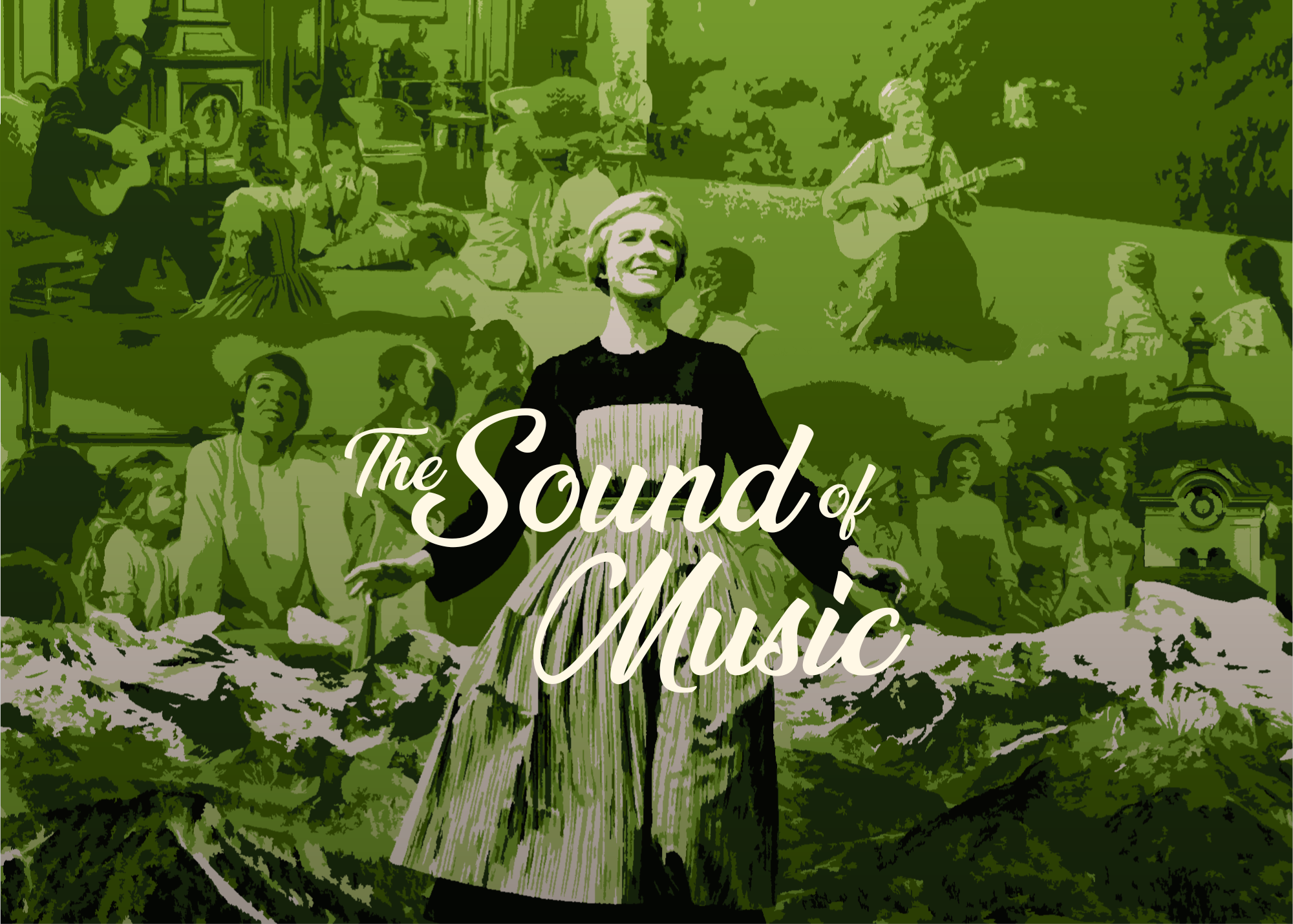
If there’s one film to refute this, it’s The Sound of Music, the story of a musical nun sent to be governess to the von Trapp children. Her charming insistence on living life to the fullest melts the steely facade of the widowed patriarch, forming a new family unit as the Nazi annexation of Austria looms large.
It’s triumphant from the off, as Maria twirls her way through the Austrian Alps, rejoicing in the glorious songs of the hills so “... alive, with the sound of music.” It charms us into submission through her well-intentioned side steps from convention, always juking by defenders of the norm and defying convention at every turn.
The children are bound by the doctrines of their iron-willed father, determined to forget his late wife by excising every reminder she existed. No songs shall fill the halls. Bedtime is to be “strictly observed.” The children rarely engage their father at all, especially as he spends so much time in the company of a woman hundreds of miles away. They do not experience any semblance of the joy they once knew. Adherence to structure is so infallible in their father’s presence that they’re essentially robots, firm in their commitment to his edicts and desperate for his approval.
It could feel exploitative of death, a familiar stepping stone to cinematic romance and family bonding, but it doesn’t; the sentiments are too subdued. Every device feels organic; every moment of resistance feels sincere. Mr. Von Trapp skirts fatherhood due to tangible pain born from something we all understand. He is smuggling his warmth from moment to moment, tucked neatly beneath his tailored suits, locked in the deepest chambers of his heart. It is Maria, the unabashed realist whose rationality cutely masquerades as classic optimism, that frees him and his family. She knows children need affection and understanding, love and affirmation. They need to feel relief from structure, to trade in musical calling signals for the music in their hearts. Her earnestness and matter-of-fact devotion to her ideals are endearing and create a welcome atmosphere that carries the movie even when its insistence on sugary countryside antics wears thin. She turns him by inspiring the children to sing a song for the Baroness, compelling him to join in. The facade shatters, and he hugs them.
It should be narratively satisfying, but it’s unearned. A man so frigid in his resistance to affection or the very memory of his wife shouldn't crumble like a sandcastle. He gets swept up by the magic of song so quickly that the film sacrifices its payoff by collecting too early. The momentum of the film gets lost. The innocence of galavanting through the Austrian countryside, learning to embrace a new motherly figure, and cutting the ties that bind, stop entirely. It becomes a ponderous story of villainous brides-to-be and mopey children waiting for Hitler to march his Third Reich over the Alps Hannibal style and destroy life as they know it, but it cannot commit. This is a Disney film, with Disney touches and Disney rules and Disney aspirations.
It can be neither too bleak nor too grim. It can be neither too pessimistic nor too weighty. It cannot build a world rooted in human authenticity and the realities of our sordid history, lest it forgets its nature. What’s a film to do if it’s called upon to do and be nothing when its only use was ease and charm?
After all, the songs fit, no jarring breakaways from the narrative to burst into song and tippity tap your way from intro to outro. The story is the music, whether it’s teaching scales (“Do-Re-Mi”) or a sing-song collection of life’s pleasures to soothe the frightened children into slumber (“My Favorite Things”). Everything has a purpose. Its very creation justifies its existence. This is a film that pleases and delights with genuine vision and a plausible story, that of a woman who marches to the beat of her own drum, bringing something into the lives of those who have long been without what we all truly need. She (and thus the film) is love and affection, life and music, a reminder that when we lose something or someone, the world spins on, and so must we, through the Alps if we must. Scratch that, if we can.
Life’s pleasures are waiting in the hills and the rivers and stone stairways lining the country towns. It's in the world, what we choose to make of it, and how we affect one another. The father is an anchor until he gives in and embraces his children once again. Unearned though it may be, this is The Sound of Music when it understands itself and stays the course: a movie about a simple idea told in a way we can respect.
But it doesn’t: it breaks away, and for far too long. It becomes that vague, frosty war drama, absent the war and drama. You can feel the lack of interest. It’s a musical too kind to its source material to abandon ship, though it knows there’s an iceberg right ahead. It’s sluggish and detached, as though everyone involved cremated their creative fibers and scattered them in the hills they pranced about when life was merry and gay. There is no reason to soldier on, yet it does. It renders everything that came before it irrelevant and saps the film of what energy remained. Its syrupy sentiments and what warmth they could elicit were on its last legs as it was; turning the lights off entirely, trapping us in a slow, dull, overlong slog with no thematic or emotional reason for being is cruel.
These characters cannot anchor such a film. They’re effective as nearly anonymous faces bellowing melodies on a screen, gleefully hopping about scenic Austria as they liberate themselves from the ties that bind and bond with their liberator. As fully realized human beings locked in a race against time and tragedy, desperate to avoid the Nazi regime in a daring escape attempt (a truly generous description of a dramatically lacking back half), they are of no worth.
It’s a shame. The Sound of Music reaches heights few musicals ever do, but it acts so much like the mountains it's set in: when they peak, they are majestic. The sights are breathtaking, the achievement of having ascended to the top meaningful and unique. Not in the occurrence of having gotten there; it’s not as though no one has ever climbed the mountain before. But in having understood what it means to reach the peak, The Sound of Music sets itself apart. It understands the importance of taking in the majesty instead of patting itself on the back and quickly scurrying back down.
But when it craters, it craters. It gently descends, trips, and plummets thousands of feet to its bloody death. By the time the body gets found, it’s hardly recognizable: the only means of identification are dental records, in this case, rewinding halfway through the film. It is not Les Misérables, reliant on cheap tricks to lure audiences before sucker-punching them with the horrible decisions that make the film unbearable. It still stands as a mostly justified defense of the movie musical, the needlessness of such trickery. One can watch it and appreciate it and perhaps, under the right circumstances, watch it again. But try as it may, it cannot call itself a great film. The hills aren't quite alive enough for that.

65
Director: Robert Wise
Studio: 20th Century Fox
Running Time: 174 minutes
Release Date: March 2, 1965
Cast:
Julie Andrews - Maria
Christopher Plummer - Captain von Trapp
Eleanor Parker - Baroness Elsa von Schraeder
Richard Haydn - Max Detweiler
Peggy Wood - Mother Abbess
Charmain Carr - Liesl von Trapp
Nicholas Hammond - Friedrich von Trapp
Heather Menzies - Louisa von Trapp
Duane Chase - Kurt von Trapp
Angela Cartwright - Brigitta von Trapp
Debbie Turner - Marta von Trapp
Kym Karath - Gretl von Trapp
Daniel Truhitte - Rolfe
Screenplay: Ernest Lehman
Editor: William Reynolds
Cinematographer: Ted McCord
Score: Irwin Kostal











.png)


.png)
Latest Entries
.jpeg)