


%20(13%20x%206%20in)%20(13%20x%204%20in).png)
Oscars Redux: 2005 Best Picture
Is Crash unfairly maligned, or are we right to critcize its controversial victory?
FeaturesThe date? March 5, 2006. The location? The Kodak Theater in Los Angeles, California. The event? The 78th Academy Awards.
Jack Nicholson strolls to the stage to present the evening’s final award: Best Picture. Ang Lee’s gay cowboy romance, Brokeback Mountain, was the odds-on favorite, having won at the Golden Globes, BAFTAs, Critics’ Choice Awards, as well as the WGA and DGA.
Besides, it was the year of queer. Along with Brokeback, there was Transamerica, Capote, and Rent championing the LGBT media cause. After all it’d achieved, all it had won, how could Brokeback not win the Academy Award for Best Picture?
Well, the answer is simple: homophobia. It doesn’t matter which of the five nominated films you preferred or if you liked Brokeback at all; that is the reason it lost. The Academy is Hollywood’s largest voting body, and they’re far from progressive (though they imagine otherwise). After all, even the cast and crew of the film struggled to attach the “gay” label to the film’s doomed lovers, Jack Twist and Ennis Del Mar. Retrospectively, it’s not exactly a shock that the people voting for these awards struggled to hop on board.
Still, when Nicholson announced Crash as the winner, it sent shockwaves through the audience and the world. The Internet became inundated with theories as to why Brokeback Mountain lost out. Petitions were signed, ads were placed, and everyone and their grandmother had an opinion, and a strong one at that.
Twenty years later, we reflect on what is undoubtedly the most controversial decision in Oscar history and ask: were we too harsh? Does Crash deserve to be labelled the worst Best Picture winner because it beat a more topical movie? Was Brokeback Mountain as good as its supporters claimed? Was another of the nominated films the superior choice?
This article will answer that question once and for all (even though that already happened when The Hollywood Reporter polled Oscar voters in 2015, and they reversed the original decision and gave Brokeback the win).
Was Crash the rightful winner? Should Brokeback have won? Was Munich the true winner? Was Capote robbed? Was Good Night, and Good Luck underappreciated? Let’s find out.
Brokeback Mountain
Two decades removed from the groundbreaking hype, we can temper our perception of Ang Lee’s tragic western romance. It’s very good, no question, but is it as moving and memorable as the incessant bemoaning of its Oscars loss suggests? No. It’s well-acted, beautifully shot and staged, and told with tender earnestness and an appreciated lack of lecturing, but so are many movies. The heartbreak of its two lovers’ inability to reconcile their sexuality and the world they inhabit is sad, but there’s something banal in the execution that prevents it from feeling truly devastating. It’s worth a watch, and it would’ve been a worthy winner in a weak year, but it’s not a masterpiece.
Capote
Although the performance is obviously central to the movie, Capote is not made or broken by Philip Seymour Hoffman’s performance. Admittedly, it’s often more a great imitation than an illuminating portrayal, but there are moments of callous manipulation and self-aggrandizement that Hoffman plays masterfully, helping layer Bennett Miller’s deliberate, steady direction with the necessary skill to energize the movie. It would be better if there were larger ideas behind the story, as the narrative of how an iconic novel came to be isn’t particularly interesting in and of itself. While we are given nuggets, they are never fully elaborated on, so Capote is a very good movie that wouldn’t be quite worthy of Best Picture in any given year.
Crash
Rarely did Roger Ebert miss, but sweet heavens did he whiff on his assessment of Crash, calling it “a movie of intense fascination” and claiming the better movie won the Oscar. It’s not surprising that so many older white critics took to Crash: it has thinly-imagined ideas of prejudice and relays them with expected melodrama. In 2005, that’s how you convinced white people your movie meant something (actually, that’s still how you convince white people your movie means something). The fact is, aside from strong showings from Matt Dillon and Thandie Newton, Crash offers nothing other than saying stereotypes are bad and that even rich, racist white ladies can be sad. What value that has is yet to be determined, which is why Crash will always rank low (if not dead last) on Best Picture rankings.
Good Night, and Good Luck
Admittedly, George Clooney is a dull director whose offerings feel antiquated and stale to some extent, but Good Night, and Good Luck is most immune. Although it possesses a stagy quality that doesn’t always translate well, his cinematic interpretation of journalist Edward R. Murrow’s courageous attack on McCarthyism is a compelling and deeply relevant story. David Strathairn is impeccable, wholly embodying the journalism pioneer’s poise and eloquence, while Clooney’s sure-handed direction ensures a compact, concise story that explores its themes and avoids histrionics, a rare feat considering Hollywood’s saccharine liberalism and the film’s subject matter.
Munich
Steven Spielberg’s political drama bites off more than it can chew. Dissecting the tensions surrounding the 1972 Israeli Hostage Crisis at the Munich Olympics and the subsequent fallout is a lofty goal, even for Hollywood’s most successful filmmaker. The ambition flattens what could otherwise be a great movie, but it lacks focus and pointed execution, resulting in an overlong, poorly paced jumble of philosophical debates and occasional violence. It doesn’t help that this year marked the beginning of Spielberg’s stale visual style, overflowing with contrived darkness and uninspired composition. It’s not bad, but it could’ve, and should’ve, been better.
And the Oscar goes too…..
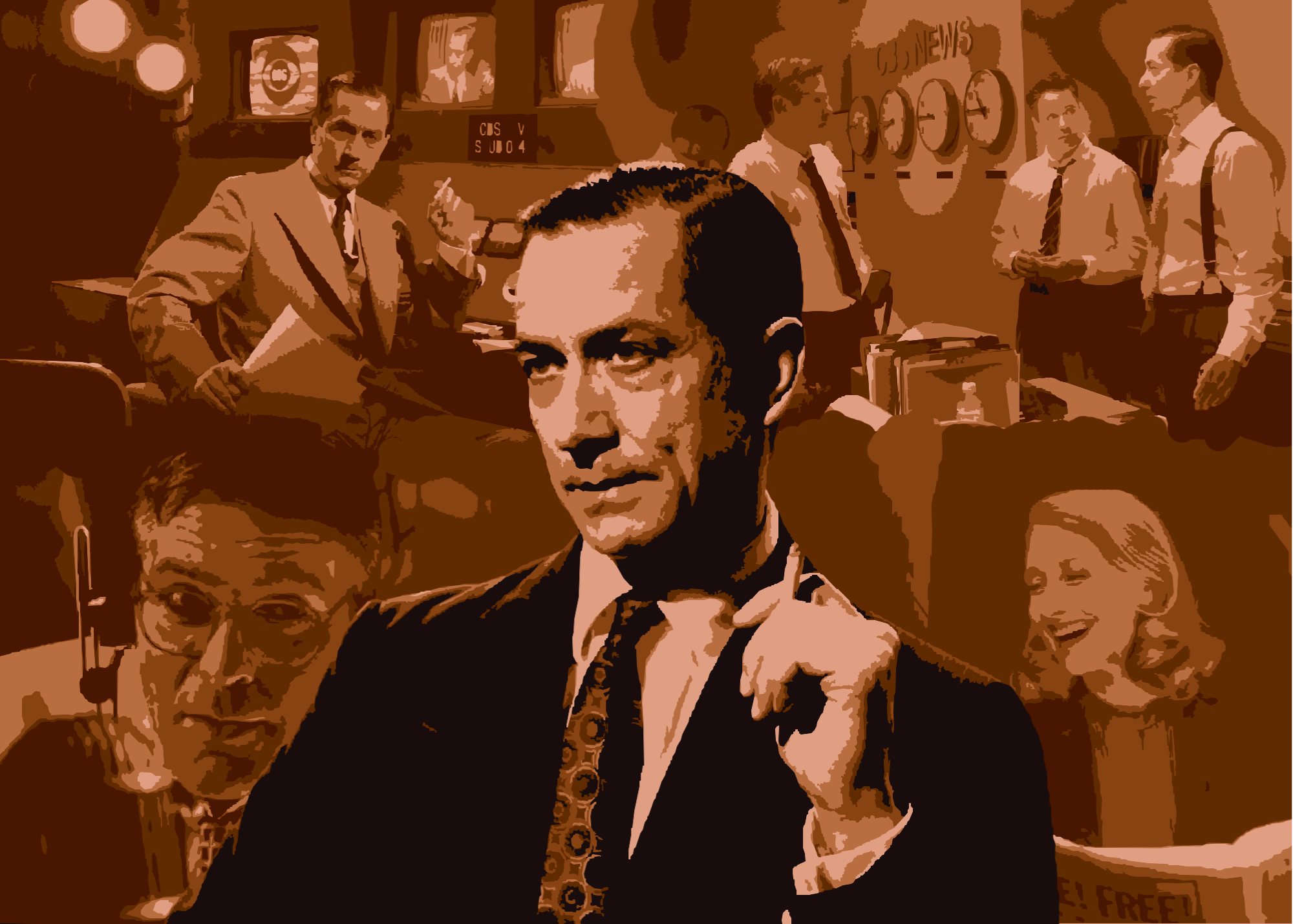
It was a weak year, and it wouldn’t have taken much to earn the top prize. Good Night, and Good Luck doesn’t clear the field with the same definitiveness as, say, The Silence of the Lambs or No Country for Old Men, but it’s the best film of the bunch. It’s a smartly crafted drama that trusts the inherent qualities of its true story narrative and allows its talented cast to shine, resulting in a strong film that, while not the most memorable, shines above the others.




.jpeg)








.png)


.png)