


%20(13%20x%206%20in)%20(13%20x%204%20in).png)
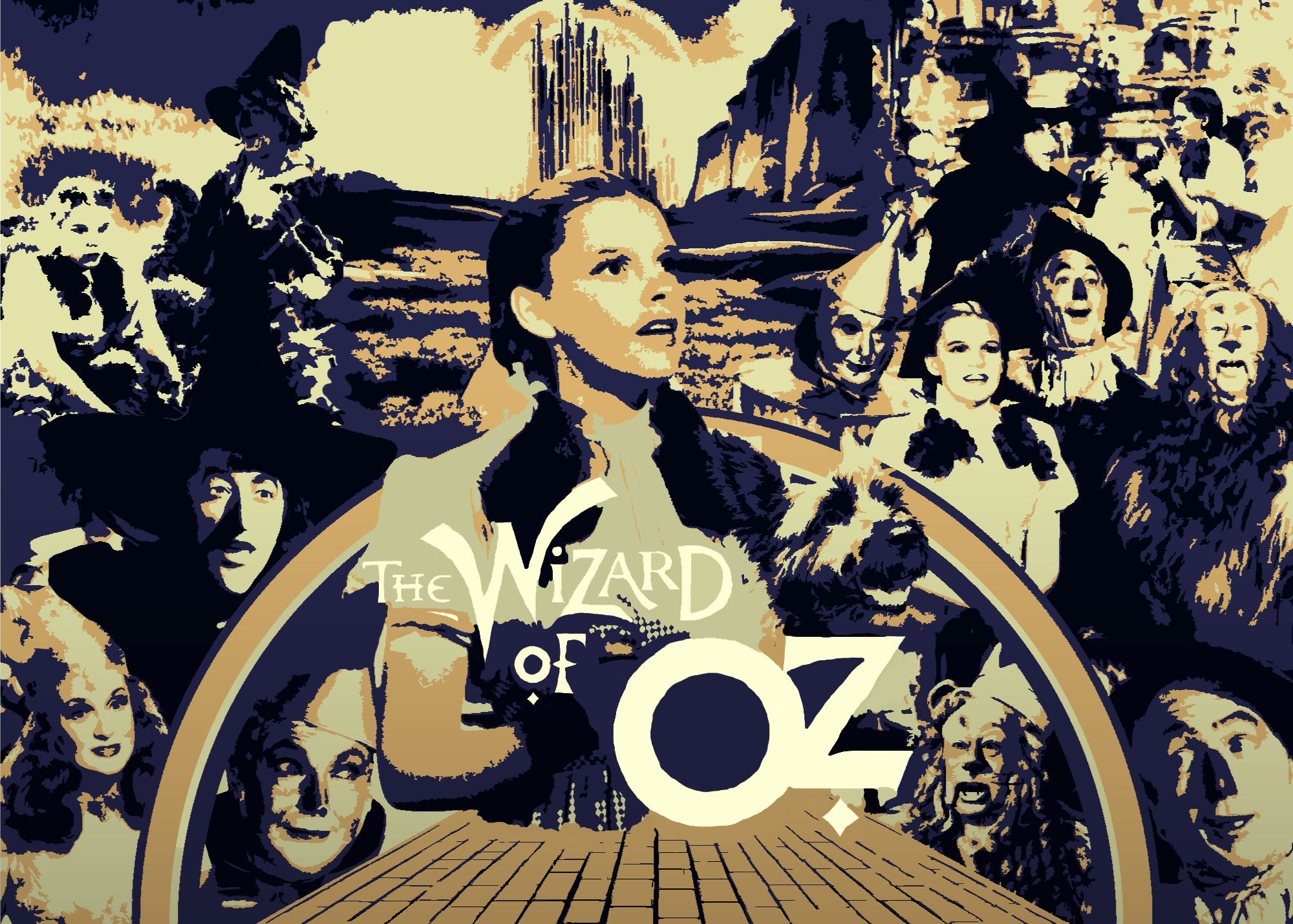
"The Wizard of Oz" Review: Still Worth A Trip Over the Rainbow
Over 80 years later, the world's most beloved movie (mostly) holds up.
Golden AgeHave you ever opened a drawer and immediately forgotten what you were looking for? Have you ever tried to match footsteps with the stranger walking in front of you? Have you ever needed to let out a huge fart in public, so you released it in short bursts so it became a covert op instead of an atomic, gaseous biohazard?
Yes, you have, and so has everyone else, just a few of the many universal experiences we humans share. Some are insanely annoying, others mildly inconvenient, and at least one can incur the wrath of an entire commuter train.
But perhaps the most common universal experience is dreaming. Yes, we sleep and have bizarre visions of dancing polar bears or envision ourselves as medieval knights or bedding that celebrity we’ll never meet, but this is about the type of dreaming we do when we’re awake. The kind when we face the mundanity of our lives or stand at the precipice of the next chapter and all the unknowns, and ask ourselves the bigger questions. The kind when we’ve retreated from the daily grind and ponder the what ifs and the maybes and the how comes. It’s when we dream of a land where troubles melt like lemon drops away above the chimney tops, and the dreams we dare to dream really do come true.
This type of dreaming is universal because it defies categorization and has no age limit. Children, unjaded by the harsher realities of life, dream of exactly that sort of thing, so the dreaming is literal. Adults, burdened by bills and hardened by hardships, dream of it figuratively. Regardless, everyone dreams. Is this why The Wizard of Oz, now in its 86th year, has endured? In a word, yes. In several more, yes, but not in the way one might think.
Everything can be trivialized, and usually by those who seek to exalt their passion by demeaning another, but the things that bring us together cannot, no matter the medium.
It isn’t always easy to talk about our feelings. We all fear judgment or misunderstanding, and sometimes we don’t even truly understand our feelings enough to take them seriously. If we can’t grasp what’s inside us, how can we ask anyone else to affirm it? Art is a way to find commonality without discussion: someone made something that speaks to us, and that’s enough. We know we are understood and accepted. The Wizard of Oz, despite its faults, has united generations across all boundaries and borders. Few things achieve this. In sports, there are individual teams whose fans despise other teams, or even their own fans and players. We can’t count on them to unite us. Instead, we can look to the story of a young girl from Kansas who dreams of flying over the rainbow.
Truthfully, The Wizard of Oz is a better idea than a movie, even if judged while considering its era’s limitations. Unquestionably, the bare-bones capabilities of Golden Age Hollywood give Oz an inimitable charm, absent the modern-day insistence on realism that sapped Wicked of the vibrance that would’ve made it a truly memorable and immersive experience. Its Technicolor magic, painted backgrounds, and fantastical costuming make it continually accessible to each new generation. Although it somewhat disservices her, the infantilization of the teenage Dorothy allows her to not be seen as a young child reserved for only the youngest of moviegoers, but someone through whom the film’s ultimate messages get relayed and taken in by all, yet with the childlike perspective necessary to make their simplicity, and thus viability, undeniable.
Still, the film is poorly edited. It unnecessarily extends sequences, particularly the arrival in Munchkinland, and underutilizes Margaret Hamilton as the Wicked Witch of the West. Dorothy’s introductions to each of her three friends along the Yellow Brick Road are virtually identical and happen in such quick succession that the film doesn’t breathe between each sequence, making 20 minutes feel like a slog. The movie is too short to explore each of its locations and much of the rising action, so it feels rushed despite its plodding pacing.
Could it have cut “If I Were King of the Forest,” a stoically shot, tuneless, and unnecessary song that halts the narrative? Yes. Could that extra time have been used to do more interesting things, like show more of the incredible Emerald City sets? Yes.
Still, there is something The Wizard of Oz has in greater abundance than most movies, and that’s warmth that doesn’t require any specific circumstances or experiences to be felt or understood. It isn’t even necessarily quantifiable. Perhaps it's that after the initial TV broadcast in 1956, watched by 45 million people, the film became an annual staple that drilled into the global consciousness. Each year it was aired, and home audiences gathered around their sets to watch Dorothy travel over the rainbow and skip off to the Emerald City with her newfound friends; it became a part of us.
Alas, that doesn’t explain why so many tuned in that November night nearly 70 years ago and why it resonated so much then in a way it didn’t upon its initial theatrical release 17 years prior, where it failed to recoup its budget. One could cite the Great Depression, which was nearly over but still saw many unable to pay the price of a ticket. One could bring up the studios’ botched marketing, constantly shuffling the release date and thus alienating audiences. One could theorize that without a definitive end in sight, people didn’t want to see something so contrasting to their hopelessness play out on the big screen.
Whatever the reasons, something that started as a one-off novelty became a time-honored tradition and part of our collective fabric, so intricately woven in that it feels as much a part of us as Fourth of July barbecues or Thanksgiving feasts. So, what is it?
It’s that unaffected warmth that only old Hollywood can provide. It’s free from CGI and the rushed carelessness that permeates every feeble attempt studios make at recapturing the magic of movies that meant something to their audience (though there’s no denying the cost). It's 35 ft. Muslin cloth tube suspended from a massive crane and operated from a moving car down below, creating the look of a devastating tornado coming to rip Dorothy’s Kansas farm home from its foundation. It's chocolate syrup posing as oil to lubricate the stoic Tin Man, and send him tilting back and forth as he sings about his missing heart. It’s the cozy, rustic feeling of something beautiful and comforting before the craft is mastered and sapped of character, like those birthday cakes your mother made before she went boujee and smoothed all the edges and piped intricate designs. Sure, they look cool, but do those cakes ever taste good?
It’s the timelessness of its songs - even those that don’t match “Over the Rainbow.” It’s Dorothy and her companions singing of whiz and wiz and wizards and wonderfulness. It’s the celebratory singing of an oppressed land of Munchkins, overjoyed to discover their oppressor has been slain.
It’s the schmaltzy dialogue and theatrical performances, all unapologetically (and delightfully) childish. It’s Dorothy's infantile panic at the slightest noise or sudden movement, Cowardly Lion’s histrionic bellowing at any sign of danger. It’s Scarecrow’s dramatic fumbling and tumbling as he and Dorothy swing their arms about, marching down the Yellow Brick Road. It’s the tearful goodbyes as Dorothy prepares to click her Ruby slippers and return to Kansas.
But most of all, it’s in its central themes: finding the courage to brave danger, staying true to worthy friends, realizing we may already have what we want most and only need to give ourselves the credit we deserve, and using all those things to realize that the grass isn’t always greener. We all dream of a different life somewhere over the rainbow, but the most universal experience of all is waking up to find everything was precisely as we needed it. It’s a lesson that’s ingrained in the soul of every human being. We can wish for something different and think it’s something more, but our most elaborate fantasies still have problems, their own obstacles to overcome, and while they’re certainly different, they aren’t necessarily better. Some are fortunate to have a home; others must make one for themselves. Many find kinship easily; others struggle to find their people. Many find success in droves; others struggle for decades to fulfill their aspirations. Still, we all have something grounding us.
For all its fantastical wonder, that core idea keeps The Wizard of Oz relevant for each generation. Without something warm, familiar, and (mostly) entertaining to remind us, especially in these trying times, that it’s what’s most dear we need to, in fact, hold most dear, we’re hopeless. Come to think of it, the times are always trying, tempting us to fly over the rainbow and stay there, dreaming of a time that may never come and a world that may never exist. The Wizard of Oz remains a film worth treasuring because it’s the ultimate reminder that while we can fly over the rainbow, in the end, there’s no place like home.

75
Director: Victor Fleming
Studio: MGM
Running Time: 102 minutes
Release Date: August 25, 1939
Cast:
Judy Garland - Dorothy Gale
Margaret Mitchell - Almira Gulch/The Wicked Witch of the West
Ray Bolger - Hunk/Scarecrow
Bert Lahr - Zeke/Cowardly Lion
Jack Haley - Hickory/Tin Man
Billie Burke - Good Witch Glinda of the North
Frank Morgan - Professor Marvel/Wizard of Oz/Gatekeeper/Carriage Driver/Wizard’s Guard
Terry the dog - Toto
Screenplay: Florence Ryers, Noel Langley, & Blanche Sewell
Editor: Blanche Sewell
Cinematographer: Harold Rosson
Score: Herbert Rothart
.jpeg)







.png)


.png)
