%20(13%20x%206%20in)%20(13%20x%204%20in).png)
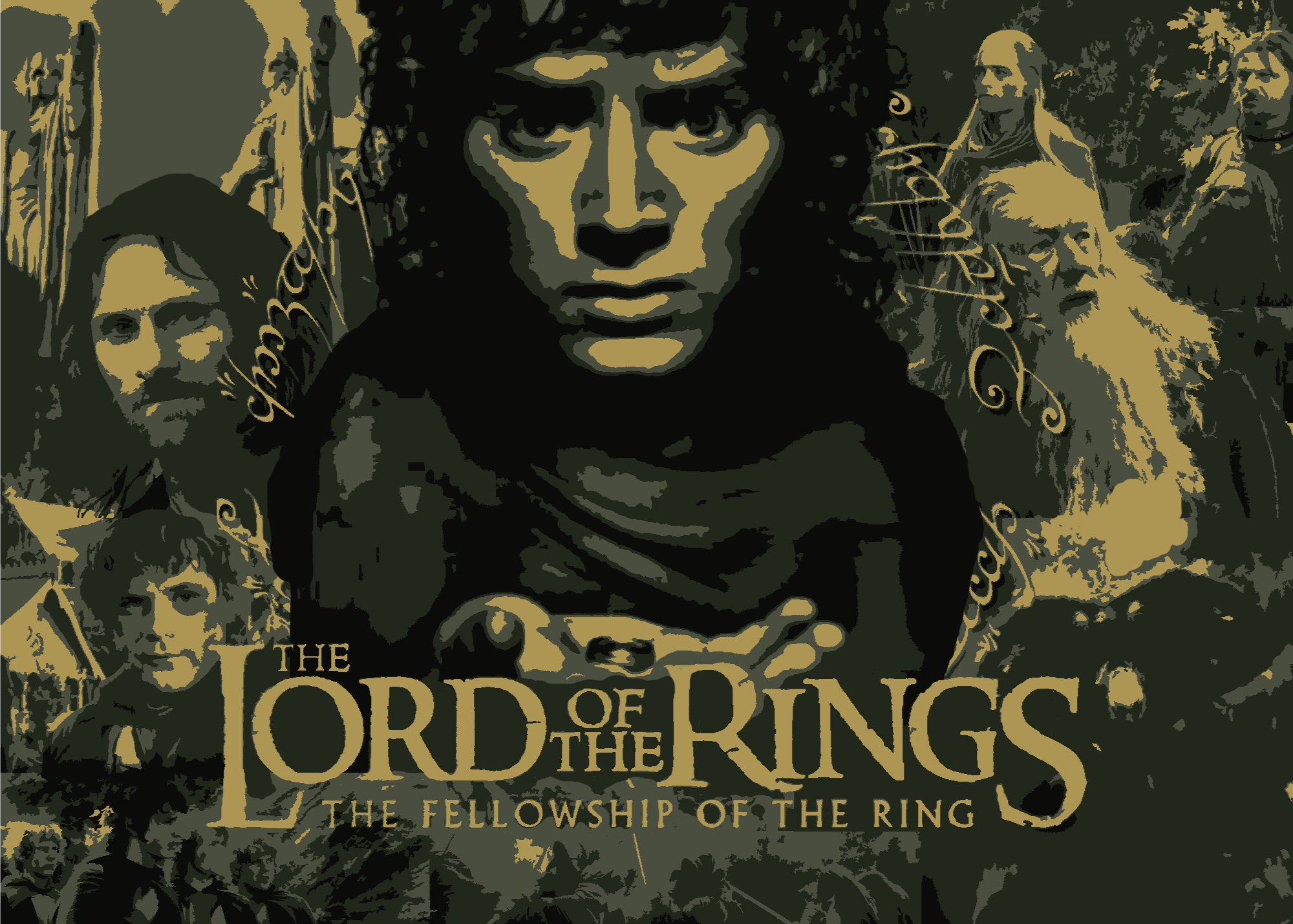
"The Lord of the Rings: The Fellowship of the Ring At 25: The Gold Standard For Fantasy Filmmaking
A quarter centrury ago, Peter Jackson made being a nerd cool.
RetrospectiveIn an October 1951 Newsweek article about the rise of bizarre slang among American teenagers, the word “nerd” was used for the first time. No one knew where this new pejorative came from, and its intended use wasn’t even specified, but forevermore, niche-interest fanatics would be known as “nerds.”
Three years later, on July 29, 1954, as though fated by the linguistic gods, J.R.R. Tolkien released The Lord of the Rings. A long-awaited sequel to The Hobbit, it landed on the literary scene in explosive fashion, garnering a polarized critical reaction but ultimately massive sales as the three-volume novel gained popularity in the ‘60s; the wonderment of its devoted fans gave nerds everywhere a home exponentially safer than the one ruled by the Dark Lord Sauron.
Still, as Dungeons & Dragons proved in the ‘80s, nerd-dom wasn’t ready for widespread mainstream acceptance, so unabashed love of Tolkien's wildly expansive Middle-earth was solidly in the “nerd” category. After several fruitless efforts to bring the book to the big screen, which started at concept art and ended at a bizarre animated short adaptation of The Hobbit, fortunes seemed to shift.
In 1978, Ralph Bakshi was a major name in animation. He’d worked as an animator for Terrytoons in the ‘50s before founding his self-named production company in 1968, and quickly amassed an irreverent, polarizing filmography. But more than a groundbreaking animator, he was a fervent Tolkien fan, having been introduced to The Lord of the Rings by Tolkien himself while still at Terrytoons. Fascinated by its ambitious storytelling and determined to prove animation could tell mature stories, he’d failed for decades to convince studios that the novel could be adapted as an animated film. When he heard a production was in the works, he fought to be the man behind the lens, and ultimately won when Oscar-winning producer Saul Zaentz footed the bill.
Sadly, Bakshi’s fanaticism didn’t translate. The 1978 release was a garish blend of live-action and questionable animation, with inconsistent voice work and glacial pacing. It was like a stale marriage in old age: if this is what I have, I’ll make do. Such was fan sentiment for 20 years, until director Peter Jackson, himself a fan who’d found critical adoration with everything from zombie comedy to crime drama, stepped up.
After Bakshi’s film was released in 1978, a 17-year-old Jackson, having heard of, but not read, The Lord of the Rings, went to see it. Intrigued but frustrated by the incomplete story, he read Tolkien’s novel. In 1995, Jackson and his screenwriter wife, Fran Walsh, both white-hot after Heavenly Creatures, sought to develop an original fantasy film. As they struggled to craft a concept separate from Tolkien’s essence, the idea came: adapt The Lord of the Rings.
It seemed a fool’s errand. How could Jackson, with so few films under his belt, pull off a project of this magnitude, one no one thought possible? It circles back to the core idea of making a film like this, or even writing the novel. The Lord of the Rings is ambitious, with unrivaled scope and firm vision. Designing its foundations alone would’ve been a titanic task, but developing such a comprehensive universe requires dedication only one type of individual could pull off: a nerd. Peter Jackson is Hollywood’s ultimate director nerd.
The road to production was bumpy. Originally, they pitched Harvey Weinstein at Miramax, who had paid for Jackson’s Heavenly Creatures, and he procured the rights from Zaentz. Jackson wanted to film a trilogy with The Hobbit as the opening act, but Weinstein could not buy out United Artists’ share of the rights. With Miramax unwilling to approve a third film for Tolkien’s novel, Jackson was forced to move ahead with two films for The Lord of the Rings.
Unfortunately, Miramax, which had only recently broken through commercially, could not accommodate the project’s massive budget. Weinstein tried to strong-arm Jackson into making massive story cuts and reducing everything into one, 2-hour movie. Jackson held firm, even after Weinstein threatened to replace him, so Weinstein put the project in turnaround.
Jackson, however, secured a meeting with New Line Cinema CEO Robert Shaye, which took the project from a pipe dream to a shining reality. Where Weinstein insisted on a reduced, two-hour film, Shaye specifically requested that Jackson complete the trilogy he had originally envisioned. Final cut was to be evenly divided between the two, but Jackson ultimately had full creative control. Against God’s plan, The Lord of the Rings was born.
Of course, adapting any novel is challenging, though fans never understand this. Tolkien’s story was thorough and expansive. Adapting it effectively meant shifting, adding, omitting, and adjusting in ways no filmmaker had ever conceived. Characters had to get cut, narrative threads rearranged, and accommodations made for actors seeking to explore their characters. Jackson employed Alan Lee, a famed Tolkien illustrator, to create concept art that would inspire the film’s production design, which took full advantage of New Zealand’s rich, diverse landscapes.
By the time the film premiered in London on December 10, 2001, the question was simple: would this be a feast or a flop? It couldn’t be anything else.
Then, we heard it:
“(I amar prestar aen)
The world is changed.
(Han mathon ne nen)
I feel it in the water.
(Han mathon ne chae)
I feel it in the Earth.
(A han noston ned gwilith)
I smell it in the air.
Much that once was is lost. For none now live who remember it.”
Cue the story of the forging of the Great Rings by the Dark Lord Sauron. Seven were given to the dwarves, three to the elves, and nine to men, but in secret, Sauron forged one ring to rule them all. As Sauron conquered the free world, a resistance between elves and men marched to Mordor, Sauron’s volcanic stronghold, to wage a final battle for the fate of Middle-earth.
When Sauron slew King Elendil, Prince Isildur killed the Dark Lord with his father’s broken blade. He took the ring for himself, but was ambushed and killed by agents of Sauron. It was found by Gollum, who kept it in the Misty Mountains for 500 years. As evil re-emerged in Middle-earth, the ring abandoned Gollum and was collected by Bilbo Baggins, a hobbit from the Shire, who has kept it ever since.
It all sounds silly. Elves and magical rings and Dark Lords and monsters? But something is clear from the opening words: this isn’t a game. It’s not a joke. It’s not a cash grab. It’s not a half-measure that caters to a specific audience, whether the hardcore fans or the children who will force parents into the theater with credit cards at the ready. It’s a passion project, a laborless labor of love. It’s here to be taken seriously as the one thing people never take seriously.
And it succeeds. How?
Passion. For Jackson, The Lord of the Rings was not a fantasy, but a historical epic: the armor, the weapons, even the dialogue. The combat has wizards and elves and monsters, but there’s something visceral about the spectacle that makes the story’s implications feel dire in a way most fantasies don’t. Everything is urgent, and it’s the level of care and craftsmanship - the seriousness with which such a fantastical story is told - that makes it feel real. The demand that each facet of the film embody this principle carries it so high, though nothing displays this as well as the music.
Howard Shore, who’d scored some of the biggest hits of the ‘90s, visited the set in 1999 and began writing the trilogy’s score soon after. He composed over 100 leitmotifs, creating a diverse, textured musical landscape. In the Shire, the lush greenery and quaintness of Hobbiton are enlivened by cheerful strings and woodwinds, while the searing brass sets a suffocating dread in the bowels of Isengard. The Elves are granted as much serenity as the Nazgûl are terror.
Shore composed a score not just for a story, but for an entire world, lending it the credence of a true story, making the film feel as true to us, despite its impossibility, as it does to the heroes living it. It allows the story to layer itself as it progresses. The innocence of the Shire underlies the film, and even as we venture further from it, it never leaves. Despite such polar opposition from one place to the next, each setting feels as fully developed and seamlessly assimilated as the next. Each location is distinct, yet exists as one.
The rest of the film’s technical execution doesn’t hold up as well as Shore’s compositions, but the craftsmanship is still remarkable. The Watcher in the Water is spotty, and the early sections of Moria look dated, but many of the effects remain mesmerizing. The Balrog, even as it roars with blinding fire, is shrouded in darkness, and its duel with Gandalf, while perhaps limiting in displaying the scope of the Wizard’s power, is still as thrilling today as it was in 2001, a reminder of how far Hollywood has gone south.
We’ve watched films become so reliant on CGI that it feels paradoxical how intent they are on seeking our investment as legitimate stories while refusing to lend themselves any legitimacy at all. Jackson captures not only the beauty of New Zealand’s landscapes but the ruggedness and vastness necessary to make this perilous journey feel like a genuine odyssey. With such diverse shot composition, pulling back to relay the boundlessness of Middle-earth as readily as it zeroes in on the most dire moments, we feel immersed in each step.
But what, above all else, creates that immersion? The acting. It's Viggo Mortensen, who blends Aragorn’s unique sensitivity and quiet strength into an inspirational and aspirational hero. It’s Ian McKellen, whose earnestness legitimizes the film’s thematics. It’s Cate Blanchett, whose nuanced intensity creates a fully realized character in record time. It’s Elijah Wood, fearful of the unknown but fiercely resolved to carry out his great task. You’ll never forget Galadriel’s rejection of the One Ring, Gandalf encouraging Frodo to make the best of his circumstances, Aragorn bidding Boromir a warrior’s farewell, or Frodo standing on the banks of the Anduin, reflecting on Gandalf’s wisdom as he grieves all he’s left behind and chooses to face all that’s yet to come.
It is not a faultless adaptation, as no film can be. But as a movie whose sole purpose is to entertain, engage, and enthrall, it’s nearly unimpeachable. By the end, we can feel how far our heroes have come, how many plains they’ve trekked across, how many mountains they’ve climbed, caverns they’ve braved, monsters they’ve fought, and friends they’ve lost. It captures the warmth of the Shire as expertly as the mystique of Lothlorien, and the grief of loss as powerfully as the resilience of fellowship.
It’s a visual and auditory feast, but its greatest achievement is becoming an emotional colossus as Aragorn, Legolas, and Gimli vow to rescue the kidnapped Merry and Pippin, and Frodo and Sam look to Mount Doom, resolving to take the ring to Mordor together. For all the revolutionary trailblazing it did for the fantasy genre, for all the unthinkable visual heights it soared to, it somehow managed something even more incredible than the most incredible things you could imagine.
As Frodo stands by the Anduin, holding out the Ring and staring across the water at his destiny, The Fellowship of the Ring takes something profound and makes it more than a whisper in the wind. In the end, people will perish, ideals will be tested, and the inevitability of questioning what we’re capable of and willing to do takes hold.
In times like those, like the ones we’re in now, it is vital that we not be too eager to deal out death and judgment. Yes, we want justice and liberty for all. Yes, we have to fight to achieve those aims, but if we decide for the world more than any one person should, we risk everything we’re fighting for. We must make the best of the time that we have, and we can do no more or less. Yet, what seems so simple can carry implications beyond what we ever conceived. We all have that power, and we must use it wisely.
So, how did it happen? How did a fantasy epic, written by a nerd, adapted by a nerd, and created for nerds, become a movie with as much emotional resonance as visual splendor? How did it notch 13 Academy Award nominations, become the fifth-highest-grossing movie ever at the end of its initial theatrical run, and enjoy such enduring appreciation 25 years after its release as the preeminent cinematic fantasy of all time? It’s quite simple, really. When it comes down to it, nerd may have meant something negative in 1951, but we know nerdiness is simply another way of describing passion. The passion to honor something you love. The passion to find meaning in every moment. The passion to appreciate every detail, no matter how big or small. When that passion shines out the clearer, it can make nerds of us all.

98
Director - Peter Jackson
Studio - New Line Cinema
Runtime - 178 minutes
Release Date - December 19, 2001
Cast:
Elijah Wood - Frodo Baggins
Viggo Mortensen - Aragorn
Ian McKellen - Gandalf the Grey
Liv Tyler - Arwen
Sean Astin - Samwise Gamgee
Christopher Lee - Saruman the White
Hugo Weaving - Elrond
Sean Bean - Boromir
Orlando Bloom - Legolas
John Rhys-Davies - Gimli
Cate Blanchett - Galadriel
Dominic Monaghan - Meriadoc Brandybuck
Billy Boyd - Peregrin Took
Ian Holm - Bilbo Baggins
Editor - John Gilbert
Screenplay - Fran Walsh, Philippa Boyens, Peter Jackson
Cinematography - Andrew Lesnie
Score - Howard Shore

.jpeg)







.png)


.png)
Latest Entries