


%20(13%20x%206%20in)%20(13%20x%204%20in).png)
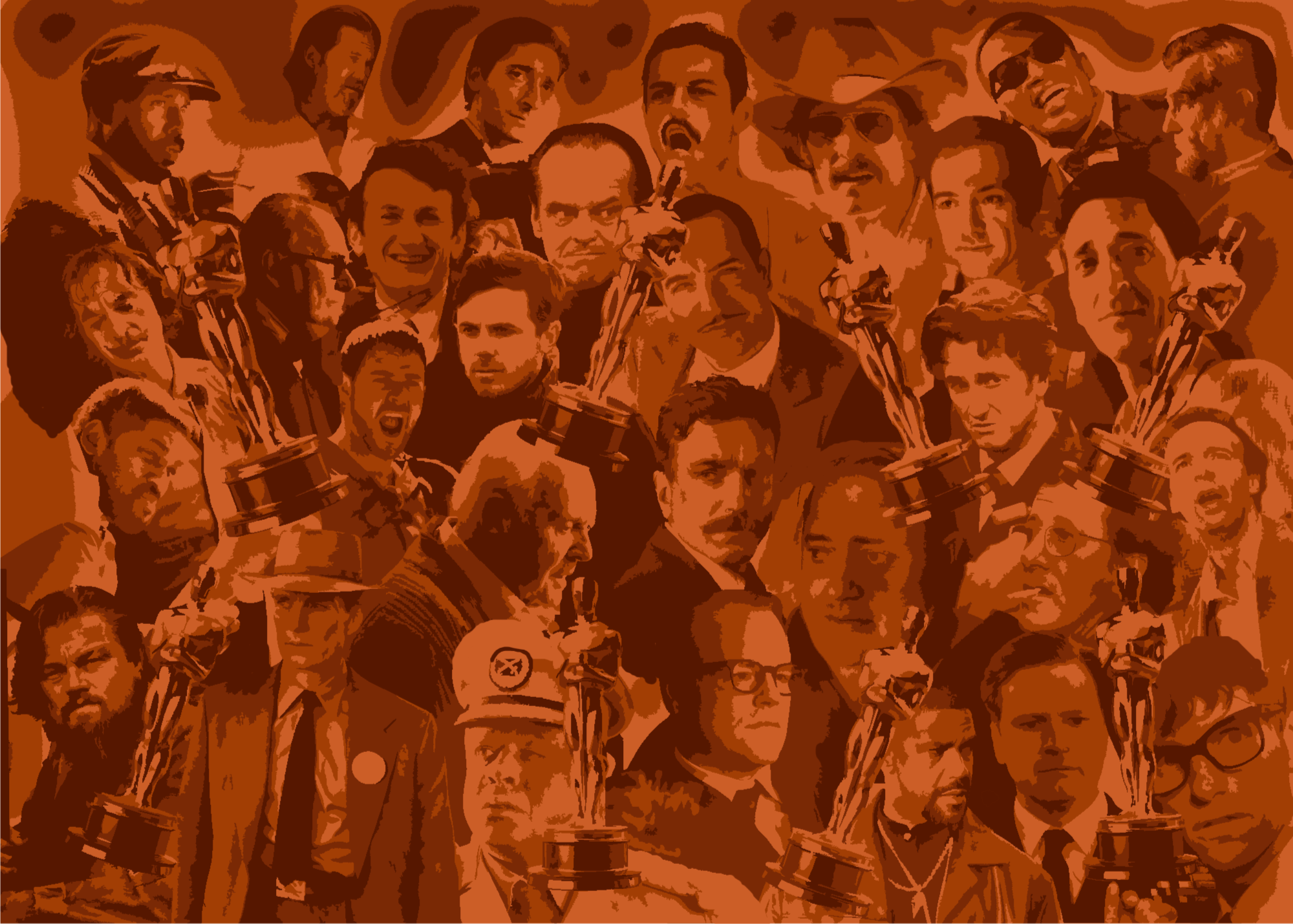
Every Oscar Best Actor Winner of the Last 30 Years, Ranked
Looking back at three decades of Academy Awards greatness and controversy.
RankdownAt the 1st Academy Awards ceremony at the Hollywood Roosevelt Hotel in 1929, Emil Jannings won the first award for Best Actor for his performances in The Last Command and The Way of All Flesh. Since then, some of the most revered actors in Hollywood history have been given this illustrious award, but there’s been plenty of controversy along the way. Great talents have been awarded for divisive performances, campaigns have seen shockers upset favorites, and the only thing that can be agreed on is that we never agree.
For the last 30 years, some of the best performances in history have steamrolled award season and captured Oscar gold, but plenty of unpopular choices have gotten read out on the big night. From horror flicks to biopics, historical dramas to rom coms, presidents to pianists, gays to gladiators, the award has known no boundaries. As art is subjective, it’s always fun to toss out a ranking, so here are the last 30 years of Best Actor winners, ranked.
30. Jack Nicholson - As Good As It Gets as Melvin Udall (1997)
Of all the actors who’ve achieved decades of acclaim and an almost cult-like devotion to their supposed greatness, Jack Nicholson’s success is the most mystifying. Many actors essentially play themself in every movie, but while the Gene Hackmans and Denzel Washingtons could/can make countless subtle alterations to each role, Nicholson is just Nicholson in everything he does. It’s a tiring, charmless schtick, and his third Oscar, for playing a misogynistic writer who falls for a single mother, is his most phoned-in role during the twilight of his inexplicably long and illustrious career.
29. Joaquin Phoenix - Joker as Arthur Fleck (2019)
Phoenix was born to be worshipped by B-grade cinephiles. He got mainstream work, so he wasn’t too challenging, but he wasn’t a conventional leading man and seemed like the weird kid in class who drew pictures on their pants. He was never widely acclaimed, but enough to feel like you were jumping on a bandwagon not everyone was riding. The fact is, he’s never been anything but mediocre at best, film-destroying at worst, save for a great turn in Walk the Line. Joker was nothing but an excuse to give him the gold, and his contrived awkwardness fit Fleck like an OJ Simpson leather glove.
28. Sean Penn - Mystic River as Jimmy Markum (2003)
Clint Eastwood is an atrocious screenwriter and a bad filmmaker, but he was in Sergio Leone’s spaghetti westerns 60 years ago, so he gets a lifetime free pass. Penn is left in the cold with some truly horrific dialogue, but he doesn’t do himself any favors. He’s a tough-nosed, sharp-edged grieving father, and we get very little of that aside from knowing it simply because that’s quite literally the story being told. Penn can’t bring that emotion, whether raw or nuanced, to the surface. The one time he tries, we get the infamous, “IS THAT MY DAUGHTER IN THERE?!?!” which may be the worst scene on the list.
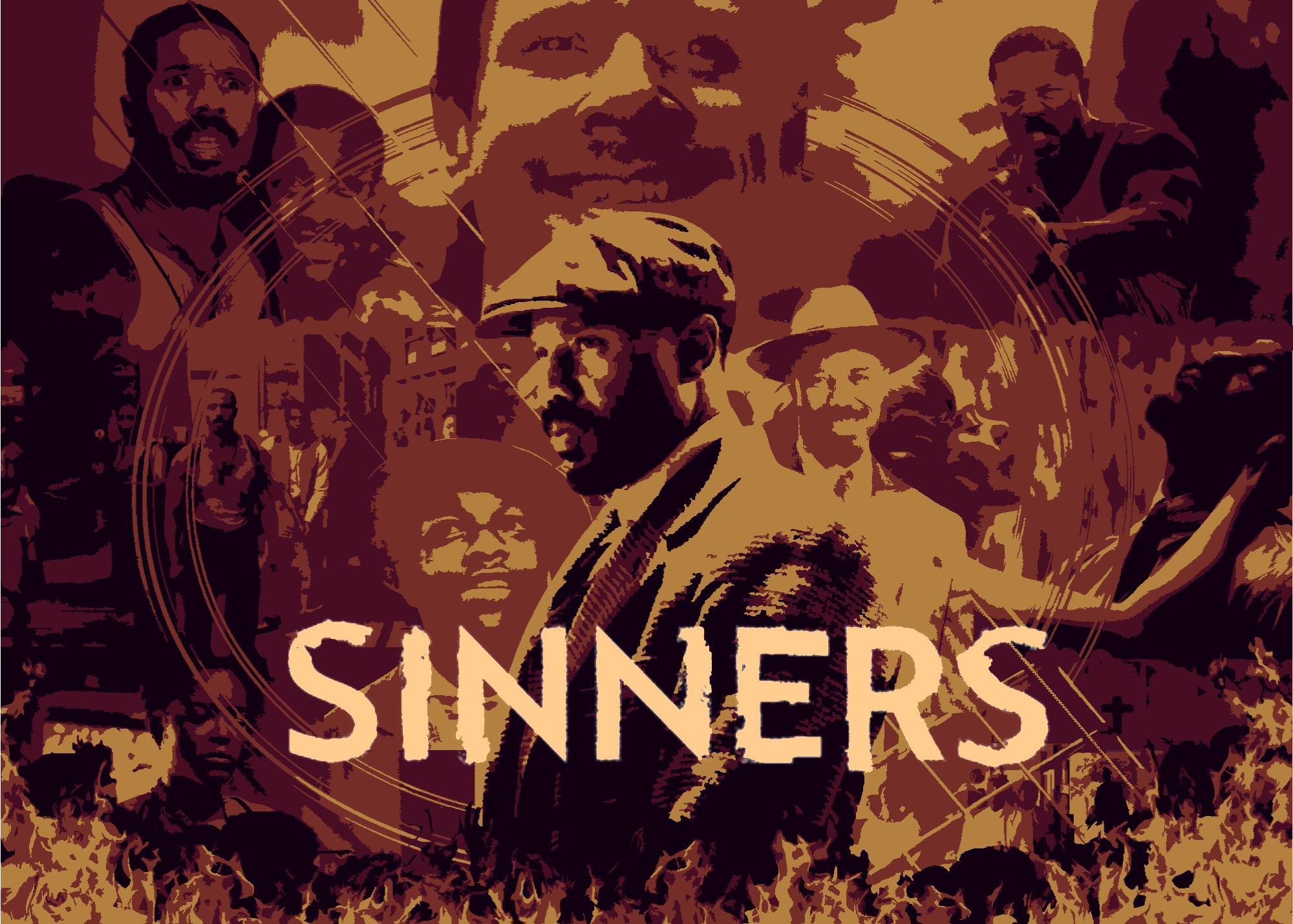
27. Michael B. Jordan - Sinners as Elijah “Smoke” Moore/Elias “Stack” Moore (2025)
After the #OscarsSoWhite scandal in 2016, Hollywood convinced itself that if it periodically behaved as if it cared about minorities, it would make it true. Make no mistake: the pressure the industry put on itself to up its representation game has awarded some worthy winners, but some have raised an eyebrow. Many tried to con everyone into thinking Jordan deserved it because Timothée Chalamet is a douchebag who “dissed” opera and ballet and because Sinners was a black-made and led movie, but reality is reality. Jordan is a mediocre actor who’s just playing himself twice over, and he's arguably the weakest actor in the movie.
26. Roberto Benigni - Life is Beautiful as Guido Orefice (1998)
Despite all the powerhouse films and performances in 1998, Benigni’s feel-good take on the Holocaust drew global adoration (save for some minor controversy). In retrospect, his slap-happy, aw-shucks schtick is aggravating, and it makes his performance feel insincere. On its own, it’s a rough watch. Guido never feels like an actual person; not a husband, father, victim, survivor, nothing. It’s two hours of Benigni trying to prove how irreverent and charming he is, but since he’s neither, his performance is one of the weakest to win.
25. Will Smith - King Richard as Richard Williams (2021)
Will Smith has always seemed high on his own supply. When it felt like charisma that anchored hits like Men in Black and Independence Day, that was okay. When it underlies Venus and Serena Williams’ dad with an insufferable narcissism that suffocates the movie, it’s not. There’s a balance to be struck there, one that would make Richard a fascinating dissection of parenthood in disadvantageous circumstances that asks and answers questions of who we are vs. how we raise our children. Unfortunately, Smith is too aligned with his subject’s grandiosity, and much of his performance feels like he's literally begging the Academy for the statuette. King Richard is nothing more than a vehicle for Smith to win the Oscar he’d long felt entitled to but never deserved.
24. Leonardo DiCaprio - The Revenant as Hugh Glass (2015)
Public opinion was so overwhelmingly in favor of anointing DiCaprio that no one asked if it was deserved. He’d been a phenomenal actor for decades, but he’d never given head and shoulders the best performance in any given year. Sadly, this led to the result of so many such campaigns: a long-denied actor getting awarded for one of their weakest performances. Physical acting impresses industry folk, but it’s ultimately the cheapest way to win an Oscar, and DiCaprio’s one-dimensionality doesn’t offer anything that deserved such a dominant awards season or the long-awaited Oscar at the end of it.
23. Jean Dujardin - The Artist as George Valentin (2011)
The awards season fascination with The Artist was predictable. Hollywood loves itself, so something reverential of an art form literally none of them will ever employ again was bound to earn raves. Dujardin benefitted tremendously from the hype to the tune of a season sweep. Was it earned? Eh. It was a weak year, but solely as a performer, he’s fine. He captures the theatrical charm of silent acting while injecting a pinch of modern life, but it’s not a memorable or moving performance, so what more can one say?
22. Sean Penn - Milk as Harvey Milk (2008)
For much of his dramatic career, Penn’s acting has felt self-indulgent. He peaked with Spicoli, bought into his own hype, and believed himself to be something he’s not and could never be. He’s simply not a dramatist, and his interpretation of groundbreaking gay politician Harvey Milk feels like a cheap imitation. It’s a shame, because Harvey Milk, though decidedly imperfect, deserved at least to have the contributions he made to the LGBT movement given a proper portrayal. In 2008, when society had significantly further to go, a film like Milk, and the performance leading it, felt revelatory. Nearly 20 years later, hopefully all can see it's just a self-serious man once again proving his general incapability of disappearing into a role.
21. Rami Malek - Bohemian Rhapsody as Freddie Mercury (2018)
Queen’s devoted fans have deified Freddie Mercury; no one could’ve satisfied their outlandish requirements. Realistically? Mercury was a powerhouse, if histrionic, vocalist, a profoundly flawed yet charismatic man, but heaven forbid he be portrayed as anything but a god. The teeth are absurd, and Malek has a singular style that doesn’t lend itself to most roles, but when he finds his footing, he’s very good. He has an appropriate amount of edge for someone with Mercury’s ethical shortcomings, strong stage presence, and ultimately gives as much as you could ask for when it matters most. It’s an uneven and sometimes frustrating performance, but it doesn’t deserve the hate it gets.
20. Jeff Bridges - Crazy Heart as Otis “Bad” Blake (2009)
2009 was a weak year for acting, and Best Actor was arguably the weakest category. It paved the way for Jeff Bridges to march to the stage on Oscar night, the beneficiary of the “It’s their time” career narrative. Bridges is such a cool dude that it was difficult to argue against it without anyone remarkable to challenge him, but as a performance, it’s good. It’s not entirely Bridges’ fault, not at all, actually. Crazy Heart is a reductive retread of Tender Mercies, so much so that Robert Duvall is in the freaking movie. Sadly, Duvall had significantly more to chew on; Bridges is stuck in a paint-by-numbers alcoholic drama that’s so banal it affords him virtually nothing to do: the man barely even drinks. He does what he can to lift the material, but there’s only so much the man can do, so while the performance is capable, it can’t be anything more.
19. Adrien Brody - The Pianist as Władysław Szpilman (2002)
Adrien Brody’s shock win is still so shocking that people rarely discuss the merits of his performance. What are they? It’s competent and relatively inoffensive, but it suffers from a rare feat of almost being too measured. It’s heavily reliant on Brody’s physicality and emotional restraint, like Szpilman is exhausted by the seemingly simple, but truly arduous, task of surviving. It’s a sharp choice by a great actor, but while his reservedness thankfully contrasts with child sex offender Roman Polanski’s melodrama, there’s something unquantifiable about it that makes the performance feel a bit aimless.
18. Eddie Redmayne - The Theory of Everything as Stephen Hawking (2014)
Redmayne has always had the tools to be a great actor. He’s handsome, but unconventionally so. He’s expressive, immersive, and British. Yet, something has never clicked, at least not consistently. You always want to like his performances more than you actually do, and his portrayal of Stephen Hawking is no different. He’s emotive, and he plays the most heart-wrenching moments well, like his decision to separate from his wife, Jane, but too many of the in-between sequences are weighed down by his theater trappings. The cinematography was syrupy enough; we didn’t need Redmayne adding a dose of schmaltz so overpowering it feels like bathing in an oil slick.
17. Brendan Fraser - The Whale as Charlie (2022)
Brendan Fraser was treated horribly by Hollywood, one of the few big-name male #MeToo victims to speak out about how predation in the industry torpedoed his career. The Whale afforded Hollywood the chance to offer their apologies in the form of a little golden man, and that narrative won the day. Charlie is a one-dimensional character that would prove challenging for any actor, but Fraser rises to the occasion. He has moments where Charlie’s contrived weepiness proves too much for his talents to overcome, but he mostly maximizes what little he’s given to carry a mediocre movie. The one chance he gets to really pound the point home, he shatters you with a line delivery that itself would’ve earned an Oscar.
16. Daniel Day-Lewis - Lincoln as Abraham Lincoln (2012)
Here’s where things get thorny, because the top half of this list is overflowing with strong performances. By all accounts, Daniel Day-Lewis does a remarkable job emulating the vaunted Civil War president, and it’s a testament to what a truly fantastic physical actor is capable of doing, especially at the behest of Steven Spielberg. On the other hand, while Lincoln’s weariness as the war is set to conclude is palpable, Day-Lewis’ technical capabilities don’t do enough to raise him above the 15 showings above it. It’s not an indictment, but that’s where things stand now.
15. Daniel Day-Lewis - There Will Be Blood as Daniel Plainview (2007)
Day-Lewis is relentless in embodying every character he plays. For a lesser actor, this approach could oscillate between brilliant and catastrophic, but for an actor of his caliber, it instead swings between solid contrivance and genius. Something about his selectivity almost feels designed to elicit a feverish response, but not seeing an acclaimed actor as often as we’d like doesn’t make every performance a knockout. Daniel Plainview is a generational role, and Day-Lewis’ viscerality creates some unforgettable moments. Still, his methodology can’t help but feel calculated, and for every “I abandoned my child!” we get a “I drink your milkshake,” and the results, while very strong overall, certainly don’t deserve the continued reverence they receive.
14. Geoffrey Rush - Shine as David Helfgott (1996)
Geoffrey Rush’s career trajectory is one of the oddest in Hollywood history. He had a solid, if unremarkable theater career starting in the early ‘80s. Then, at 45, he landed his international breakthrough as schizoaffective classical pianist David Helfgott, which sent his career into the stratosphere. In the 10 years following his win, he starred in Elizabeth,Shakespeare in Love, Quills, Frida, Finding Nemo, and the first two Pirates of the Caribbean movies. For an Oscar win to spark such a blazing hot streak would imply it was a transcendent, film-anchoring showing, but it’s not.
Considering his leading man status, he’s hardly in the movie and is given little to do compared to Noah Taylor, who portrayed Helfgott in his adolescence. Rush is an incredible actor, and his depiction of Helfgott’s advanced mental illness is respectful and refined, but it’s a simple matter of the actors above him having more to do while being just as good or better. It’s not an indictment of Rush; had he been a larger presence, he’d have potentially cracked the top ten.
13. Jamie Foxx - Ray as Ray Charles (2004)
It seemed almost fated that Foxx would win the Oscar. He was essentially born to play the role, and Charles died just before the film’s release. The acclaim was likely impacted by the circumstances, but Foxx shines. He becomes the man as a musician and singer, but even more so as an arrogant, charismatic man whose family neglect and drug abuse ultimately gave way to renewed character and an indelible legacy. Taylor Hackford demanded a lot in telling the story of one of music’s most beloved but haunted figures, and Foxx, though a tad strained and unnatural in the less showy scenes, checked off nearly every box en route to the Oscar.
12. Phillip Seymour-Hoffman - Capote as Truman Capote (2005)
Hoffman was one of those actors who everyone rabidly acclaimed, but no one could ever explain why. Frankly, the man was mediocre, but if one were to conjure an argument to the contrary, Capote is it. To make the man himself a compelling fulcrum, Hoffman needed to wholly relay Capote’s self-absorption and manipulativeness, all while ensuring you never feel contempt for him. It’s a fully realized exploration of an exploitative and uniquely charming literary genius who shrewdly stops at nothing for a good story that gives insight into crime fanatics even today, and it’s hard to imagine anyone could’ve pulled off the role as expertly as Hoffman.
11. Gary Oldman - Darkest Hour as Winston Churchill (2017)
Brian Cox, Timothy Spall, Albert Finney, John Lithgow, Brendan Gleeson, and Michael Gambon: these are the notable names that had portrayed the UK’s most famous Prime Minister heading into Gary Oldman’s turn at bat. That alone makes his performance the most difficult to judge: how can one individualize a man who, with his legendary status and countless on-screen portrayals, seems impervious to individualization? Oldman proved up to the task, lending a charismatic gravitas and tireless strength to Churchill that accomplishes the film’s objective of relaying why he was the man to lead Britain through its darkest hour.
10. Denzel Washington - Training Day as Alonzo Harris (2001)
It seems nuts to think about now, with how Denzel Washington and Russell Crowe’s careers ultimately turned out, that there was no Best Actor race in 2001. The award was Crowe’s until an altercation between Crowe and a producer at the BAFTAs turned the tide at the last minute, handing Washington the second-ever Best Actor Oscar to a black man. Crowe would’ve been a worthy winner, and Washington’s performance occasionally veers into theatricality, but he’s terrifying as corrupt LAPD narcotics officer Alonzo Harris. He feels like a man who could snap at any moment while having a chilling control over every second of Ethan Hawke’s unfortunate training day; then he unleashes hell. That compelling paradox creates one of the most unique and memorable film villains of the 21st century.
9. Colin Firth - The King’s Speech as King George VI (2010)
Colin Firth’s career didn’t go as expected after he stole millions of hearts as a soaking wet Fitzwilliam Darcy in the BBC’s 1995 adaptation of Pride & Prejudice. He’d had a good career, but never became a true leading man. It was satisfying to see his talents finally recognized on a larger scale, not just the consolation prize for Renée Zellweger or as part of one of the worst Christmas movies ever.
He was a star for The King’s Speech, and a brilliant choice to play King George VI in his most vulnerable hour. The king was fiercely shy and deeply sensitive, due largely to a steely father and a lifelong stammer. Firth’s most impressive feat is portraying him without being patronizing, not to view him as a victim struggling to break free, but as a man trying to overcome and be better for those around him as well as himself. The film’s crowd-pleasing success is due largely to Firth’s relatability in the central role, while not sacrificing the overarching stakes.
8. Russell Crowe - Gladiator as Maximus Decimus Meridius (2000)
Measuring a performance like Crowe’s in Gladiator is easy, not only because Maximus is a singular character with a very specific goal, but because the template has existed for a character of his kind since the dawn of film. A heroic warrior will always have the mic crop moments, and Crowe handles those with masterfully, making Maximus feel as courageous and honorable as intended. But what matters most in a role like these is the quieter moments where an inner resolve needs to shine through. “Are you not entertained?!” and Maximus’ reveal to Commodus deserve the fanfare, but if you want the true power of Crowe’s performance, look to when he tells Commodus he’s been scared all his life. In Gladiator, Crowe is pure power, but in a dozen nuanced ways.
7. Matthew McConaughey - Dallas Buyers Club as Ron Woodruff (2013)
The McConaissance was real, and while it gave McConaughey a chance to recover from the pain of some 2000s stinkers, it also shone a spotlight on his irreverence and ultimately derailed. Thankfully, he peaked at the perfect time, bringing the little-known story of Ron Woodruff to the big screen in riveting fashion. Relaying the terror of the AIDS crisis, particularly in small-town America, was no mean feat in 2013, long after HIV had become a manageable condition. Yet, he pulls it off with the most unaffected, raw power of his career. McConaughey evokes Woodruff’s fear beneath a macho facade, but the development of his personal relationships is the film’s deeply human backbone. McConaughey’s desperation as he fights for the survival of him and the community he builds shows tremendous resolve, but it's the bonds within that community, most notably with the transgender Rayon, that allow his unique charisma to shine.
6. Cillian Murphy - Oppenheimer as J. Robert Oppenheimer (2023)
After getting repeatedly relegated to second (or really eighth) fiddle in Nolan flick after Nolan flick, Cillian Murphy finally got his moment as the father of the atomic bomb. The #Barbenheimer phenomenon distracted us from how Murphy would approach dissecting one of the 20th century’s most important and controversial figures, but the results were dazzling.
Murphy is magnetic, evoking the egotism needed for one to carry out such a monumental and compromising task, and the many ways it bleeds into the lives of those around such individuals. He seems deeply feeling but frigid, deserving of respect but contemptible, and quietly charismatic while lacking charm. It makes his ultimate realization of his creation’s power against the ambition of scientific pursuit a thrilling thematic payoff, and Oppenheimer is the most compelling protagonist from any Nolan film.
5. Anthony Hopkins - The Father as Anthony (2020)
The Father’s choice to portray Anthony’s developing dementia by muddying the timeline and forcing us to question what’s real and what’s not could have been a liberation or an anvil. Director Florian Zeller handles his method with poise, but it’s Hopkins that proves it a worthy endeavor. He’s effective as the aging man insistent that he can continue on his own devices and temperamental with those who try to help, but he’s brilliant when Anthony’s illness consumes him, and he reverts to being a scared man who doesn’t know what’s happening to him or why. When he begs for his son-in-law not to strike him or cries out for his mother, your blood will boil, and your heart will shatter. Why can’t we cure this? Why can’t we help these people? You’ll walk away with the deep empathy that comes with lacking answers to impossible questions, and few actors can pull that off.
4. Forest Whitaker - The Last King of Scotland as Idi Amin (2006)
Whitaker, who’d built a career out of soft-spoken, compassionate men, showed immense range by transforming into megalomaniacal dictator Idi Amin, the brutal former President of Uganda. Rarely has such irrepressible narcissism been captured so effectively, absent heavy-handed dialogue or physical histrionics. Through Whitaker, we fully understand why Idi Amin could rouse a crowd so effortlessly, inspire such disdain, and the calculated thinking that could turn a conversation on its head. For a movie to fade into such obscurity but have its central performance leave such a lasting impression is a testament to Whitaker.
3. Adrien Brody - The Brutalist as László Tóth (2024)
It feels like a fever dream every time it’s acknowledged that, of all people, Adrien Brody is a two-time Oscar winner. His first win is not cut and dry, but his second is undeniable. Rarely is an actor tasked with shouldering a movie to this extent; Brody now stands as the Best Actor winner with the most screen time in the award’s history. Tóth’s journey takes him through love, addiction, ambition, exploitation, antisemitism, abuse, and the nuanced difficulty of pursuing the American dream. Few actors have mastered despair like Brody, but his performance is far from one-dimensional. Despite everything placed on him, he knows precisely when and how to sharpen Tóth’s edges and remind us that the man shares the burden of his anguish even though we still long to see him pull through against a tide flowing relentlessly against him.
2. Kevin Spacey - American Beauty as Lester Burnham (1999)
In light of Spacey’s alleged sexual predation and similarly alleged predilection for the underage, his embodiment of Lester Burnham’s lust for his daughter’s teenage friend is, shall we say, not fun to watch. It’s always difficult to approach these things, but nuance does no one any good if it is used to avoid drawing conclusions instead of solidifying a perspective. Ultimately, the film condemns Burnham’s Lolita fantasies, so there’s no attempt by Spacey to legitimize his alleged perversion.
We can’t pretend he didn’t win, and the man is brilliant. He’s biting, caustic, desperate, wounded, yet, against all odds, bizarrely relatable. No, not in that most lecherous, despicable way, but in the “looking at our life and wondering how it came to this and behaving out of sorts” kind of way. Despite his behavior, we never feel wholly removed from Lester, largely because Spacey does a brilliant job of portraying how masterfully one can deceive oneself to the point of self-destruction, yet have those deceptions be so shallow that they can crumble in an instant. Screenwriter Alan Ball provides Spacey with plenty of acerbic humor, which he pulls off remarkably, but it's the emotional nuances of a deeply flawed character that ultimately resonate, even if the reasons make your stomach turn.
1. Casey Affleck - Manchester by the Sea as Lee Chandler (2016)
It’s sometimes difficult to articulate why a performance is so good, which is why most rely on calling things “viscerally raw” or “hauntingly devastating,” or just generally writing like no human being ever has thought or spoken (which is not to say this article has been immune to a linguistic reach or several). Let it be said then, as plainly as possible: in Manchester by the Sea, Casey Affleck gives one of the best performances ever, and perhaps the strongest the category has ever awarded. For all the fire and music most cinematic portrayals of grief get derailed by, Affleck’s discipline unlocks something more grounded that challenges us to perceive these emotions in a new way. He conveys more heartache without tears than most actors do with a flood. He’s a man surviving without aim, not even trying to discern how to truly live, and anyone, for any reason, who’s suffered that way will never forget Casey Affleck in Manchester by the Sea.


.jpeg)













.png)


.png)