


%20(13%20x%206%20in)%20(13%20x%204%20in).png)
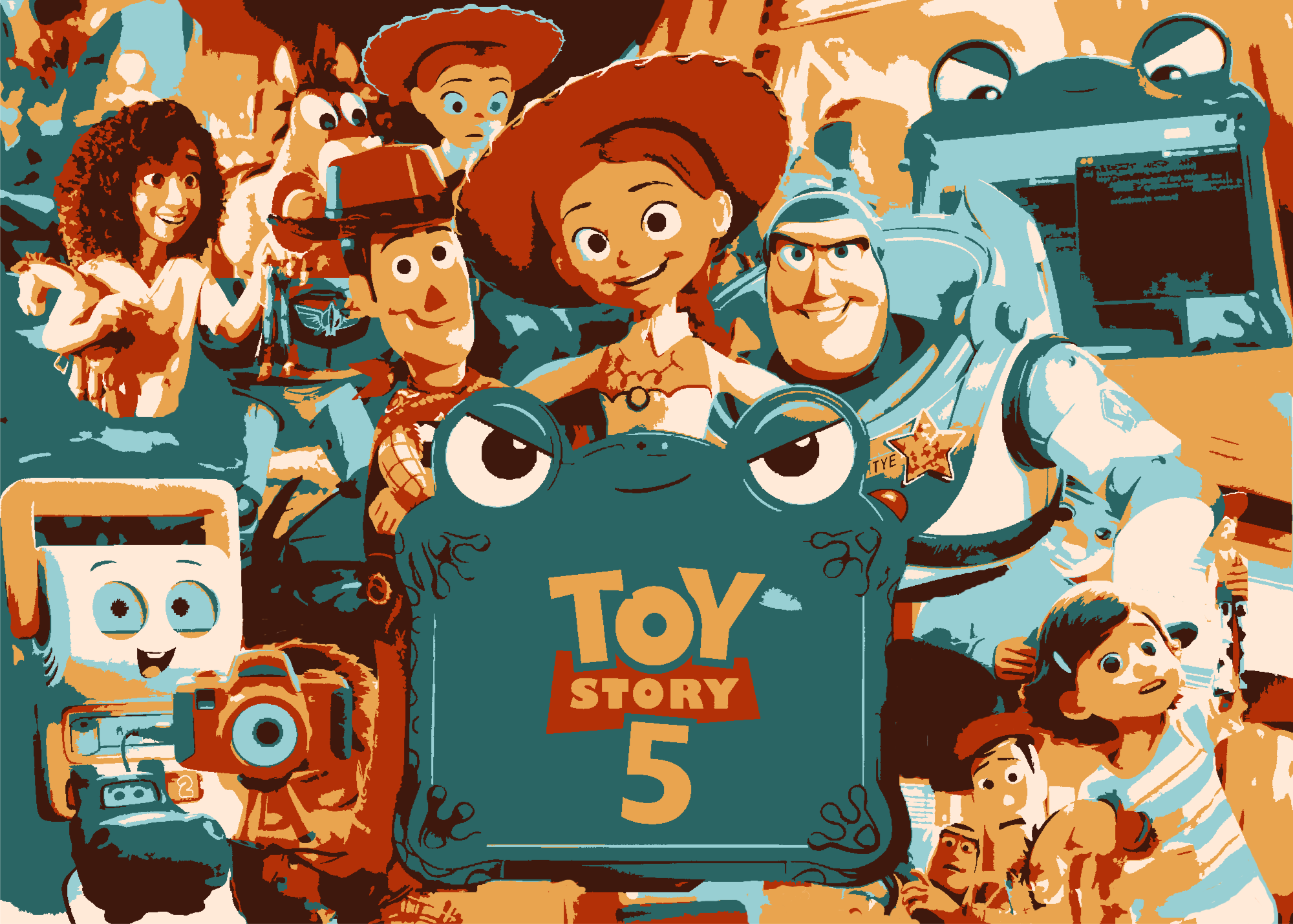
"Toy Story 5" Review: Proof The Classic Franchise Still Has A Purpose
Over 30 years after the first film, Pixar has justified returning to this never-ending well.
Recent ReleaseSince the dawn of humankind, we’ve proven to be creatures of evolution, and the core of 300,000 years of evolution is exemplified by this concept: a simple idea, born of necessity, tinkered until those small steps turn into a giant leap.
In fact, Toy Story 5 wouldn’t exist without that. We need stories. We need to keep people engaged in storytelling, so we need to change how we tell stories. We tried this style and that one, taking a step forward with each new technological development, until… Toy Story, then 2 and 3 and 4 and 5.
It feels ironic that a franchise that leapt technology forward so far would want to offer a perspective on its potential dangers, but here we are: 31 years after the first movie, in the crosshairs of AI, saturated with more technology than we can handle, and letting pads and tablets raise our children.
What exactly Toy Story 5 wants to say about this is never altogether clear. It starts with the warning that devices prevent true connection, ultimately shows that there’s a place for it so long as used properly and in moderation, and in between posits that coming to that realization requires… individuality, self-acceptance, safe emotional spaces, rectification of past trauma, embracing the new as well as the old, and a whole lot of other things that a 102-minute kids’ movie, even one done by Pixar through its flagship franchise, likely couldn’t tell.
Yet, oddly enough, it comes dangerously close to convincing you it could and does, but it doesn’t quite get there, and for a reason that, also oddly enough, has nothing to do with technology or the ambition of its narrative: Joan Cusack is too old for the role.
Misogynistic ageism in Hollywood is real, no question. In Moneyball, Billy Beane gets told that every player eventually gets told they can’t play the childrens’ game anymore. Some are told at 18, some at 40, but they’re all told. Actresses are told they can’t be a lot of things, but the difference between them and baseball players is that actresses are virtually always told at 40. Cusack wasn’t cast as a femme fatale or a desirable mother in these movies, but the reality is that her voice has aged. Toy Story 5 puts Jessie in the long-deserved limelight, but doing so requires her to be the film’s heart and soul. The drama is hers, as is the excitement, anguish, worry, realization, jubilation, frustration, and resolve. Toy Story 5takes our favorite cowgirl on an emotionally varied journey, and Cusack simply isn’t up to it. She’s up to capturing the general idea, but she isn’t physically capable of reaching the auditory highs and lows necessary to make the film’s biggest moments sing.
It’s sad. The power of Jessie’s arc in Toy Story 2 and the decades of emotional resonance it’s experienced are due to Cusack. Her voice is, for lack of a better word, animated. It’s exciting, it’s vibrant, it’s earnest and sincere. It’s alive. No one could resist Jessie’s charm and exuberance, and they couldn’t resist the tears when shown her tragic backstory. It’s not Cusack’s fault. Father time comes for us all. Our knees grow weak, our backs hunch, we start eating dinner at 5 p.m., and can’t stay awake long enough for the sun to go down. But reality is reality, and older people simply can’t do some things that younger people can.
Toy Story 5 has moments that drum up the waterworks and remind us why Pixar revisits this franchise time and again (aside from money). Bonnie’s panic over her “friends’” reaction to her wanting her toys back and her subsequent decision to let them go are heartbreaking. It’s not just a mirror to our past experiences with youthful self-consciousness, but a sobering means of realizing that our intense response to seeing it play out on-screen is an indicator of what the movie preaches: no matter how far we come, how much we develop the world around us, it’s who we are inside that wins out. We carry the devastation of loss and judgment. We experience the fear of not being accepted, the feeling of needing to fit in, and while we’ve made progress in understanding mental health struggles, it can truly be something as simple as a well-done movie to remind us how much work we have to do on ourselves, and how much we need to accept the work others need to do on themselves.
Toy Story 5 would be better if it leaned into universality. Its take on tech’s potentially robbing the world's youth of genuine human connection feels both muddied and specific to a particular type of individual. Bonnie, who loves to play with toys, ultimately overcomes the allure of technology and finds the true friendship that her bullying peers don’t, the film’s reward for her being “not like other kids.”
Alas, a movie like this should send a message to everyone, not having one child’s problems solved by embracing their individuality. Sure, one could extrapolate that being true to yourself should always reign supreme, but what did the other girls’ cruelty cost them? Bonnie, whom they didn’t truly care about? Friendship, which they still have with each other, even if it’s not the sort the movie believes prudent? One day, they may realize that, but isn’t it better to learn those lessons now?
There are other issues, but nothing particularly damning: much like its immediate predecessor, it’s really more One Toy’s Story than Toy Story, and many of our beloved characters get relegated to something even less than sidekicks. The animation, so expertly crafted across the original trilogy, is oftentimes garish, especially with Blaze, Bonnie’s potential bestie, who looks (and sounds) more like an adolescent than a 9 ½-year-old girl and whose appearance flirts with uncanny valley. It’s a tad too long, even at 102 minutes; the first films packed more thematic punch in less time.
But what matters is that, in an increasingly dull and unimaginative cinematic landscape, there’s still something, somewhere we can go to get these types of stories. Kids need to learn that if you don’t find your way back to someone, that can be okay. It’s not up to us to determine what role we play in each other’s lives or for how long, only what we do with the opportunity to connect. Jessie finally learned that Emily truly did love her, but she served a purpose at the time and place she could, and parting, while potentially sorrowful, can be sweet if you change your perspective.
Every Toy Story movie deals with one foundational idea: getting replaced, whether by someone, some higher purpose, or even just by time. But Toy Story 5 gives an updated take on that tried and true concept: just like Woody learned there was room for two, that your truest purpose is the one you choose, and that the passage of time and all the change it brings is neither a punishment nor an indictment, Jessie finally learns that love and companionship can be something other than we thought, and that even if it’s hard at first, if we accept that, we can make peace with past heartache, and maybe move forward into a new and exciting future, like Bonnie’s.
If you love words, it can be frustrating not to find many to explain just why something is good. Oftentimes, critics crack open their thesaurus to fill the proverbial dead air, usually to no avail. Things can be simple, and that’s okay, because the truth of Toy Story 5 is relatively simple: it isn’t perfect, it’s not even great, but it’s enough to get us thinking and give us a general direction of where to go, and while the first two movies show it could be more, it’s good enough.
All in all, despite its technical flaws and the aging of Cusack’s voice, Toy Story 5 gets this franchise as close to justifying continuation as possible. You can feel that each person cares about these iconic characters and believes in their ability to still make an impact, and that can carry any movie a long way. Sure, not all the threads connect, so some are left dangling and thus underdeveloped, but what we do get, while nowhere near the highs of the franchise’s early days, is certainly a step forward from the fourth film, and a reminder that these toys still have some great stories to tell.

83
Director: Andrew Stanton
Studio: Pixar
Running Time: 102 minutes
Release Date: June 19, 2026
Cast:
Joan Cusack - Jessie
Tim Allen - Buzz Lightyear
Tom Hanks - Woody
Greta Lee - Lilypad “Lily”
Scarlett Spears - Bonnie
Conan O’Brien - Smarty Pants
Craig Robinson - Atlas
Shelby Rabara - Snappy
Screenplay: Andrew Stanton & Kenna Harris
Editor: Jennifer Jew
Cinematographer: Matt Aspbury
Score: Randy Newman







.jpeg)














.png)


.png)