


%20(13%20x%206%20in)%20(13%20x%204%20in).png)
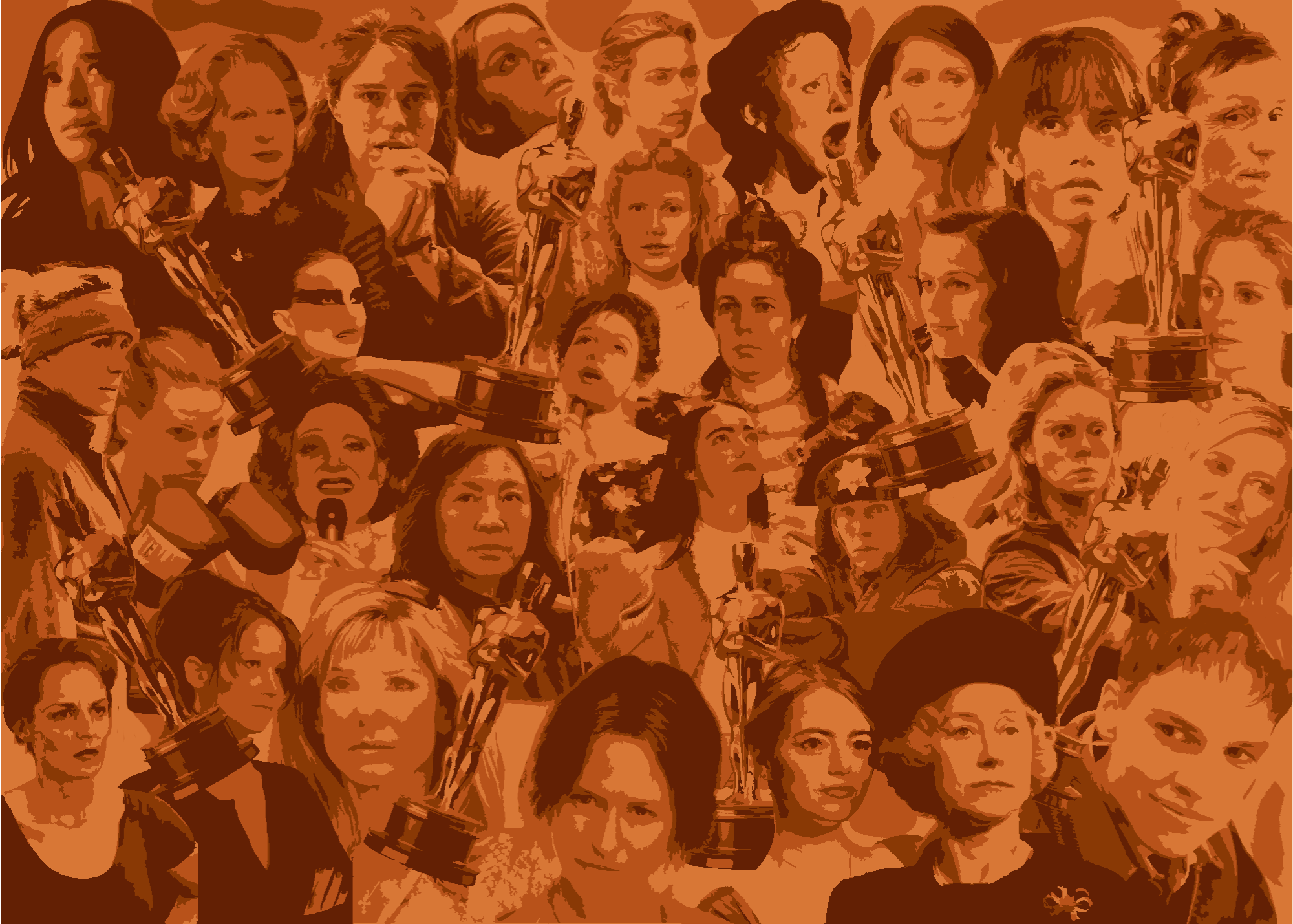
Every Oscar Best Actress Winner of the Last 30 Years, Ranked
Looking back on three decades of Academy Awards greatness and controversy.
RankdownAt the first Academy Awards ceremony in 1929, Janet Gaynor won the first award for Best Actress. She was awarded for three films: Street Angel, 7th Heaven, and Sunrise, honoring her year in totality. Since then, some of the most revered actresses in Hollywood history have been given the industry’s top honor, but there’s been plenty of controversy along the way. Great talents have been awarded for divisive performances, campaigns have seen shockers upset favorites, and the only thing that can be agreed on is that we never agree.
For the last 30 years, some of the best performances in history have steamrolled award season and captured Oscar gold, but plenty of unpopular choices have gotten read out on the big night. From romantic comedies to period dramas, Nazi guards to North Dakota cops, the award has known no boundaries. As art is subjective, it’s always fun to toss out a ranking, so here are the last 30 years of Best Actress winners, ranked.
30. Helen Hunt - As Good As It Gets as Carol Connelly (1997)
The Academy should absolutely recognize performance in comedy films, but that doesn’t mean it should always happen. Between Mad About You and Twister, Hunt became the actress-of-the-moment in the late 90s, but she isn’t the most capable comedienne or dramatist, and she falters when James L. Brooks asks her to become more than a sidekick to Jack Nicholson’s obnoxious lothario, Melvin. In her biggest moment, when she rails against her mother’s demands and bemoans her life’s lack of progress, she’s a jumbled mess, dramatically unconvincing, and, at the very end, painfully unfunny.
29. Nicole Kidman - The Hours as Virginia Woolf (2002)
Occasionally, the Academy awards a performance with little screen time. In a few instances, it’s earned, like Beatrice Straight’s five-minute takedown of her philandering husband in Network. In others, it feels like an attempt to convince everyone they understand what the average filmgoer cannot, and when that desired superiority rears its ugly head, performances like Nicole Kidman’s win. In only 23 minutes, she displays banality that any actress could muster. It’s a fine turn, and there’s nothing wrong with it, but at the height of actresses winning awards for “going ugly,” Kidman was the biggest beneficiary.
28. Jessica Chastain - The Eyes of Tammy Faye as Tammy Faye Messner (2021)
Jessica Chastain has given good performances, but in the 10 years between her first nomination for The Help and her victory for The Eyes of Tammy Faye, nothing justified the “it’s her time” narrative that won her the statuette. Chastain looks the part, but there’s nothing in her performance that any actress couldn’t give; it’s completely forgettable and mundane. Chastain has never been truly transcendent, only reliably capable, but if there was going to be a career narrative, this was not the performance to justify it.
27. Renée Zellweger - Judy as Judy Garland (2018)
Hollywood loves nothing more than movies about Hollywood, so the second Zellweger signed on to play Judy Garland, the industry’s most beloved tragic figure, she was guaranteed her second Oscar. Sadly, instead of honoring Garland’s legacy, it often feels like Zellweger rested on her laurels. She has moments of heart-wrenching emotion, and her final performance of “Over the Rainbow” is spine-tingling, but even that has notes of the melodrama with which the rest of her showing overflows.
26. Frances McDormand - Nomadland as Fern (2020)
Perhaps the marriage between performer and film is so harmonious that it’s nearly impossible for one to deviate from the other’s course, because Nomadland certainly makes a compelling argument. McDormand feels overly familiar, a likely consequence of playing off real-life people as she plays make-believe. She’s repeatedly outshone by the reality around her, something that, while perhaps not her fault entirely, makes us wonder how a decorated actress could fail to capture the raw emotion when it’s getting displayed right in front of her.
25. Julianne Moore - Still Alice as Alice Howland (2014)
Another career Oscar, Julianne Moore finally claimed the statuette for her performance as a middle-aged woman battling Alzheimer’s disease. She has charm, but there’s something plain and reductive about it. It all feels like it’s happening for the sake of it, no exploring or unearthing, nothing interesting or illuminating to say. It’s a banal turn that feels like it’s seeking awards for the principle of its narrative rather than the quality of its content, and that’s not what Oscars should be about.
24. Halle Berry - Monster’s Ball as Leticia Musgrove (2001)
Monster’s Ball is not a great movie, and it takes a long time for it to discard the melodrama and temper itself. Therefore, it takes Berry a long time to do the same. As the movie settles into the dynamic between widow and grieving mother Leticia and racist former prison guard Hank, it finds the nuances within its two protagonists, and Berry shines. The shock of learning her lover’s role in her deceased husband’s execution and her sobering acceptance is a quick emotional turnaround that a lesser actress would’ve fumbled. Sadly, Berry isn’t allowed to show this talent from start to finish, so she can go no higher.
23. Kate Winslet - The Reader as Hanna Schmitz (2008)
It’s always satisfying, even if to a minimal degree, to see the actress of her generation get the big prize. It’s unfortunate, however, that such satisfaction can get muted by the quality of that performance. Winslet is incapable of even mediocrity, so while her portrayal of an emotionally stunted, former Nazi prison guard who sacrifices her freedom to maintain the secret of her illiteracy is good, it’s nothing more. Much like in her acceptance speech, the desperation for Oscar gold is clear, rendering the performance occasionally desperate and its emotional cues obvious.
22. Natalie Portman - Black Swan as Nina Sayers (2010)
Portman’s performance as Nina Sayers, a ballerina descending into madness as she pursues the part of a lifetime, is the veteran at her undeniable showiest. We’ve seen her dive into meaty roles, explore them fully, and deliver faultless execution, but something about Black Swan feels contrived. As irreverent as Darren Aronofsky aims to seem, there’s something painfully unoriginal about his work, and Portman feels more like an actress begging for an Oscar than a woman on the brink of insanity. It’s a capable turn, but nothing more.
21. Meryl Streep - The Iron Lady as Margaret Thatcher (2011)
Streep’s controversial third Oscar win is so largely due to the performances that lost out that year and the other roles for which she was passed up in the 29-year gap between her win for Sophie’s Choice and her victory at the 84th Academy Awards. Streep did have superior performances in more complex roles, yes. She should not have won; of the nominees alone, Rooney Mara (The Girl with the Dragon Tattoo) and Viola Davis (The Help) were superior. However, Streep flawlessly captures the steely demeanor and rigid authority of Britain's first female PM to compelling, if not career-best, results.
20. Michelle Yeoh - Everything Everywhere All At Once as Evelyn Wang (2022)
The Everything Everywhere All At Once craze was undeserved. It’s odd; no matter how many times people give a film such enormous raves to the tune of a shower of awards, only to do an about-face immediately following the ceremony, we never learn. Michelle Yeoh’s win was certainly a feel-good story, and her illustrious career warranted recognition at some point, but something about this win felt off even in the moment. It’s not because she beat out superior competition, though she did. It’s because it just never locked into place. She was good, but nothing more.
19. Gwyneth Paltrow - Shakespeare in Love as Viola de Lesseps (1998)
It’s almost inconceivable, after naming her daughter after a fruit and telling women to shove jade eggs in their vaginas, that Gwyneth Paltrow was once one of Hollywood’s hottest young starlets. Her meteoric rise to stardom culminated with a Harvey Weinstein-induced Best Actress Oscar, for which she has long been ridiculed thanks to the convicted rapist’s influence, Shakespeare in Love’s Best Picture win, and her whiny acceptance speech. All of these are lamentable, but there’s no denying her performance. Charming, warm, and refreshing, she breathes life into what would otherwise be a stale character in a paint-by-numbers romcom. Viola’s individuality is down largely to Paltrow’s talent, a long-forgotten treasure buried beneath middle-aged insanity.
18. Hilary Swank - Million Dollar Baby as Maggie Fitzgerald (2004)
Swank tends towards over-earnestness, a quality that prevents boxing hopeful Maggie Fitzgerald from feeling like a wholly realized person. She has moments of genius, namely when she implores Clint Eastwood’s Frankie to train her or tells off her family as they try to con her into signing over her earnings, but it’s often a performance too child-like to properly capture the wide-eyed ambitions of the character and have them resonate in a meaningful way.
17. Emma Stone - La La Land as Mia Dolan (2016)
Retrospectively, Hollywood perhaps jumped the gun by giving Emma Stone her first Oscar. Stone is very good in La La Land, but she occasionally reeks of the desperation that tanks some of the other showings on this list. Wanting to win an Oscar isn’t a shameful desire, but allowing it to seep into your performance? It’s not constant, and her work during the audition scenes and the big argument over Mia and Ryan Gosling’s Sebastian’s future as he sacrifices his dreams is fantastic, but scenes like her refusing to go to the big film audition miss the mark.
16. Sandra Bullock - The Blind Side as Leigh Anne Tuohy (2009)
In one of the more childish human tendencies, we collectively rally against an individual because the institution is flawed. The Blind Side is a Hallmark movie disguised as a studio production that contorts its real-life narrative into racist histrionics, insulting its central figure by relegating him to an intellectually defective side character. For this atrocity, we penalize Sandra Bullock, who is fantastic as the no-nonsense Tuohy and finds emotional nuances in the film’s few moments where it allows her to work her magic. The woman is a walking contrivance; the actress makes her feel as inspiringly human and rootable as the middling production allows, and her showing tricked us into believing this was actually a good movie to the tune of over $300 million worldwide (don’t lie, you loved it then, too).
15. Reese Witherspoon - Walk the Line as June Carter Cash (2005)
From the moment 14-year-old Reese Witherspoon debuted in The Man in the Moon, it was clear she was destined for incredible things. By the time she’d scored the role of June Carter Cash in Walk the Line, she’d harnessed an infectious, unique charisma and churned it into a career as one of the industry’s most bankable actresses. It’s a shame that the movie for which she won her only Oscar doesn’t afford her more to do; Joaquin Phoenix, with career-best work (not that that’s saying much), is fantastic, but it’s Witherspoon’s allure that maintains the film’s momentum, crafting a memorable drama with a compelling figure at its heart.
14. Hilary Swank - Boys Don’t Cry as Brandon Teena (1999)
Swank congratulated her peers upon winning at the 72nd ceremony in 2000: “We have come a long way.” It was a Hollywood back pat as much as an admittance that the award was more for turn-of-the-millennium social justice than the quality of her performance, which has admittedly affected the perception of said quality. Swank’s eager naivete doesn’t always lend Teena the credit he deserves, but she does well to use his longing for acceptance and affirmation to relay the emotion necessary to take the leap she lauded her peers for making.
13. Mikey Madison - Anora as Anora “Ani” Mikheeva (2024)
Mikey Madison rode the Anora wave to a shocking upset of frontrunner Demi Moore (The Substance). Head-to-head, that upset was well-earned, though the overall victory was also helped by an absurdly weak year. Still, Madison, though another actress awarded early on when her best work is likely still to come, is gripping as Anora, the young sex worker swept up in the hormonal mania of a Russian oligarch’s son. She’s messy but never trashy, brash but never untidy, and has the charm necessary to legitimize her final moment, when she finally breaks down as she sloppily navigates her first reception of human kindness.
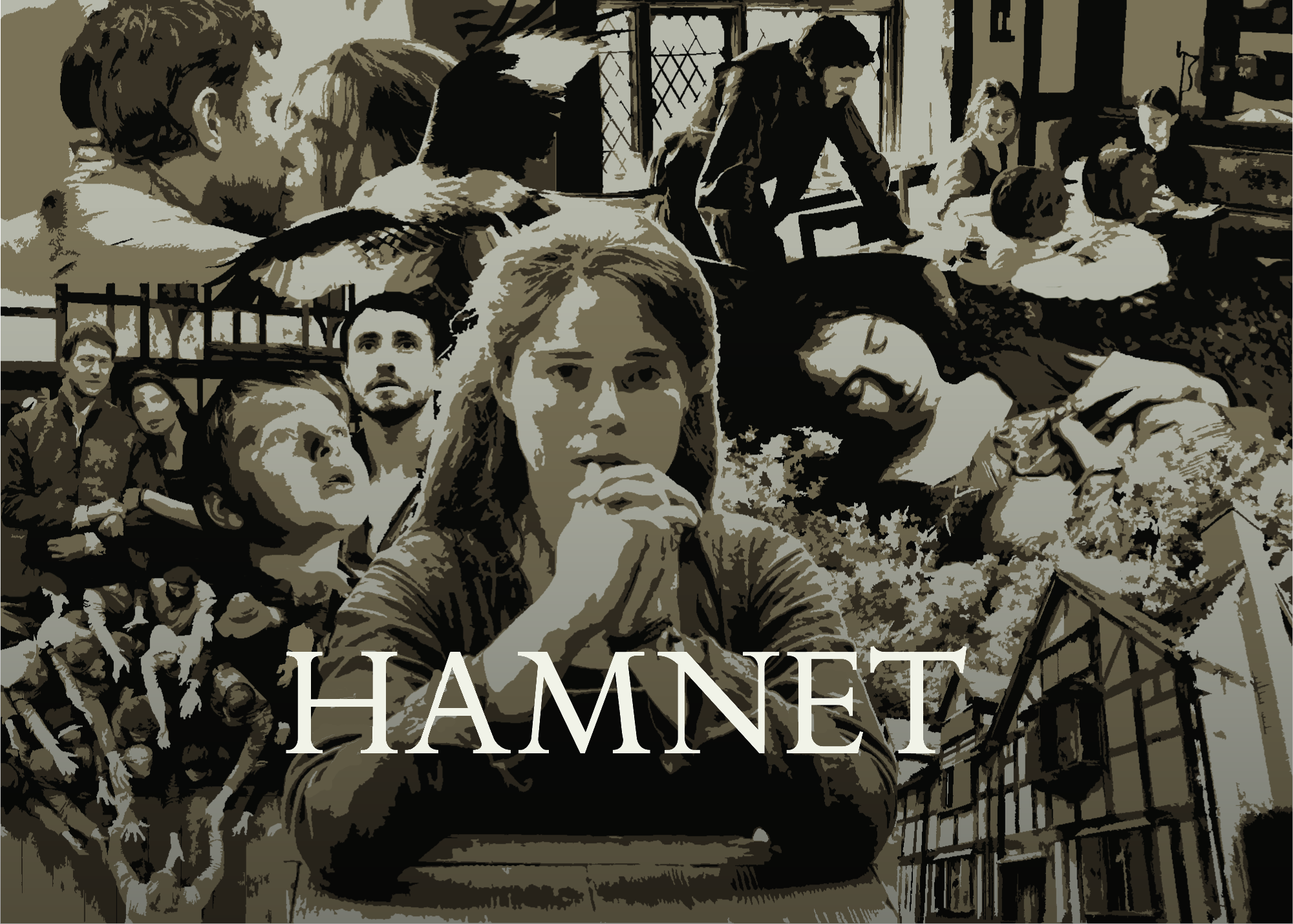
12. Jessie Buckley - Hamnet as Agnes Shakespeare (2025)
In one of the worst Oscar years in recent memory, it would be a lie to say Buckley’s performance in Chloé Zhao’s historical drama didn’t get overhyped. It’s a strong performance from a long-underrated talent, but to be such a formidable lock? Still, there’s no denying that when Zhao’s film calls for Agnes to become the unrelenting emotional center, guiding the audience through a barrage of grief and heartache, Buckley rises to the challenge and delivers emotional whallop after emotional whallop.
11. Olivia Colman - The Favourite as Queen Anne (2018)
If one were to penalize Colman, it would be for a potential incident of category fraud, as her role as Queen Anne, though central, isn’t as prevalent as Rachel Weisz’s Sarah or Emma Stone’s Abigail. The result is that she simply isn’t actively affecting the story to bring as much as the actresses ranked above her, but there’s no denying that she’s fantastic. In one moment, the camera holds on her as she watches her lover, Sarah, engage in a lively (and peculiar) dance with Baron Masham, and she slowly shifts from childish wonderment to nuanced envy so seamlessly she could’ve justified an Oscar then and there. It’s a performance of impeccable comic timing and dramatic heft, simply not one with enough presence to justify a higher ranking.
10. Frances McDormand - Fargo as Marge Gunderson (1996)
One of the most unconventional roles to win an Oscar, but one that provides a strong case for the relevance of the Academy Awards. She’s a rock-solid moral center with unambiguous character but irrepressible sharpness, whose wholesomeness is never relegated to second fiddle. McDormand’s comic timing is above reproach, but her sense of urgency in the film’s moments of high drama creates the iconic character we love to this day. The genius of her Marge is not always glaringly apparent, but therein lies what makes it such a fantastic performance that carries the Coen Brothers' most revered film to its highest highs.
9. Marion Cotillard - La Vie en Rose as Edith Piaf (2007)
The surprise of the 80th Academy Awards was Marion Cotillard, who made some noise with a BAFTA win, but was a dark horse to Julie Christie for Away From Her heading into the big night. Christie would’ve been a fine choice, but the superior performance won. Cotillard’s portrayal of the iconic French songstress does occasionally feel like a caricature, and it’s a shame the film itself didn’t properly showcase Cotillard’s talents, but she became Edith Piaf. Few performances are this emotionally expressive while feeling genuinely energized and reflective; Cotillard’s mainstream success began here, and it was a very well-earned beginning.
8. Charlize Theron - Monster as Aileen Wuornos (2003)
Theron’s performance as executed serial killer Aileen Wuornos is one of the few Oscar-winning turns to justify the word “transformative.” Even beyond the eerie makeup is a woman completely immersed in her character, often acting through the physicality to unmask something more intimate about someone so horrific. She perhaps humanizes Wuornos more than she deserved, and her performance thus occasionally doesn’t quite mirror the woman behind the madness, but her showing is largely an exercise in uneasy choices and deep-rooted empathy that, while perhaps not altogether challenging, is certainly rewarding to watch.
7. Frances McDormand - Three Billboards Outside Ebbing, Missouri as Mildred Hayes (2017)
Simmering rage is easy to portray if you’re playing a grieving mother whose daughter’s murder has no leads or suspects. The hard part is seamlessly incorporating the guilt and searing shame without compromising the stubbornness and rigidity, especially with the darkly comic undertones of Martin McDonagh’s screenplay. As Mildred marches to the billboards, fire extinguisher in hand, her son begging her to let them burn, McDormand unlocks something few actresses are capable of, and there’s no doubt she’s one of the greatest talents to ever grace a movie screen.
6. Brie Larson - Room as Joy “Ma” Newsome (2015)
With all the hate the Marvel fanboys leveled at her, Brie Larson suffered a muddying of the career waters, with many knowing her exclusively as the MCU hero fans loved to hate and not the talented indie headliner that won a well-earned Oscar. The determination she exhibits as she schemes to trick her captor and save her and her son’s lives is palpable. The love and frustration as she raises her child in the confines of her ongoing trauma is stirring. The outpour as she grapples with life in the outside world is unforgettable. Every overused, pretentious cliché in the book applies to her performance, one that elevates Room from a good movie to a great one.
5. Julia Roberts - Erin Brockovich as Erin Brockovich (2000)
A movie star winning an Oscar will always draw the derision of “cinephiles,” so Julia Roberts has spent the last 25 years with arthouse dwellers bemoaning the loss of Ellen Burstyn’s performance in Requiem for a Dream, foolishly buying into the fallacy that victory equates to quality one way or the other. Even if Burstyn was the superior choice, that takes nothing away from Roberts, whose relentlessness in portraying the woman who raised a small town from its knees creates one of the most electrifying performances the category has ever seen. Even when Erin’s wrong, Roberts’ charisma makes us feel she’s right, and she captures the story’s emotional highs and lows and comic bite with skill only she could have mustered.
4. Cate Blanchett - Blue Jasmine as Jeanette “Jasmine” Francis (2013)
Blanchett is perhaps the greatest living actress; her having only two Oscars is considered a travesty by many, but an even greater testament to her talent is that there is no universal agreement on which performance(s) should’ve won her further Oscar gold. Every performance she gives is award-worthy, but perhaps none more so than her role as Jasmine, the mentally ill, ruined socialite “slumming” with her sister in San Francisco after her Bernie Madoff knockoff husband kills himself in prison. Her unapologetic narcissism and vice grip on the delusions of her former life invite Blanchett to show her rarely-utilized comedic chops, and the emotional crescendos, of which there are many, are carried out with precision that a lesser actress would’ve lacked, turning Jasmine from an infuriating nuisance to an enragingly gripping protagonist.
3. Jennifer Lawrence - Silver Linings Playbook as Tiffany Maxwell (2012)
J-Law mania had sects of public opinion against Lawrence before the 85th Academy Awards, and many hoped that a BAFTA win and a late push for Emanuelle Riva would prevent the expected result. Had it worked, it’d be a shame. Tiffany is a worthy character on paper, but it’s Lawrence’s magnetism and versatility that bring her to life. She’s moody, but never brooding, wild but never unhinged, and all the delicate balances and youthful maturity feel authentic because Lawrence layers a character that, in the hands of a lesser actress, would’ve become a caricature that sank an otherwise fantastic movie.
2. Helen Mirren - The Queen as Queen Elizabeth II (2006)
If the word “dignified” was ever applicable, it is to Helen Mirren’s performance as Queen Elizabeth II. Mirren exudes the regality and unflappability that made the Queen such a beloved and, for those few days in the wake of Princess Diana’s death, reviled figure. It was an impossible task, allowing us emotional insight into a woman who so wholly subscribed to “duty first, self second,” but Mirren was up to it and turned Stephen Frears’ drama into one of the century’s most underrated films. Mirren’s final stroke of genius, as she laments the course of that horrific week and the abolition of her antiquated perspective on the monarchy, is one of the most emotionally clarifying performances any actress has given, illuminating a fascinating real-life character with poise, dignity, and understanding.
1. Emma Stone - Poor Things as Bella Baxter (2023)
The Best Actress race felt like it was going to be a dead heat heading into the 96th Oscars. Stone, who’d won the Golden Globe, BAFTA, and Critics’ Choice, was long seen as the favorite. Yet, a last-second push for Lily Gladstone notched her the coveted SAG, and the narrative surrounding her performance proved such a challenger that many had conceded the race to her. Thankfully, the right performance won. Bella Baxter is undoubtedly a showy character, but Stone walks the tricky tightrope between unabashedly theatrical and grounded, providing a once-in-a-lifetime character with the quirky humanity necessary to make her an indelible film character. Gladstone was good, but Stone turned in a performance for the ages.

.jpeg)








.png)


.png)
