


%20(13%20x%206%20in)%20(13%20x%204%20in).png)
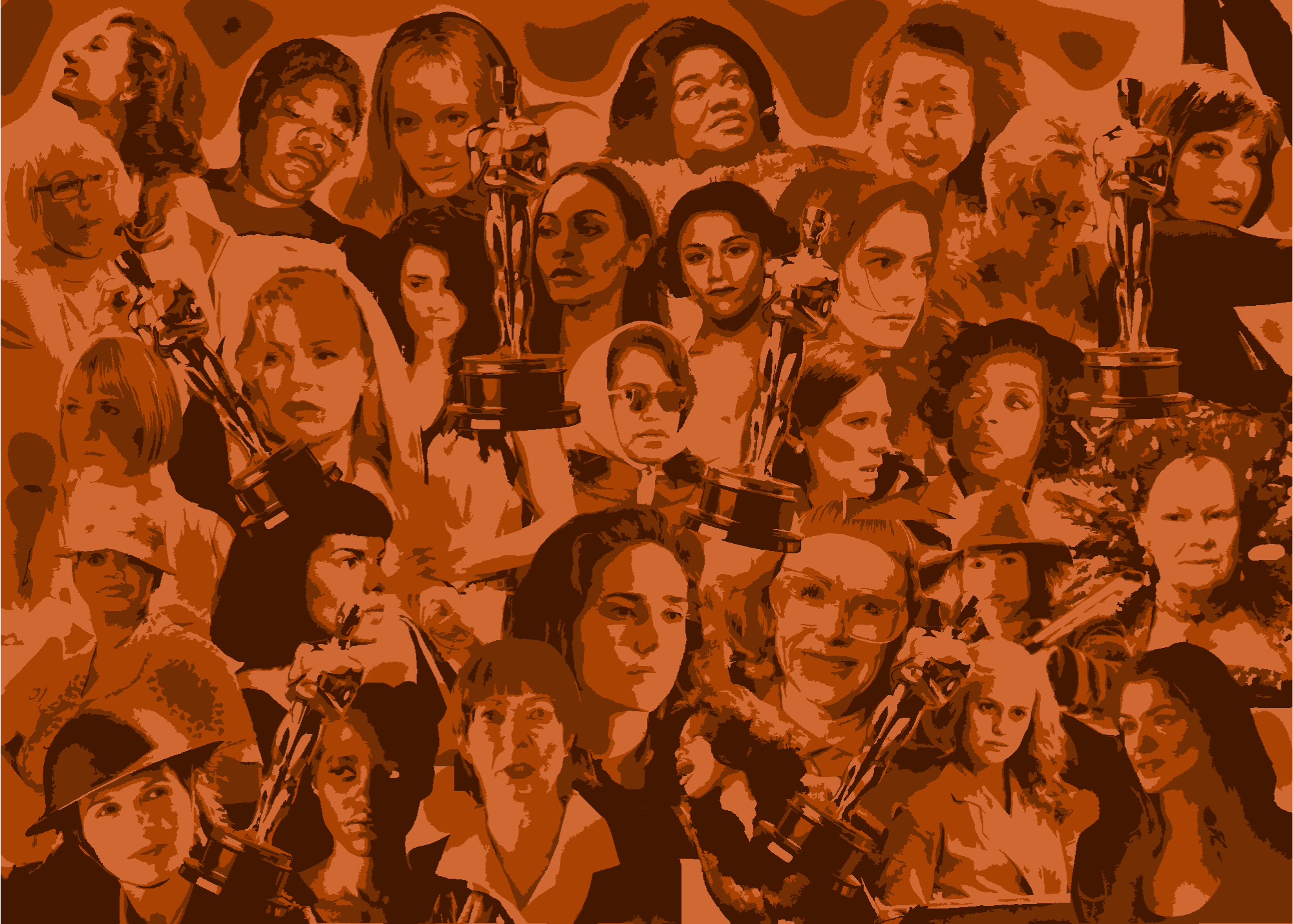
Every Oscar Best Supporting Actress Winner of the Last 30 Years, Ranked
Looking back at three decades of Academy Awards greatness and controversy.
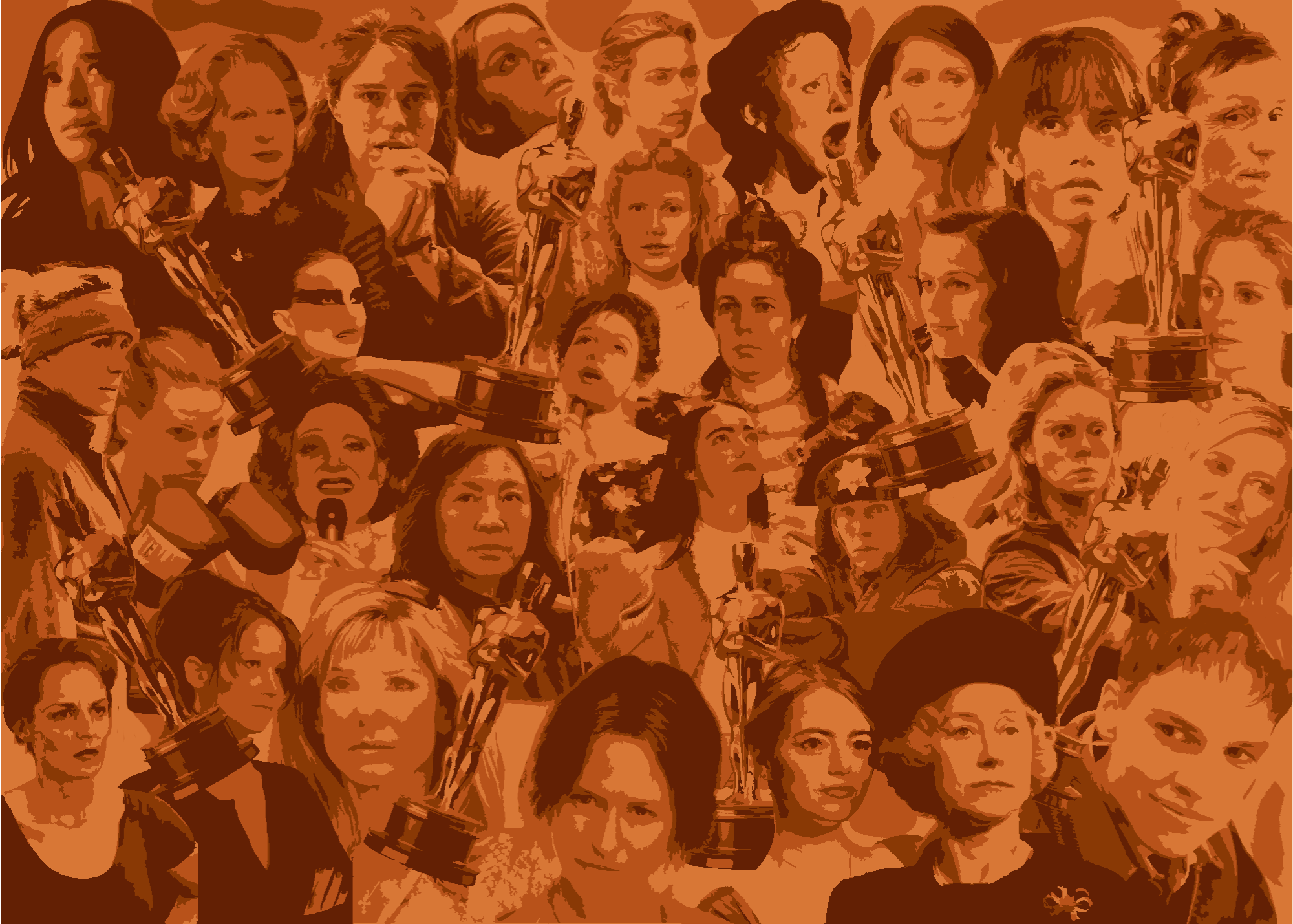
RankdownAt the 9th Academy Awards ceremony in 1937, Gale Sondergaard won the first award for Best Supporting Actress for the epic drama Anthony Adverse. Since then, some of the most revered actresses in Hollywood history have been given this illustrious award, but there’s been plenty of controversy along the way. Great talents have been awarded for divisive performances, campaigns have seen shockers upset favorites, and the only thing that can be agreed on is that we never agree.
For the last 30 years, some of the best performances in history have steamrolled award season and captured Oscar gold, but plenty of unpopular choices have gotten read out on the big night. From memoirs to biopics, musicals to noirs, single mothers to monarchs, grandmothers to evil witches, the award has known no boundaries. As art is subjective, it’s always fun to toss out a ranking, so here are the last 30 years of Best Supporting Actress winners, ranked.
30. Renée Zellweger - Cold Mountain as Ruby Thewes (2003)
After dominating (and scoring Oscar noms) the previous two years with Bridget Jones’ Diary and Chicago, Hollywood felt obliged to “finally” give Zellweger her moment in the sun. It’s a tale as old as time, but true only in reality, not in spirit. Saying her performance as a spitfire farmwoman is mediocre would be the greatest kindness an actress could ever know. She’s overzealous, campy, and distracting, delivering the only showing on the list that could be classified, by any metric, as bad.
29. Jamie Lee Curtis - Everything Everywhere All At Once as Deirdre Beaubeirdre (2022)
Whether there’s an applicable adage is one for the philosophy majors, but make no mistake: in life, if you have to beg, you don’t deserve. Curtis went all out campaigning for the statuette, effectively leveraging her parents’ legacy and the wave of support for the Daniels’ multiversal madhouse into an Oscar win. Her demeanor upon taking the stage was insufferably self-indulgent, a shameless moment displaying the power of popularity in a contest supposedly based on merit. It’s a decent comedic performance that any capable actress could’ve delivered, and considering the heavy hitters in the category, her win looks even worse.
28. Zoe Saldaña - Emilia Pérez as Rita Mora Castro (2024)
The question of the 2025 awards season: Why was Emilia Pérez, a horrible movie that so pitifully represented every group it sought to represent, all while being nonsensical, overlong, poorly constructed, and horrendously acted, the favorite? It’s simple: Hollywood thought they’d score points with the masses, whose approval they’re so desperate to attain, by fawning over something seemingly topical. It’s a shame: Saldaña has given so many fantastic performances across so many genres for generations of moviegoers. She deserved better, but she also could’ve been better. It’s such a confused, aimless performance. Yes, the entire film feels that way, and that isn’t her fault, but there’s something that feels unstable at the core, and so the character and her purpose get lost.
27. Anne Hathaway - Les Misérables as Fantine (2012)
Retrospectively, people have attempted to rewrite the legitimacy of the Hatha-hater movement during the 2013 awards season as she swept the proceedings for her turn as the tragic Fantine in the film adaptation of Les Misérables. Unfortunately for them, her corny over-earnestness truly was as grating as advertised, and it’s the foundation of everything that makes her performance so uninspired. If even Honest Trailers calls you out for begging for the gold, you know you’ve gone too far, and rarely has an Oscar-winning turn been this obnoxious in its desperate theatricality.
26. Ariana DeBose - West Side Story as Anita (2021)
DeBose became the second actress to win this award for playing Anita in West Side Story. Considering Rita Moreno brought unforgettable, vibrant depth to an unforgettable role, one wonders how much her legacy (and the inherent strength of the character) carried DeBose to her win. She’s fine, but only her impeccable vocals stand out. The fire and substance Moreno brought is gone, and in its place, we get a mediocre actor’s interpretation of those qualities instead of genuine embodiment. If you want to find what she’s missing, look to Mike Faist as Riff.
25. Melissa Leo - The Fighter as Alice Ecklund (2010)
Melissa Leo rode the same wave several had before her: score a novelty nod, nab a part in a big movie, collect. The hype overstated the actual quality of her performance, which, while not bad, feels too hammy. There’s a lot of zeal and mania to her turn as the rough, tough Boston mother, but it all feels contrived. It doesn’t help that she isn’t even the best supporting actress in her own movie, as she’s repeatedly upstaged by Amy Adams. Leo is serviceable, but if you’re going to win an award that says you’re the best at something, you have to be better than serviceable, and your co-star certainly can’t be better than you.
24. Lupita Nyong’o - 12 Years a Slave as Patsey (2013)
Nyong’o benefited tremendously from the general (and false) perception that 12 Years a Slave was an “important” film. It made people want to use Nyong’o, in her first major role, as the vessel through which that idea would come to fruition. It worked in the sense that it got her the Oscar, but time makes clear the waters that hype and buzz muddy. She’s over-the-top in the most damaging way, dragging the audience out of what contemplation Steve McQueen’s languid drama could’ve achieved and into melodrama so tiresome that her performance doesn’t land. She was a studied actress fresh from the Yale School of Drama, but that’s exactly what her performance feels like: a student doing as they’ve been taught instead of a natural actress bringing raw emotion to the screen.
23. Alicia Vikander - The Danish Girl as Gerda Wegener (2015)
Alicia Vikander winds up here largely because, while she’s good as the anguished wife of a transitioning transgender woman, there’s absolutely nothing spectacular or memorable about her performance. In fact, it may be the most forgettable performance on the list. She tries so hard to find the nuance in Gerda's swelling emotional moments that she forgets to access the underlying emotions, and the one time she tries to go for it, when she begs her emotionally distant wife to bring back the husband she needs, she almost gets there, but doesn't quite command the moment. It’s a performance that shoots for the stars, apparently didn’t know the moon existed, and is now floating aimlessly throughout the cosmos, gone and forgotten.
22. Patricia Arquette - Boyhood as Olivia Evans (2014)
It’s not uncommon for a movie beloved during awards season to get zeroed in on for one award from the top dog, knowing full well it’ll falter across the other categories. Arquette benefited tremendously from this principle, sweeping awards season and ultimately claiming the win for a wooden performance. Linklater gives her opportunities to make an impact as she navigates her young son’s turbulent childhood, but she rarely hits the mark, leaving many of the film’s biggest emotional moments cinematic whispers in the wind.
21. Jennifer Hudson - Dreamgirls as Effie White (2006)
As Anne Hathaway did after her, Jennifer Hudson clinched her Oscar on the back of a towering musical performance. The power of that moment cannot be understated, but the rest of her turn as the difficult and discarded Effie needed to measure up. Bluntly, it doesn’t quite, but there’s something delightful and sympathetic in some of her more amateurish moments between the belting. We feel drawn to Effie in a way we don’t to anyone else, and it’s Hudson’s charisma, even if lacking the tuning necessary to make it a truly great performance, that makes her a memorable character.
20. Marcia Gay Harden - Pollock as Lee Krasner (2000)
Elephant in the room: Kate Hudson should’ve won. However, that’s a testament to Hudson and Penny Lane, not an indictment of Harden, whose tough-nosed style works for the uncompromising wife of Jackson Pollock. An artist herself, Krasner has zero tolerance for Pollock’s reckless treatment of his gift, and even less for his desire to have her compromise herself for the life he wants. The film doesn’t offer her much, but Harden’s shocking win, while not earned, was at least given for a good performance that captures the self-assured pomp of artists and the earnestness of Krasner’s insistence on her husband’s genius.
19. Cate Blanchett -The Aviator as Katharine Hepburn (2004)
Blanchett is the undoubted actress of her generation, so to say any performance of hers is bad is sacrilege. It’s not that her turn as Hollywood legend Katharine Hepburn detracts from the film, but there’s something insipid about the interpretation, an overzealous aim at lavishing the beloved starlet with that sort of retroactive mysticism that’s mistakenly convinced generations that there was something glamorous about old Hollywood. She’s good, but occasionally so exaggerated that Hepburn doesn’t feel like a real person. Her more natural moments, like cautioning Howard against the invasiveness of the press, are unforgettable, but much of it feels like flirtation with caricature.
18. Viola Davis - Fences as Rose Lee Maxson (2016)
It’s interesting: many would rank Davis’ showing significantly higher for the revered scene in which she castigates her narcissistic, philandering husband for his recklessness and laments the choices that have led her to the heartbreak he’s inflicted, but that’s actually the moment that sinks it. It’s a hammy, histrionic scene that feels like Davis is begging the Academy to make up for robbing her of the Oscar for The Help. The power in her performance is in her quieter moments, of which there are many, and for which she deserved all the acclaim she got. If she’d shown that restraint when it was needed most, she’d be higher.
17. Allison Janney - I, Tonya as LaVona Fay Golden (2017)
Janney’s win was a bit of a narrative victory. She had been an industry favorite with awards galore under her belt. The talent justified the reputation, but it also became the laurels she rested on as she stole I, Tonya as the narcissistic mother of Tonya Harding. Amazingly, an Allison Janney running at half-speed is still leaps and bounds above most other actresses, and while there’s something slightly vacant about what specifically Janney wants to say about LaVona, there’s a distinct possibility that a lesser actress, though she may have colored in the entire picture, wouldn’t have brought the X-factor that made this character an Oscar-winning role.
16. Judi Dench - Shakespeare in Love as Queen Elizabeth I (1998)
Amid the backlash against Gwyneth Paltrow and the film itself waltzing away with Best Picture, Judi Dench’s unorthodox win got lost in the shuffle. One could say that in only 8 minutes of screen time, Dench commanded the role with such spellbinding presence that she trounced the competition, but it would be more likely to say there were no standout performances in big movies, so Harvey Weinstein’s aggressive campaigning delivered the legendary Dame her consolation Oscar for the prior year’s Mrs. Brown travesty. Still, Dench does have a commanding screen presence, and as little as she’s given and for as few times as she appears, it’s hard to fathom any other actress bringing so much electricity.
15. Catherine Zeta-Jones - Chicago as Velma Kelly (2002)
Zeta-Jones’ turn as the musical, murderous vixen Velma Kelly in Rob Marshall’s adaptation of the 1975 stage musical Chicago isn’t quite a movie star performance, but the gravitas she brings to the film certainly evokes that feeling. She commands every second she’s on screen with an allure few actresses of her generation could’ve mustered, and her devilishness and inspired stage presence are the best part of the film. The character is a tad one-note, forcing her performance to suffer from diminishing returns, but what she’s asked to do, she does exceptionally.
14. Tilda Swinton - Michael Clayton as Karen Crowder (2007)
The 2007 Best Supporting Actress race was one of the last true up-in-the-air acting categories. Mostly, this is down to 2007 being a weak year for film and the category itself sporting an uninspired roster. Had it been prime contender Ruby Dee (American Gangster) or dark horse Amy Ryan (Gone Baby Gone), it wouldn’t have been a travesty, so Swinton’s win was a muted affair. Retrospectively, she thrives in a limited role as an in-over-her-head corporate lead counsel, and unlocks the most compelling fixture in an otherwise dry movie. Her faultless, tempered approach humanizes Karen in a comprehensible yet unsympathetic way, allowing Michael Clayton to forgo simple dynamics between the big bad billionaires and the people seeking to expose and undermine them.
13. Kim Basinger - L.A. Confidential as Lynn Bracken (1997)
Basinger’s win came against a field of heavy hitters. Gloria Stuart’s Old Rose in Titanic was her primary competition, but Minnie Driver (Good Will Hunting), Joan Cusack (In & Out), and Julianne Moore (Boogie Nights) were all acclaimed, commendable performances. Combined with what many see as a single-note performance for a one-dimensional character, her Oscar moment has not aged well. It’s a disservice to chastise her for “failing” to evoke the femme fatales of yesteryear as the high-class call girl who develops a romance with hot-headed LAPD officer Bud White. Her subtle shifts in tone and demeanor as she navigates her interactions with the various men navigating the overarching narrative become the thematic fulcrum of the film, and she succeeds admirably in what could easily (and falsely) be construed as a nothing role.
12. Regina King - If Beale Street Could Talk as Sharon Rivers (2018)
King had long been one of the industry’s most magnetic performers, able to bring sass, vibrance, soulfulness, and vitality to some of Hollywood’s biggest movies in the ‘90s and ‘00s. She was finally allowed to show the full breadth of her range in Barry Jenkins’ drama about a black man falsely accused of rape and the ramifications that event has on his loved ones. King gets the film’s climactic emotional heave when Sharon ventures to Puerto Rico to confront the woman who’s put her prospective son-in-law behind bars, but the underlying subtlety of her role leading to that point arguably does even more to relay the anguish permeating the families whose lives have been shattered - and the strength needed to face that adversity.
11. Octavia Spencer - The Help as Minny Jackson (2011)
Never Been Kissed, Malcolm in the Middle, Spider-Man, Coach Carter, ER, The X-Files. These are some of the film and television credits of Octavia Spencer before landing the role of Minny Jackson in The Help. She was staring down a storied but far from illustrious career as “that woman that’s in everything,” and then she won the Oscar. For that alone, it was a feel-good story that could’ve inspired even the most calculated voter to check her name on the ballot. Thankfully, the performance matched the narrative. Minny is a powerhouse character, if a tad contrived, but Spencer layers her not only with a titanic bark but a bite equal parts tender and ferocious. She evolves beyond a cliche and becomes more than a comedic figment in a larger story.
10. Amy Madigan - Weapons as Gladys (2025)
Rarely do horror movies fare well at the Oscars, and a character as zany and evil as Gladys is not fodder for the Academy. It’s a testament to some progress that Madigan won, but we must also recognize the strength of her performance. The character is dressed maniacally, but she isn’t individualistic solely based on her clothes. Madigan nails so many specific mannerisms and inflections, all equally human and purely wicked, that make Gladys a truly singular character that we won’t soon forget. When Weapons relies on her to anchor its final act, she guides it to a disgustingly satisfying conclusion.
9. Penélope Cruz - Vicky Cristina Barcelona as María Elena (2008)
Cruz benefited mightily from circumstance at the 81st Academy Awards. Viola Davis made a name for herself with her short but astonishing turn in Doubt, but she didn’t have enough pedigree, and co-star Amy Adams canceled her out. Kate Winslet, the frontrunner for The Reader, got shifted to lead; Marisa Tomei had already won, and Taraji P. Henson was the novelty nom. The road was wide open for Cruz, who had the momentum of the industry’s continued adoration for Woody Allen and critical recognition from Volver two years prior. Thankfully, circumstance didn’t reward an unworthy performance. Cruz is the only memorable component of Vicky Cristina Barcelona, elevating a character driven by mania into one that’s irresistibly layered and the driving force behind what interpersonal lunacy and comedic highs the film achieves.
8. Mo’Nique - Precious as Mary Lee Johnston (2009)
Mo’Nique didn’t have an easy job in bringing the abusive mother of the titular character, Precious, to the screen. She’s the textbook definition of a malignant narcissist, relentless in her torrent of verbal, physical, and sexual abuse. Whether harming her grandson, labeling her daughter a seductress for “letting” herself get raped by her own father, or any other number of depraved acts, Mo’Nique was tackling a character so over-the-top in her villainy that only a victim of one such individual could conceive of it not being a caricature. One could say she did the role justice and leave it at that, but she makes a bevy of subtle choices, particularly when she derides Precious from the bottom of the stairs, that make Mary horrifyingly accessible. By the time she’s in the social worker's office justifying sexually abusing her daughter, it’s become a definitive performance.
7. Youn Yuh-Jung - Minari as Soon-ja (2020)
Youn achieves subtle magic as the unorthodox pseudo-matriarch of the Yi family. For a character that could easily feel like an interloper, all incessant zaniness and no soul, she manages to make her a grounded center for the struggling Korean-American family to navigate their lives around, providing insight both into the commonality of nuanced familial dynamics and the seismic transition for immigrant families, particularly in rural communities. She’s a singular character, the grandma we all sorely need and love, but she also feels distinct in a way that’s not invasive, a truly tricky tightrope to walk considering how tempered Minari aims to be as it tells a simple, but powerful, story. Youn is a supporting performance in the truest sense of the word: a means of tying together a vast array of characters and perspectives to hammer home the core ideas of a movie.
6. Da’Vine Joy Randolph - The Holdovers as Mary Lamb (2023)
In a wonderfully-crafted film with two stellar performances behind its foundational dynamic, Randolph’s naturalistic delivery remains the most memorable, impactful component of a modern classic. She manages to make grieving mother Mary a truly natural conversationalist, like a person you’d speak to in your daily life. Yet, she remains a gifted actress, enough to not let that prevent her from delivering the dramatic heft required to let Mary’s tragic story make an impact beyond the principle of loss. Everything about her task sounds easy on paper, but often those are the most difficult performances, and she is the heart and soul of The Holdovers.
5. Angelina Jolie - Girl, Interrupted as Lisa Rowe (1999)
Society would perhaps be better off if Angelina Jolie hadn’t won the Oscar for Girl, Interrupted, so we wouldn’t have had to hear her say she was in love with her brother while he sat in the audience weeping. On the other hand, had she lost, a truly fantastic performance would’ve gotten criminally ignored. The tail end of the film is mishandled, and Jolie thus has no choice but to go down with the ship, but the majority of her work as the psychotically troubled bully Lisa Rowe is remarkable. She lends her incessant disregard for her wardmates’ feelings a bizarre, troubling sort of charm and intelligence, and her more sweeping emotional moments, particularly when she and Winona Ryder’s Susanna bid each other farewell, are the mark of a truly immersive actress.
4. Laura Dern - Marriage Story as Nora Fanshaw (2019)
Laura Dern accomplishes something vital for Marriage Story: make us hate someone simply for doing their job well, then tune their passive-aggressive sketchiness just enough for them to be contemptible just beyond principle. If we’d hated Nora any more, we’d have sided entirely with Charlie, but beneath her not-so-thinly veiled snobbish misandry is a woman with a lot of valid points. We have to agree with her even when we don’t want to, and even when her entire being makes us want to loathe everything she says on principle. We have to believe she wields enough pseudo-empathetic charisma to influence Nicole to such disastrous yet beneficial ends, but not so much that she feels like a human oil slick. It’s not a flashy performance, and the range of difficulty isn’t immediately apparent, but inside Nora is a deeply complex performance that requires immense skill and precision.
3. Jennifer Connelly - A Beautiful Mind as Alicia Nash (2001)
The tortured wife is far from an atypical role, and countless actresses have interpreted the archetype. Connelly’s role as Alicia Nash, wife to mentally ill mathematician John Nash, offers the actress a bit more to chew on, but Ron Howard’s Oscar-winning direction strands her in the cinematic wilderness. Amazingly, Connelly finds her way out and becomes the backbone of the movie, navigating some heavy-handed scenes with restraint and grace. While her counterpart, Russell Crowe, gives a strong performance, it’s Connelly’s serenity and earnestness that carry the film and lend a sense of realism to John’s struggle to overcome the psychological hurdles that plague him.
2. Juliette Binoche - The English Patient as Hana (1996)
Many of The English Patient’s nine Oscars are viewed as undeserving, particularly its much-maligned Best Picture win. Juliette Binoche’s shock win over Lauren Bacall, the overwhelming favorite heading into the 69th Academy Awards, is the only one to escape unscathed. While the forbidden romance between Almásy and Katharine is the narrative core of the film, it’s ultimately Hana’s journey as she cares for the titular character and develops a love story of her own with Sikh combat engineer Kip that anchors the movie. She captures Hana’s tranquil perseverance with a sorely-needed relatability that draws us into a sprawling and ambitious narrative. Without her, we’d get lost in a sea of desire for deeper meaning that Binoche helps us contemplate and feel on the profound level that director Anthony Minghella wanted.
1. Rachel Weisz - The Constant Gardener as Tessa Quayle (2005)
Weisz’s performance has become tragically lost to time, as The Constant Gardener, like many of the films adapted from John Le Carré’s novels, has largely faded from public consciousness. The goal was simple but tremendously difficult: create a film-defining character whose presence both lingers over and drives the film long after their departure. Weisz’s characterization of activist Tessa Quayle is a masterstroke of subtlety and nuance, a full-bodied performance built on glances and quiet moments of physicality, even when the film demands an emotional world of her talent. Her husband’s devotion to her feels not only comprehensible but undeniable. She feels as much a part of the film in all the time without her as she does while stealing every scene she’s in, and The Constant Gardener is a strong adaptation because of her performance.

.jpeg)








.png)


.png)
