


%20(13%20x%206%20in)%20(13%20x%204%20in).png)
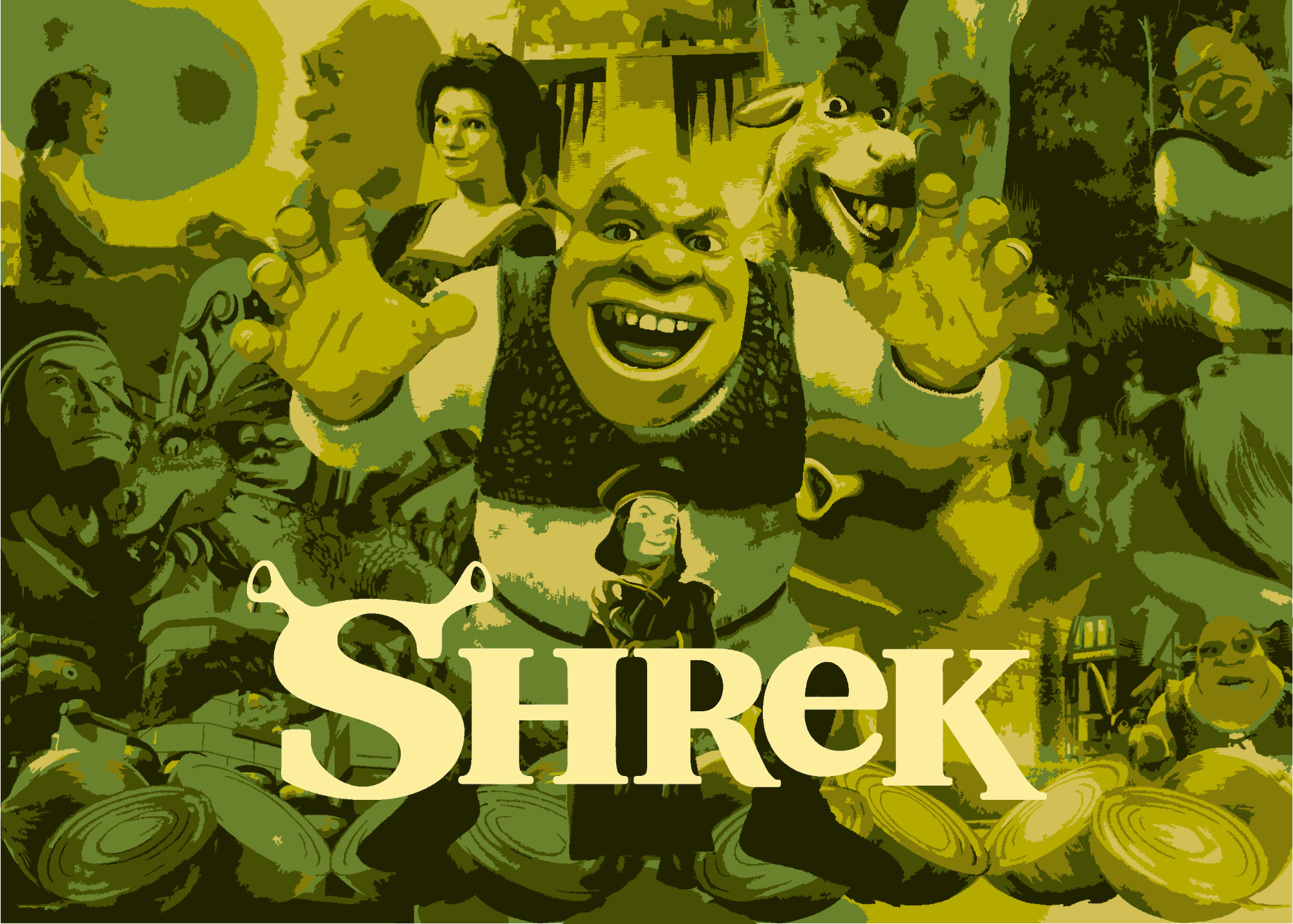
"Shrek" 25th Anniversary Retrospective: A Beloved, Groundbreaking, Animated Romp
Dreamworks' family classic still shines at 25.
RetrospectiveIn the Disney classic Cinderella, the most beloved of all fairy tale classics, an orphaned young woman lives under the treacherous thumb of her wicked stepmother, Lady Tremaine, and her two snobbish stepsisters, Drizella and Anastasia.
One day, the King sends out an invitation to a royal ball in the hopes his son, the Prince, will find a bride. Lady Tremaine, hoping to solidify her position with one of her daughters, conspires to keep Cinderella from the ball. Undimmed, Cinderella teams up with her furry friends and, with the help of her fairy godmother, makes it to the ball and enchants the Prince. When she flees before the fated stroke of midnight, she leaves behind a glass slipper.
Determined to find his son’s lost love, the King orders the Grand Duke to place the slipper on every woman in the kingdom until they find a match. When they find Cinderella, the slipper fits, and Cinderella and the Prince live happily ever after.
What a load of shit.
In 1991, Steven Spielberg bought the rights to the animated book Shrek!, the story of an ogre who ventures to a castle and rescues and weds a princess even uglier than him. When he founded DreamWorks with Jeffrey Katzenberg and David Geffen in 1994, the rights were transferred to the new studio. However, a series of creative differences kept the movie from getting made.
Before Shrek, animated movies were for children. The only value they had to parents was giving them a break while the kids watched TV. The stories and lessons were elementary and bland: true love, good always prevailing over evil, yadda yadda. But, as with all things, necessity is the mother of invention. Any kids’ movie will satisfy kids, but if you’re an up-and-coming studio wanting to make your mark, you need something different, something that gives parents a reason to actually want to be around their children.
This was the debate during the early days of Shrek. Director Andrew Adamson and Katzenberg agreed that pulling in many demographics was vital, but they didn't agree on how to do it. Adamson wanted an all-out assault on convention, with a hard rock soundtrack and unapologetic vulgarity, but Katzenberg wanted to keep things more conservative.
Although Adamson’s vision won out, it took refining to reach the smash hit result. Initial treatments saw Shrek near a garbage dump, living with his parents in a room overflowing with dead fish. The spirit of subversion was there, but the story needed something universal for the movie not to feel like subversion for subversion’s sake. The final product had the swampy glory and mature humor, but the characters needed a purpose; their journey needed meaning.
Life is not easy, whether we have everything we’ve ever wanted or nothing at all. We all get judged and face hardships from within and without, but how we navigate those trials teaches us a lot about ourselves and life. Shrek internalizes the world’s rejection and pushes everyone away, becoming exactly what the world has decided he is. It’s a vicious cycle, one we often find ourselves in. We stop fighting to be seen for who we are and simply start fighting. Fiona sees herself as ugly because of who she’s supposed to be, instead of beautiful for being who she is. How many of us feel lesser because we don’t check the boxes or haven’t become everything we’re supposed to have become?
Yet, when given an opportunity to see themselves from the inside out and not the outside in, they take it, but it’s the way in which they take it that matters. Shrek and Fiona need each other to learn to love themselves, and no matter how many Instagram posts or TikTok reels tell you otherwise, that’s okay. We can’t do everything ourselves; that’s what people are for: to help each other finish the journey when we don’t have the strength. We don’t have to become our best selves before we find what we need. Sometimes, the final step in becoming that person is letting someone else convince us we are that person.
That consistent tonal substance was key, but once they achieved it, DreamWorks had to make it come to life. The plan was to be a live-action/motion-capture hybrid, but the initial test was putrid. Instead of feeling ahead of its time, it looked enslaved to it, like a cutscene from a PS1 video game. The media company was fired, and DreamWorks chose to use computer animation. Now it was time to find Shrek himself.
Comedian Chris Farley was cast in Shrek's infancy, but he died of a drug overdose in 1997 with five days of voice work left. Seven months later, Katzenberg approached Farley’s fellow Saturday Night Live alum, Mike Myers. Myers was put off by the title, but he agreed to come aboard, inspired by the story’s themes of self-acceptance. After doing the voice work, Myers was shown a cut of the film, and insisted on redoing everything in the Scottish accent he’d often used on SNL.
The stage was set, but the best ingredients only come together if the execution is faultless. Make no mistake: without its humor, Shrek is a movie with heart, but nothing to provide the contrast that helps that matter. As the delicate theme plays over the serenity of DreamWorks iconic logo of the fishing boy sitting on a crescent moon, it’s so funny.
For all the hilarious insanity to come, this moment encapsulates Shrek’s genius better than any other: the tranquil, melodic opening, transitioned to a storybook narration of a fairytale, capped by Shrek ripping the final page out for toilet paper before he barges out of his outhouse to the tune of Smash Mouth’s “All-Star.”
If you’re seeing it for the first time, it throws you off in the most delightful way. If you’ve seen it a thousand times before, the anticipation of what’s to come is tickling in a way no movie has ever been. Countless films have tried subversion, but none have managed it with such iconic, irresistible perfection as Shrek, all due to respecting its roots, even as it tries to subvert them.
Why? Because the true magic of Shrek is its humanity. Amidst the fire-breathing dragon in the towering castle above the lake of lava and the martial arts smackdown on Robin Hood and his Merry Men, there's emotional nuance. Shrek doesn’t truly see himself the way the world does, but he’s resigned to it, making the lesson of accepting yourself more meaningful than if it told us to do it on principle. Finding companionship and acceptance isn’t simply believing in yourself. When push comes to shove, if others don’t see you, or don’t want to see you, there’s nothing you can do.
Instead of teaching that loving yourself is all you need, Shrek teaches that what matters is accepting love when it does come your way, to not look a gift horse - or donkey - in the mouth, and to not let others' rejection overshadow others' acceptance. The parents can look at one another and remember when they too had given up, worn down by the hopelessness of feeling accepted in a judgmental world, and appreciating having found the Shrek to their Fiona.
What else do we learn from Shrek? We learn that, like ogres, humans are like onions, and are oftentimes more than they appear. Beneath an irritating insistence is a loyal friend. Beneath a pretty green dress and a golden crown is a fearsome warrior. Beneath a “big, stupid, ugly ogre” is a kind and sensitive soul.
We learn not to assume the worst of everyone, and that simply because so many people have given us reason to be afraid, that doesn’t mean we need to live our lives in fear. It’s easy to make assumptions and keep our guards up, but if we never give the benefit of the doubt, the only person we wind up genuinely doubting is ourselves.
The animation was groundbreaking and has held up, from the flow of Donkey’s fur to the vivid emotions conveyed by the beloved cast of characters. The music, combining the soundtrack of hit songs with a vivid fairytale score by John Powell and Harry Gregson-Williams, layers the film with its signature humor and wholly represents the emotional journey of our beloved ogre.
So yes, Shrek certainly did break ground, but in more ways than we imagine. It didn’t just subvert: it completely reinvented the wheel. It’s a consistent riot, as humorously effective today as thematically timeless. We’ll always need a good laugh and the warmth of familiarity, the soothing embrace of nostalgia. But what we need most, whether we’re 8 or 80, is to remember that things aren’t always perfect. Yet, if we do our best, see the best in what we have, and strive for the best no matter what obstacles stand in our way, we give ourselves a chance, and good things may happen.

95
Director: Andrew Adamson & Vicky Jenson
Studio: Dreamworks
Running Time: 90 minutes
Release Date: May 18, 2001
Cast:
Mike Myers - Cady Heron
Eddie Murphy - Regina George
Cameron Diaz - Sharon Norbury
John Lithgow - Janis Ian
Screenplay: Ted Elliott, Terry Rossio, Joe Stillman, & Roger S.H. Schulman
Editor: Sim Evan-Jones
Score: Harry Gregson-Williams & John Powell





.jpeg)











.png)


.png)